Maintenance & Prevention
Slab Leak Detection: Finding the Leak Under a Menifee Floor
A slab leak has no dramatic moment. It has a warm patch on the tile, a water bill you cannot explain, and six weeks of quiet damage.
The short answer
The five signs of a Menifee slab leak, in the order people usually notice them: a warm patch on the floor, an EMWD bill that jumped without explanation, the sound of running water in a silent house, water pressure that has quietly declined, and finally flooring lifting or baseboards darkening.
A burst pipe announces itself. A slab leak does not, and that is what makes it the most expensive plumbing failure in Menifee.
The water goes down into the soil under your foundation. Nothing floods. Nothing sprays. It simply runs, at line pressure, for as long as it takes someone to notice something subtly wrong.
The five signs, roughly in the order people notice them
1. A warm spot on the floor
The single most reliable early indicator. Walk your house barefoot and pay attention. A patch of tile, laminate, or vinyl noticeably warmer than the area around it means the hot water line beneath is leaking.
Rule out sunlight through a window first — then take it seriously. Hot-side slab leaks are more common than cold-side, because hot water is more aggressive on copper.
2. A water bill that jumped for no reason
The most objective sign available. A pinhole can waste hundreds of gallons a day. If nothing about your household changed and the EMWD bill climbed, that water is going somewhere.
3. Running water in a silent house
Late at night, with everything off, stand still and listen near the floor. A faint continuous hiss or trickle with no fixture running is water escaping under the slab. Putting an ear to the floor, or against a wall at floor level, makes it clearer.
4. Water pressure that has quietly declined
Gradual pressure loss, particularly on the hot side, can mean water is escaping before it reaches your fixtures. This one is easy to normalize — the change happens slowly enough that you adapt.
5. Flooring lifting, or baseboards darkening
The late sign. Cupped laminate, loose tile, a dark line along the baseboard, or a musty smell at floor level means the slab has been wet long enough to move moisture into finishes. At this stage the leak has typically been running for weeks.
The test you can do yourself in five minutes
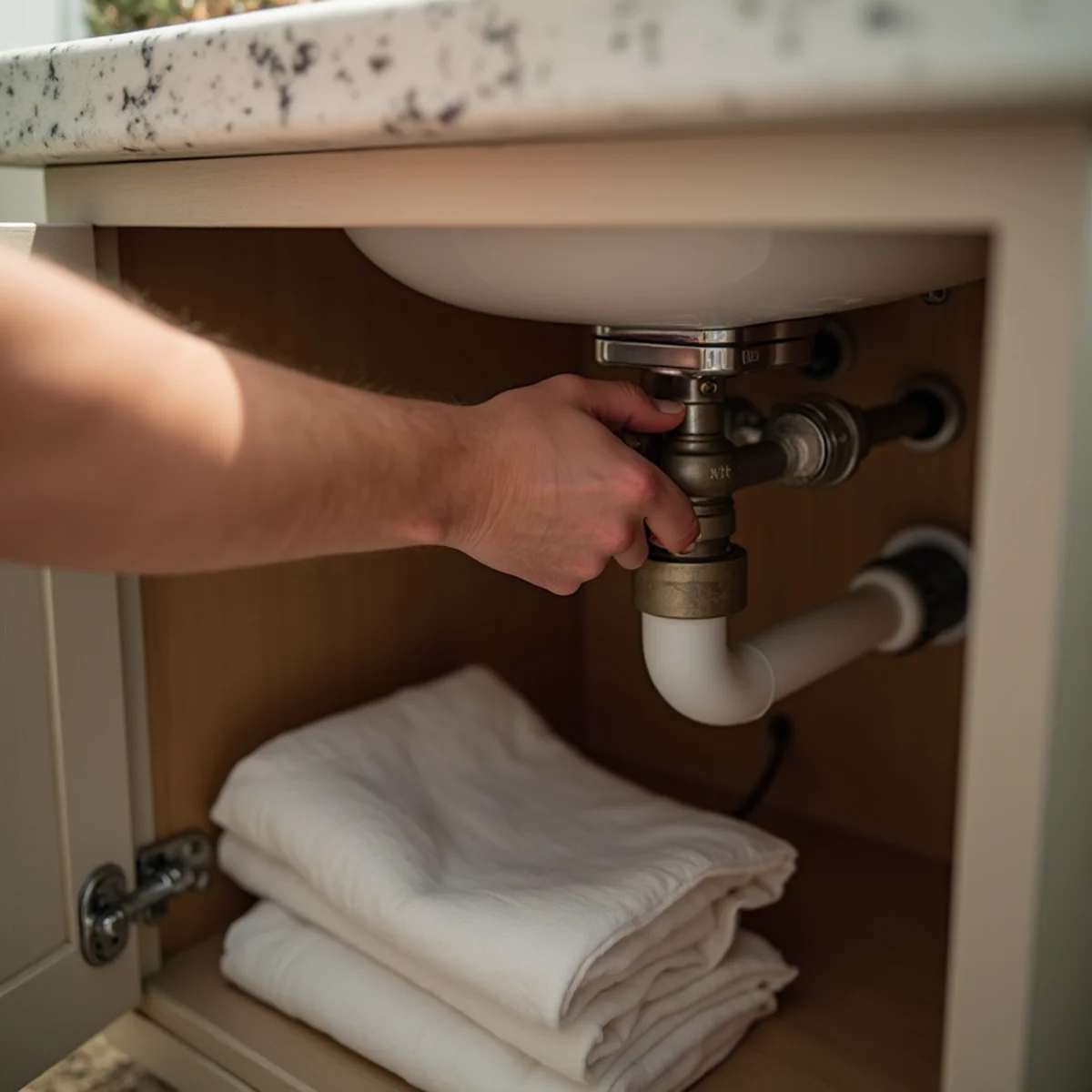
Shut off every fixture and water-using appliance. No dishwasher, no washing machine, no ice maker, no irrigation.
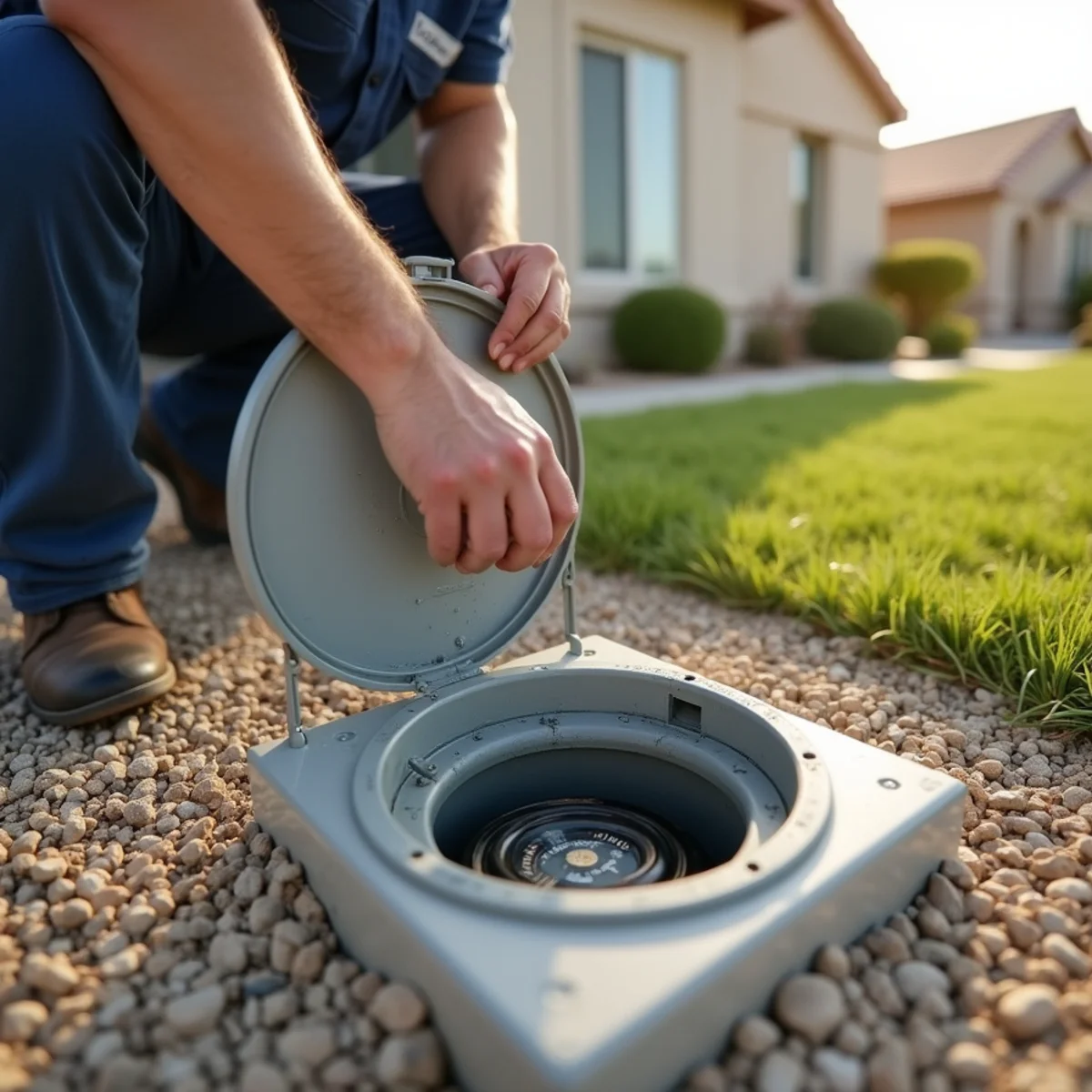
Find your EMWD meter — usually in a box near the street.
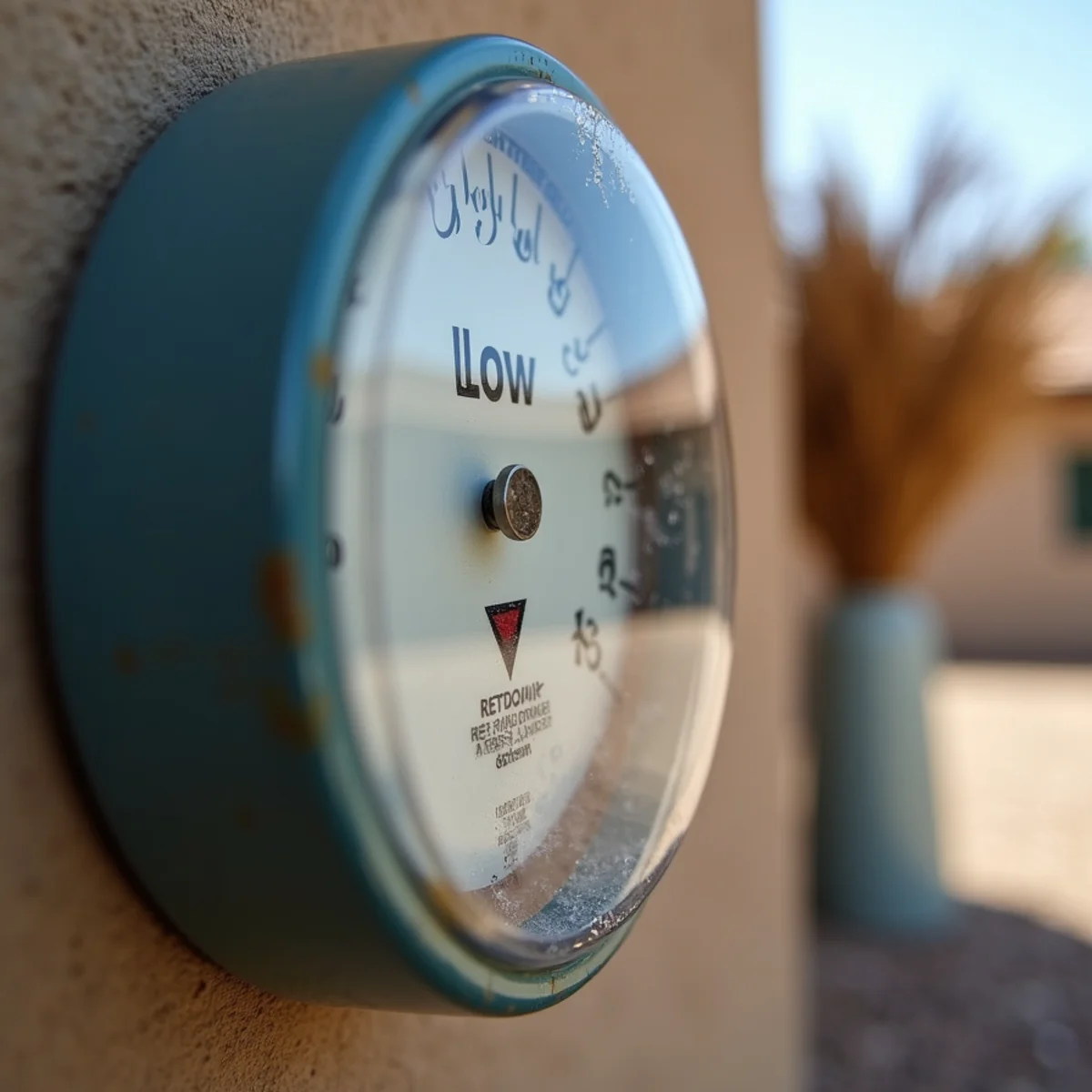
Look for the low-flow indicator: a small triangle, star, or dial that spins with even a trickle.

If it is moving with everything off, water is leaving your system.
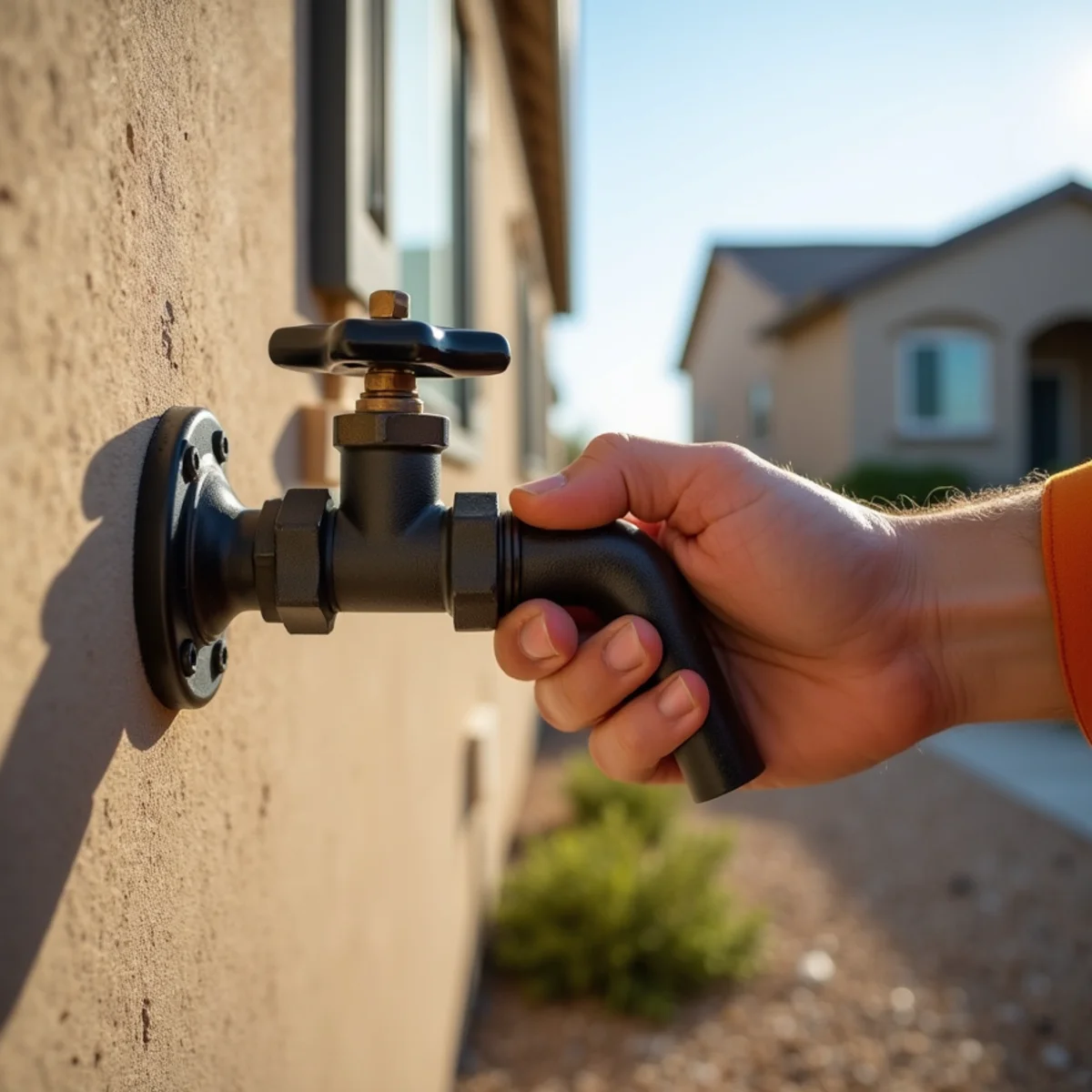
To rule out irrigation, close the irrigation supply valve and check again. If it stops, the leak is outside. If it keeps moving, it is inside — and on a slab home, likely underneath it.
For extra confidence, note the exact meter reading, wait an hour with everything still off, and read it again. Any change is a leak.
How professional detection works
Knowing you have a slab leak and knowing where it is are very different problems. Opening a slab in the wrong place is expensive and destroys flooring for nothing.
- Pressure isolation — shutting sections of the system to narrow which line is losing pressure. This alone eliminates most of the house.
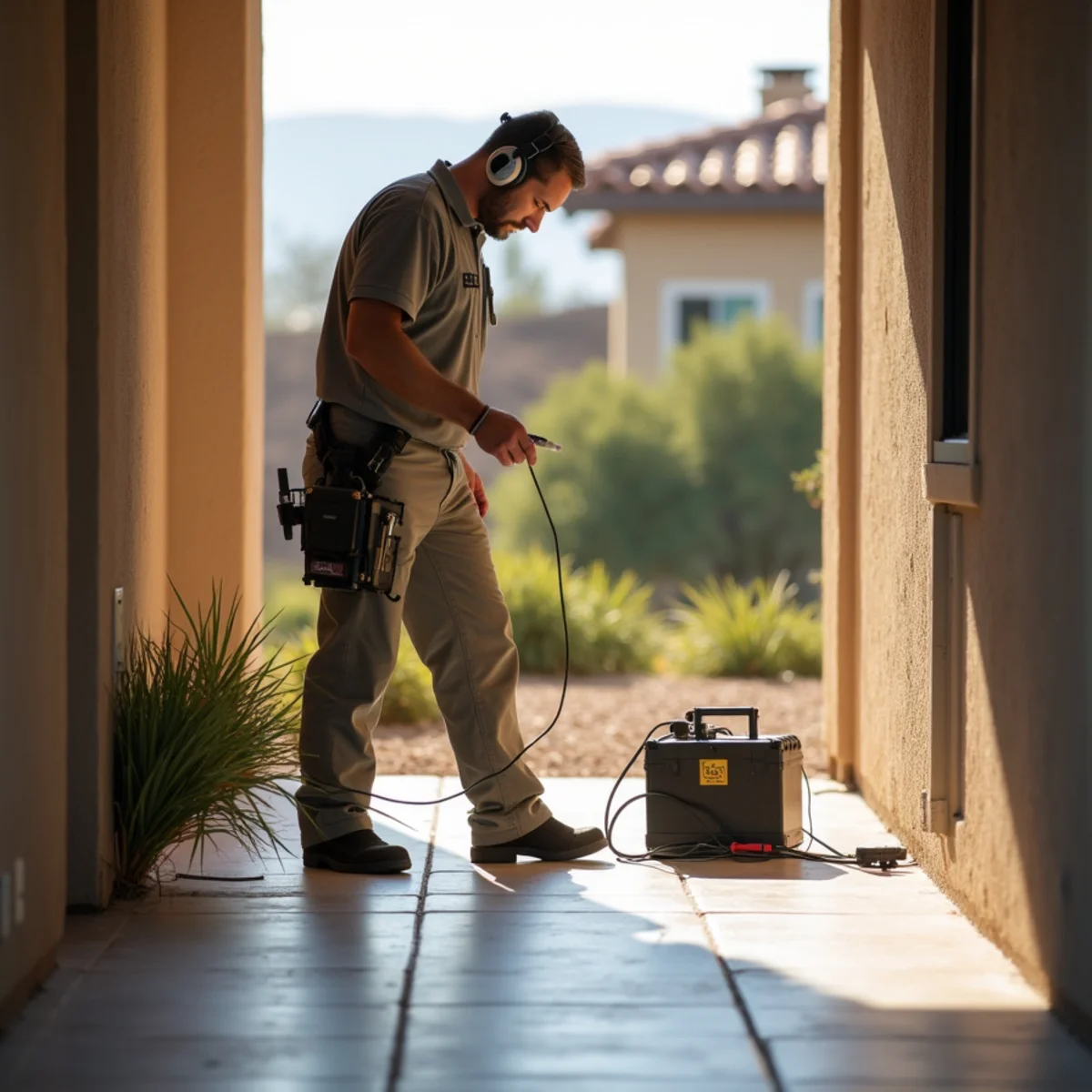
- Acoustic listening — ground microphones amplify the sound of pressurized water escaping into soil. In experienced hands this pinpoints a leak to a small area of concrete.
- Thermal imaging — an infrared camera shows the temperature signature of a hot-water leak spreading beneath the floor. It does not see water directly, but it shows where to concentrate.
- Moisture metering — confirms which materials have actually absorbed water and how far it has travelled.
The goal is one deliberate access point rather than exploratory demolition. That is the whole point of leak detection and moisture inspection.
Repair options, honestly compared
| Approach | What it involves | When it makes sense |
|---|---|---|
| Spot repair | Open the slab at the leak, cut out the damaged section, splice in new pipe | First failure in an otherwise sound system; leak in an accessible location |
| Reroute | Abandon the under-slab line and run new pipe overhead through walls and attic | Second or third pinhole; leak under cabinetry, an island, or a staircase |
| Whole-house repipe | Replace the entire supply system, typically overhead | Multiple failures, galvanized supply, or a system at the end of its life |
The instinct is to take the cheapest option today. Sometimes that is right. But if your 1990s Menifee home has already had one pinhole, the rest of that pipe is the same age, in the same soil, carrying the same water. A reroute frequently costs less than the second and third repairs you would otherwise pay for — plus two more deductibles.
The insurance distinction that matters
Most policies cover the water damage caused by a sudden pipe failure. Most exclude the cost of repairing the pipe itself. Coverage for access — opening and restoring the slab — varies by policy and is worth checking specifically before you need it.
The bigger risk is the gradual-damage exclusion. A leak that clearly ran for months can be declined entirely. That is another reason the warm-spot-on-the-floor stage is the moment to act, not the flooring-is-lifting stage. More on this in filing a water damage insurance claim.
Why this is so common here
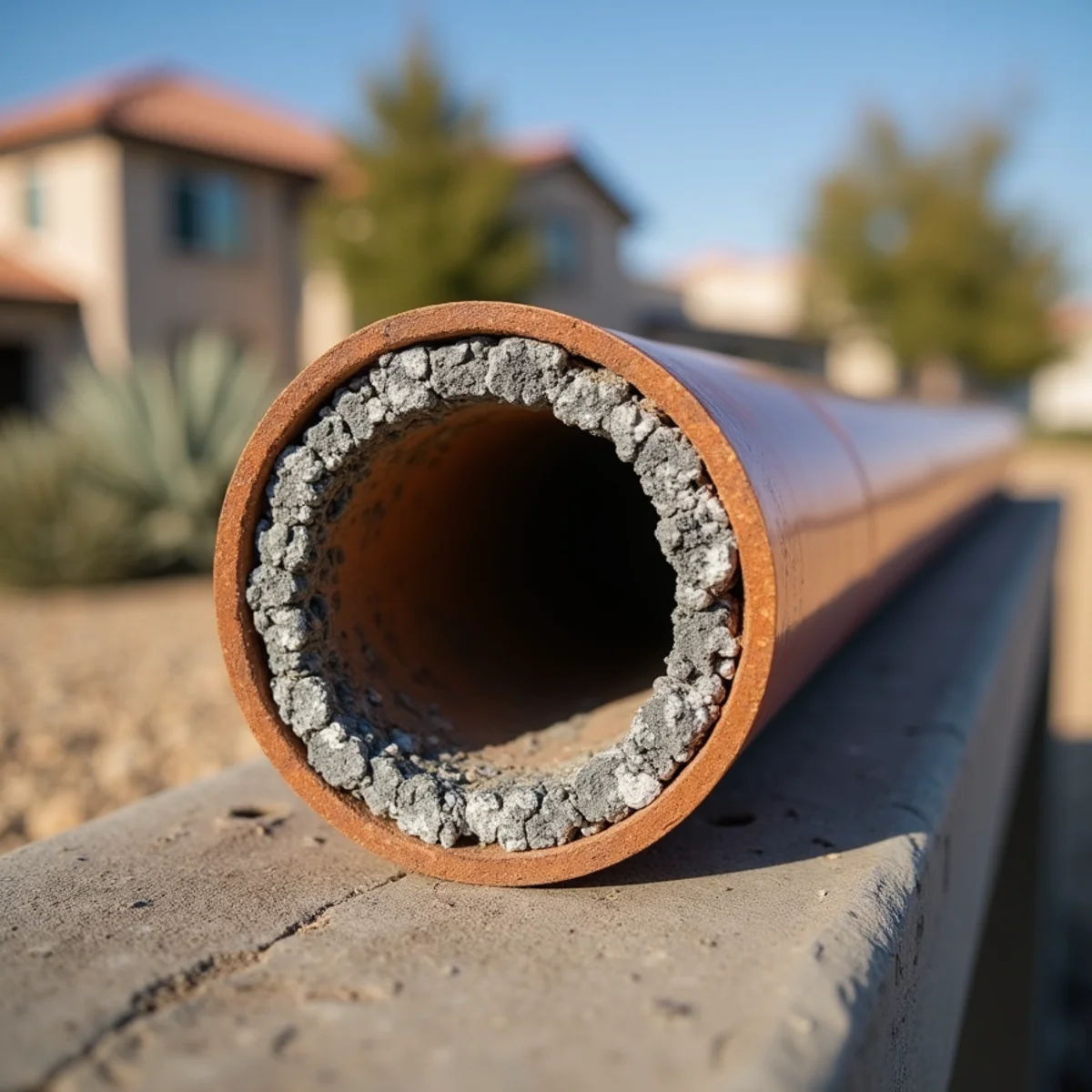
Copper under a slab starts pinholing at roughly 25 to 40 years in this water, and Menifee's neighbourhoods were each built in a compressed window. Menifee Lakes and Sun City are deep into that range now; Heritage Lake and Paloma Valley are entering it.
If your home is in that band, the useful posture is not worry — it is attention. Walk barefoot occasionally. Glance at the water bill each month. Both cost nothing, and both catch this while it is still cheap.
Hot side or cold side, and why it changes everything
Not all slab leaks behave alike, and the first thing worth establishing is which line is leaking, because it changes the symptoms, the urgency and often the repair strategy.
A hot water line leak is the one people notice, because it announces itself. A warm patch on the floor is unambiguous, the water heater runs far more than it should, and in a quiet house you can sometimes hear it. Hot line leaks are also more common, because hot water is harder on copper than cold — higher temperature accelerates the corrosion that produces pinholing in the first place.
A cold line leak is far more insidious. There is no warm spot, the water heater behaves normally, and the only signals are a water bill that has crept up and, eventually, moisture appearing at the slab edge or a musty smell in a room with no visible source. Cold-side leaks routinely run for months before anyone works out what is happening, which is why they tend to produce more damage by the time we see them.
Repair, reroute, or repipe — how the decision is actually made
Once a leak is located, there are three genuine options, and the right one depends far more on the age and condition of the whole system than on the specific leak in front of you.
| Approach | What it involves | When it is the right call |
|---|---|---|
| Spot repair | Open the slab at the leak, cut out the failed section, repair, patch the concrete | A newer home, a single leak, and a clear mechanical cause such as damage during construction rather than corrosion |
| Reroute | Abandon the failed line under the slab and run a new line overhead or through walls | One or two leaks on an otherwise sound system — the most common sensible choice in Menifee homes of this age |
| Full repipe | Replace the supply plumbing throughout the house | Multiple leaks, or a first leak in a home with original copper past its expected life in this water |
The judgement people get wrong is treating a first leak in a forty-year-old copper system as an isolated event. Pinholing is a corrosion process that happens along the whole length of pipe that has been exposed to the same water for the same period. A spot repair in that situation is not a fix; it is a way of buying several months and paying to open the slab a second time.
Ask the plumber directly how old the system is, whether they found evidence of corrosion or of mechanical damage, and what they would do in their own house. In our experience the honest answer for the 1970s to 1990s Menifee stock, on a second leak, is almost always reroute or repipe.
Frequently asked questions
How much does slab leak detection cost?
It is a small, defined cost relative to what an undetected leak becomes. When we find a leak and go on to do the restoration, we credit the detection fee against the job. On an active covered loss, detection is generally part of the claim.
Can a slab leak damage my foundation?
It can contribute to soil movement under the slab, particularly in clay soils, and that movement stresses the concrete. The more immediate and common damage is to flooring, wall bases, and cabinetry — and to whatever grows in a cavity kept damp for weeks.
Should I repipe if I have had one pinhole?
Not automatically, but do not dismiss it. One pinhole in an otherwise healthy system can reasonably be spot-repaired. A second in the same slab means the line has reached the end of its service life, and continuing to patch it costs more over five years than rerouting once.
Does a slab leak mean my foundation is damaged?
Usually not, and this is the fear that causes the most unnecessary alarm. Concrete tolerates water well. What actually gets damaged is everything sitting on and beside the slab — flooring, skirting boards, the bottom plate of the walls and whatever is inside those walls — plus the soil under the slab if the leak has run long enough to wash material out. Foundation movement from a slab leak does happen, but it takes a serious and prolonged leak in the right soil conditions, not the typical pinhole found in month two.
Can I keep using the water while I wait for the repair?
If the leak is on the hot side you can shut the valve at the top of the water heater and keep cold water throughout the house, which makes the wait far more tolerable. If it is on the cold side there is usually no way to isolate it without shutting the house down. Either way the leak is adding water under your slab every hour, so this is a question of days rather than weeks — and the drying job grows the whole time.