Water damage restoration in Menifee, CA is the full sequence from emergency extraction through structural drying to the repairs that put the property back. We dispatch 24/7, average about 30 minutes citywide from our Palomar Road shop, meter every affected material against a dry standard taken from your own home, and bill your insurance carrier directly.
We restore water-damaged homes and businesses across Menifee, and we do the whole job: emergency extraction, moisture mapping, structural drying, antimicrobial treatment, and the rebuild that puts your house back the way it was. You deal with one crew and one scope, not a mitigation company that disappears once the fans come out.
Call any hour. We answer live, walk you through shutting the water off, and roll a truck while you are still on the phone.
What to do before we get there
Three things, in this order. The full minute-by-minute version is on our homepage and in the first-hour guide — this is the short form for someone standing in it right now.
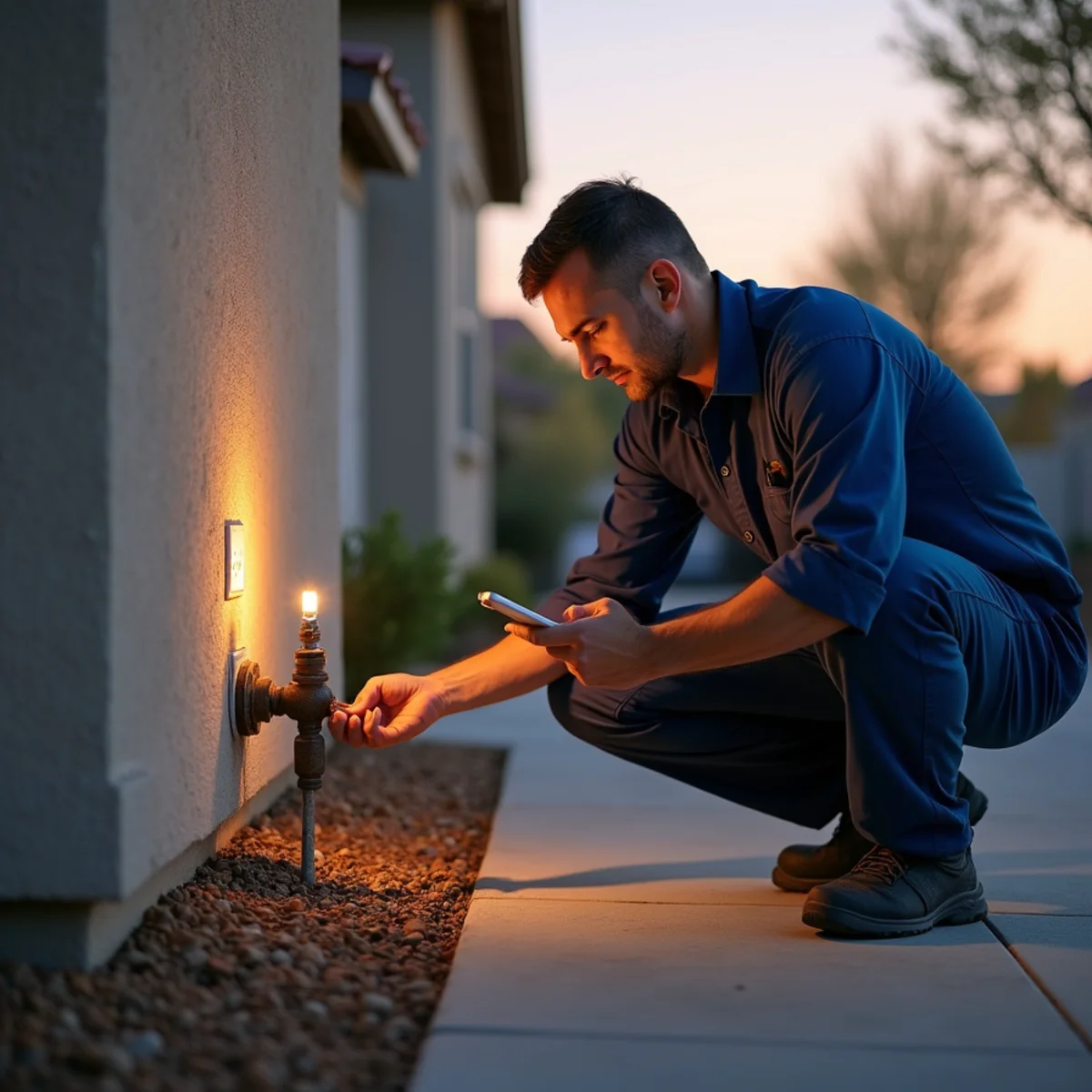
- 1Shut the water offAt the fixture valve, or at the main if the valve is seized — mineral deposits lock angle stops solid in this water. In most Menifee tracts the main is in a box at the street or on the garage-side exterior wall. Clockwise.
- 2Kill power to the affected roomsOnly if you can reach the panel without stepping in water. Outlets in these tracts sit about twelve inches off the floor, so an inch or two of standing water is already in contact with them. If you cannot reach it safely, wait outside.
- 3Film it before you touch anythingA slow video walkthrough, narrating what you see. Your adjuster will never see the house in this state again, and it takes four minutes. Then call — we will talk you through the rest.
The full first-hour guide covers what not to do, and why the clock runs faster here than the standard advice assumes.
Signs you have more water damage than you can see
Standing water is the obvious part. These are the signals that tell us moisture has already moved into the structure — and every one of them is a reason to get a meter on the wall today.
Baseboards that feel cool or look swollen
Drywall wicks water upward. A cool, slightly bulged baseboard means the bottom of the wall cavity is holding moisture even if the surface looks fine.
A musty smell that comes back after you air the house out
Odor that returns when you close the windows is coming from a wet cavity, not the room. In Menifee heat, that smell usually arrives 48 to 72 hours before visible mold.
Tile or laminate that sounds hollow or has started to cup
Water under a floating floor has nowhere to evaporate. Cupped planks and hollow-sounding tile mean the subfloor or slab underneath is still wet.
A water bill that jumped without a change in habits
A sudden increase usually points to a slab leak or an irrigation break — both common in Menifee and both capable of soaking a home slowly for weeks.
Paint that is blistering or a ceiling with a spreading ring
A stain with a defined edge is old. A stain that grows over a day or two is active, and the drywall above it is carrying weight it was not designed to hold.
What a full restoration job includes
One crew and one contract from the first moisture reading to the last coat of paint. Everything below is inside that scope.
Emergency extraction and moisture mapping
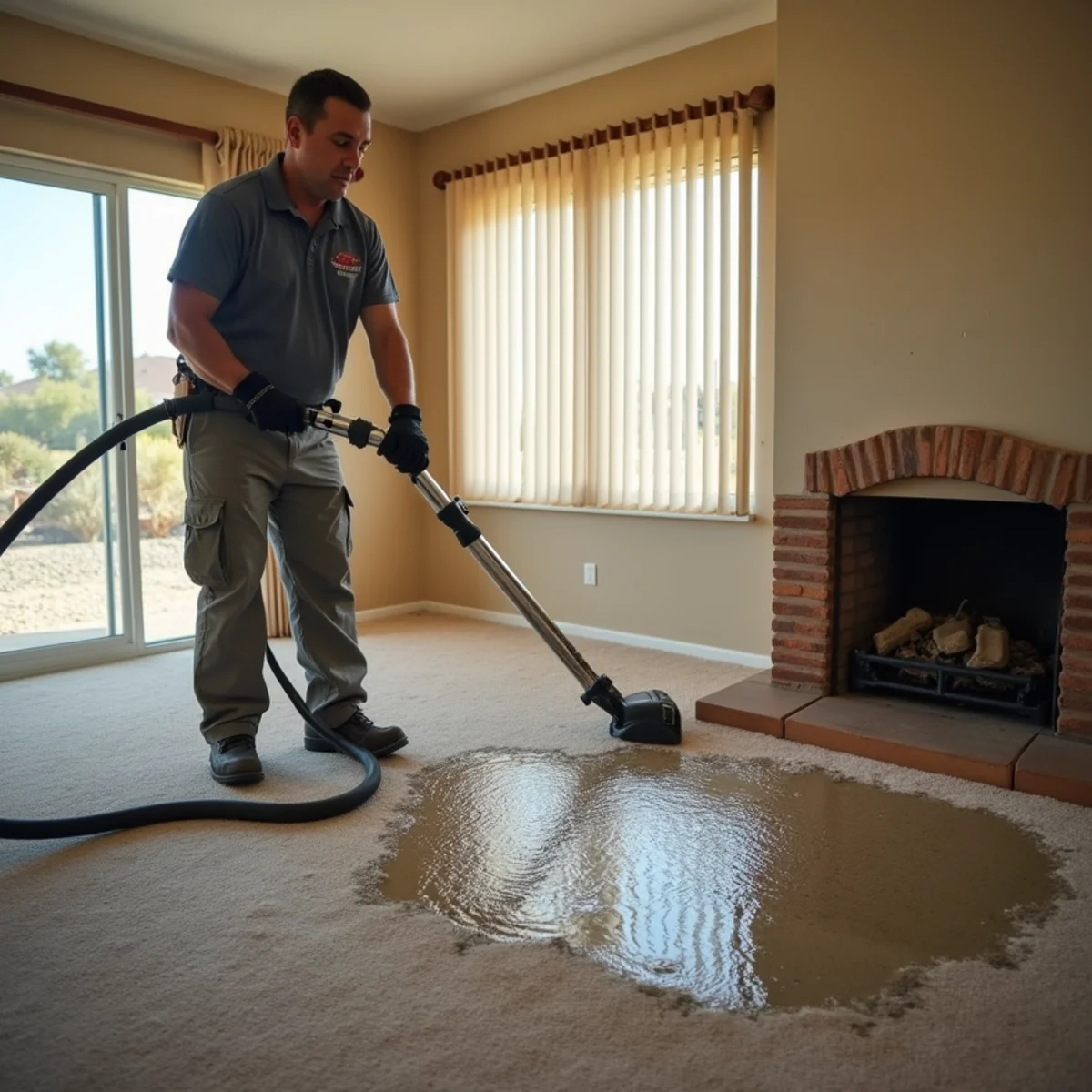
Truck-mounted extraction for standing water, weighted passes over carpet and pad, then meters and thermal imaging to define the real wet perimeter. You get a marked-up floor plan on day one.Structural drying against a calculated load
Air movers and LGR dehumidifiers sized to affected cubic footage and material class, with readings taken and logged every day. Equipment comes out when the numbers meet the dry standard, not on a schedule.Cleaning, antimicrobial treatment and containment where needed
Affected surfaces cleaned and treated to stop microbial growth. Category 2 and 3 losses get sealed containment, negative air and HEPA filtration before anyone opens a wall.Full reconstruction to pre-loss condition
Drywall, texture matched to your tract, paint carried to a natural break, baseboard, flooring and cabinetry. The repair should not be visible, and if we cannot make something disappear we tell you before we start rather than after.
What makes water damage different in Menifee
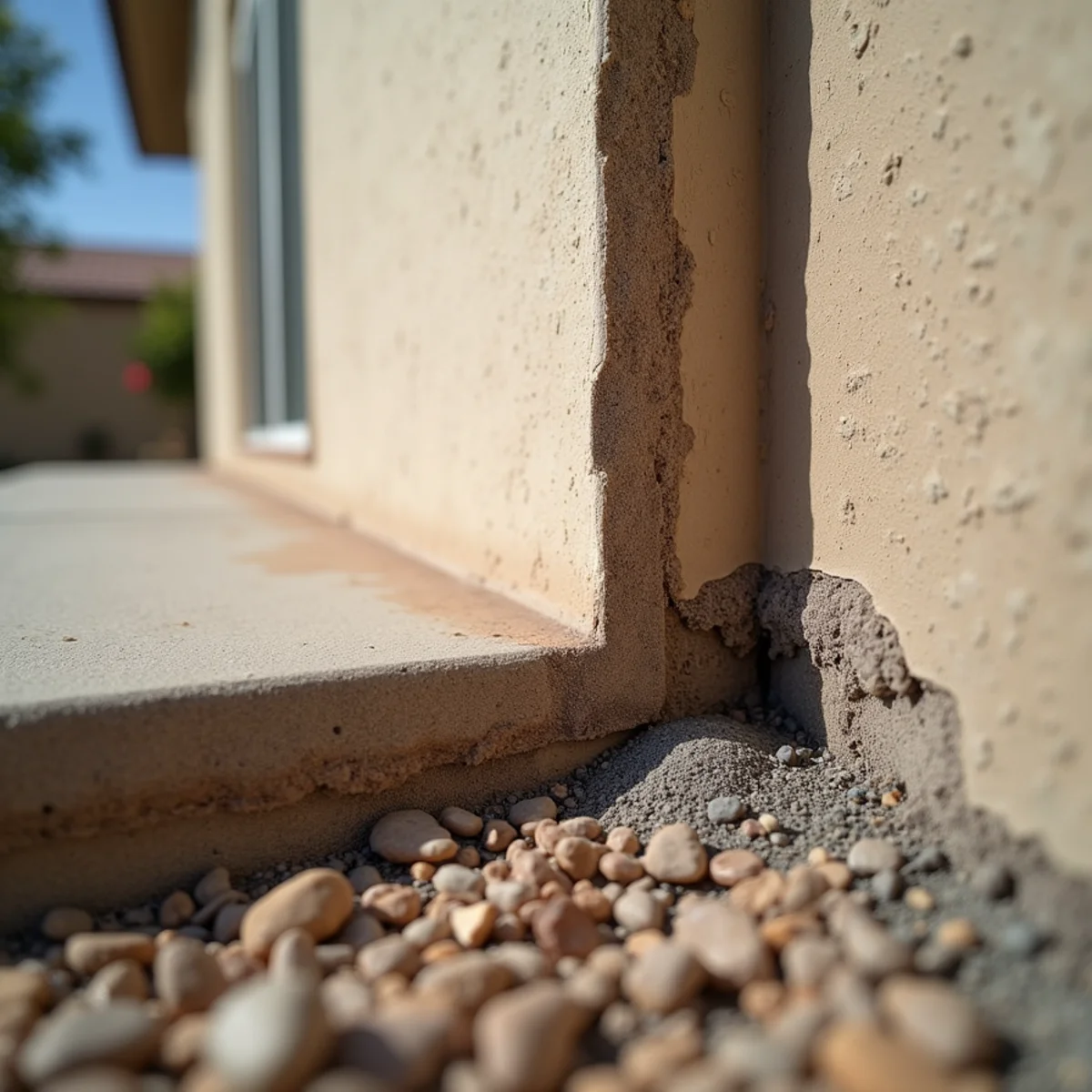
Menifee was built in waves. The Quail Valley and Homeland tracts came first in the 1970s and 1980s, Menifee Lakes and Sun City filled in through the 1990s, and Heritage Lake, Paloma Valley, and Audie Murphy Ranch followed through the 2000s. That means the failure we walk into is usually predictable from the address alone: galvanized supply line in the older pockets, pinholed copper under the slab in the mid-era tracts, and burst braided hoses or split condensate pans in the newest ones.
The water itself is the other half of the story. Eastern Municipal Water District draws from a brackish groundwater basin — mineral-rich enough that EMWD runs dedicated desalination plants to treat it, including the Menifee Desalter that has been in service since 2002 and the Perris I and II desalters north of town. Reverse osmosis handles what reaches the tap, but the minerals still work on your plumbing: scale in the water heater, deposits at every valve seat, and corrosion that turns a 25-year-old copper line into a pinhole waiting to happen.
Then there is the climate. Summer highs over 100°F drive hard on air conditioners, and a clogged condensate line is one of the most common ceiling failures we see in this city. Santa Ana winds lift roofing between September and April. Monsoon cells in late summer dump more rain in twenty minutes than the hardpan can absorb. We plan the drying around all of it.
How a Menifee water damage restoration job actually runs
Nothing here is a mystery, and nothing gets billed that you have not seen on the scope first.
- 1
1. Live call and dispatch
A person answers, not a service. We ask where the water is coming from, whether it is safe to reach the shutoff, and where you are in the house. A truck leaves while we are still talking.
- 2
2. Inspection and moisture mapping
We meter every affected wall, floor, and cavity and shoot the area with a thermal camera to find moisture behind finishes. You get a marked-up floor plan showing exactly what is wet and how wet it is.
- 3
3. Extraction
Truck-mounted units pull standing water first. Weighted extraction tools press water out of carpet and pad; portable units handle upstairs rooms and tight closets where the hose reach is limited.
- 4
4. Structural drying
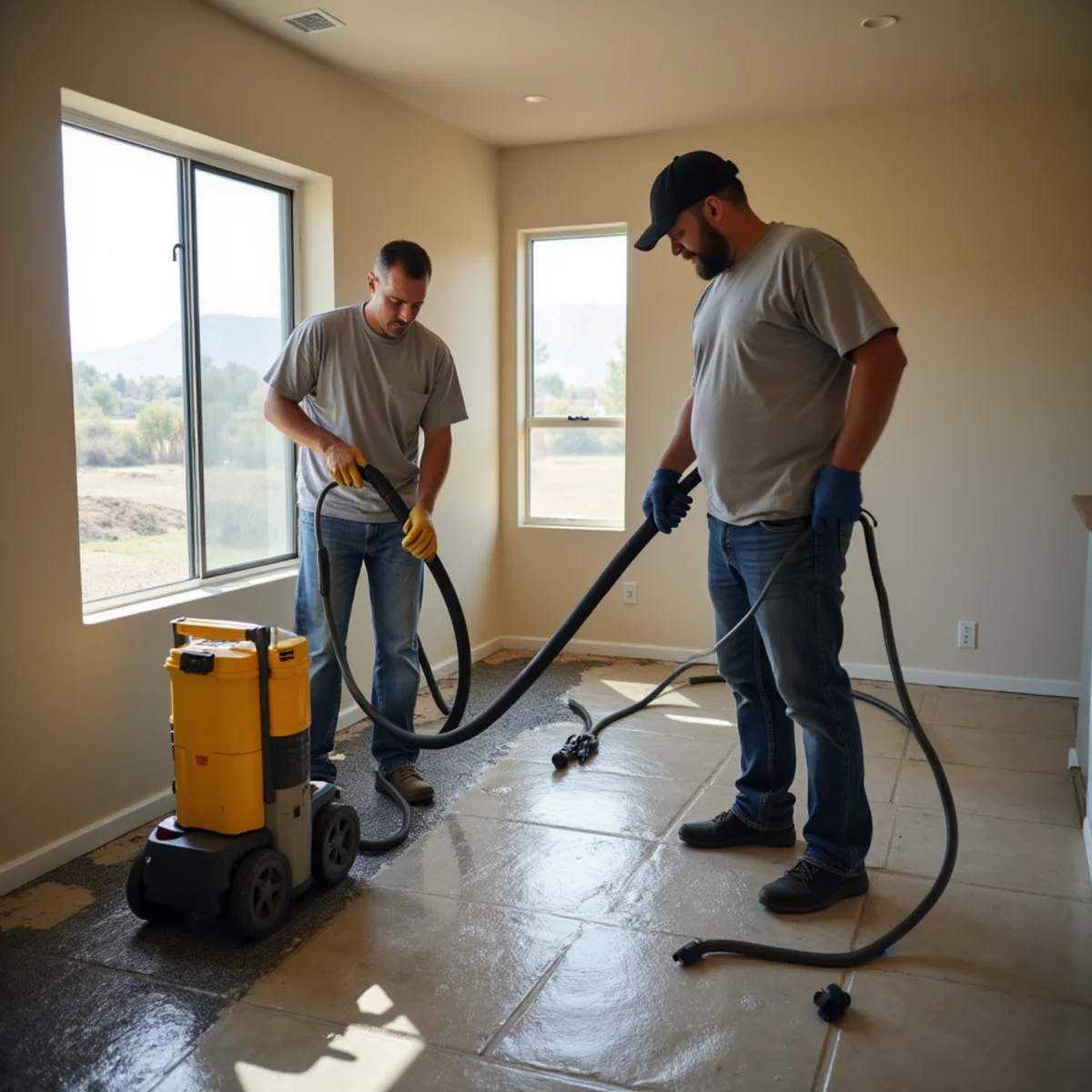
Air movers and LGR dehumidifiers are placed to a calculated load, not eyeballed. We take readings every day, log them, and adjust equipment until the wet materials match the dry standard for your home.
- 5
5. Cleaning and antimicrobial treatment
Affected surfaces are cleaned and treated to stop microbial growth. Category 2 and 3 losses get containment, negative air, and HEPA filtration before anyone opens a wall.
- 6
6. Repair and rebuild
Drywall, texture, paint, baseboard, flooring, and cabinetry go back in. We match the standard tract-home textures used across Menifee so the repair does not read as a patch.
What we actually bring, and what each thing is for
You are entitled to ask what is running in your house and why. Ask any restoration company to name their drying equipment before work starts — the answer tells you a great deal.
Finding the water
Pin and non-invasive moisture meters for readings, and thermal imaging cameras to spot the temperature signature of moisture behind finishes. Thermal shows us where to meter; the meter is what confirms it. Anyone selling thermal imaging as standalone proof is overselling it.
Getting it out
Truck-mounted extraction units for bulk volume, portable units for second floors and tight closets where hose reach is limited, and weighted extraction heads that compress carpet pad and pull out what it is holding. That last tool is what saves carpets.
Drying the structure
Commercial air movers placed at a shallow angle along wet surfaces to drive evaporation, and low-grain refrigerant dehumidifiers sized to the calculated load so the moisture actually leaves the building through a drain line instead of moving to another room.
Air quality and contamination control
HEPA air scrubbers and negative air machines for Category 2 and 3 work and for any mold remediation, plus EPA-registered antimicrobial and disinfectant treatments applied to affected surfaces.
Documenting it for your claim
Photo and video documentation from the first minute, moisture mapping of the affected area, and daily readings logged against a dry standard taken from unaffected material in your own home. You get that record, and so does your adjuster.
Clean, gray, or black — the category decides everything
Category is set by where the water came from, not by how it looks. Perfectly clear water from a toilet that held waste is Category 3. It determines what protective equipment we work in, whether the room gets sealed off, and which of your materials can stay in the house.
1Category 1 — clean water
A burst copper supply line, a failed water heater, an overflowing sink. Low health risk at the moment it escapes, and most materials are salvageable. The catch is that it does not stay Category 1: contact with flooring, dust and building materials degrades it to Category 2 in roughly 48 hours, and in Menifee's warm interiors that is the fast end of the range rather than the slow one.
2Category 2 — gray water
Dishwasher or washing machine discharge, a shower overflow, a failed sump. It carries detergent, food residue and bacteria, enough to make someone unwell on contact or ingestion. We work in protective equipment, treat every affected surface with an EPA-registered antimicrobial, and remove the carpet pad as a matter of course. This is where most Menifee appliance failures land.
3Category 3 — black water
Sewage, a toilet overflow containing waste, or storm flooding that has crossed soil and streets. It carries pathogens, and it is a health matter rather than a cleaning one. Every porous material it touched comes out — carpet, pad, insulation, particle board, the lower courses of drywall — because none of them can be reliably disinfected in place. The area is sealed under containment with negative air pressure before anyone starts.
| Category | How we work it | What comes out of the house | Containment |
|---|---|---|---|
| Category 1 — clean | Standard extraction and drying, no containment needed | Carpet pad usually; carpet itself usually saved | Not required |
| Category 2 — gray | Protective equipment, EPA-registered antimicrobial on all affected surfaces | Pad always, affected drywall often cut back, carpet case by case | Sometimes, depending on spread |
| Category 3 — black | Full PPE, regulated disposal, verified sanitization before drying begins | Every porous material the water touched, no exceptions | Always — sealed poly barriers and negative air |
What water damage restoration costs in Menifee
No restoration company can quote a house sight unseen, and any that does is guessing. Here is what genuinely drives the number, so you can read an estimate — ours or anyone else's — and know what you are looking at.
Water category
Clean water from a supply line runs roughly $3–$4 per square foot to mitigate. Gray water from a dishwasher or washer runs about $4–$6.50. Category 3 sewage runs $7 or more because it requires containment, PPE, and disposal of porous materials.
How much area is wet — and how deep
Square footage matters less than what the water got into. A 200 sq ft spill on tile dries in days. The same volume that reached two wall cavities and a stair stringer is a much bigger scope.
How long it sat
Water found in an hour is a mitigation job. Water that ran behind a Sun City vanity for three weeks while the owners were away is a mold job, and the price reflects the containment and demolition that follows.
Mitigation versus rebuild
Drying is the cheaper half. Putting the house back — drywall, texture, flooring, cabinetry — typically runs $20–$37 per square foot of affected area, and it is a separate line on the estimate for a reason.
Why hire one company for the whole loss
Most of what goes wrong in a water damage job happens in the seams — between the mitigation company and the rebuild contractor, between the first estimate and the supplement, between day one and day six. These are the seams we close.
A written scope before anything is torn out
You see the estimate, the affected-area measurements and the drying plan before demolition starts. If the number changes later it is because a reading changed, and we show you the reading. Nobody should discover the price of their restoration after the drywall is already in the skip.
We work the supplement, not just the first estimate
Adjusters scope from what is visible on the day they walk it, and hidden damage is by definition not visible then. When drying exposes wet sheathing or a second wet room, we document it and file the supplement ourselves. That argument is ours to have, not yours.
Equipment is twenty minutes away on day four
A dehumidifier that quits mid-job, or a room drying slower than the calculation predicted, is a same-day fix when the stock sits on Palomar Road. Companies working Menifee out of a yard in another county order it for the next morning, and your dry-out gains a day for no reason.
One number to call for the entire loss
The person who scoped your job is the person who answers on day six when you want to know why a fan is still running in the hallway. You are not routed between a mitigation office, a rebuild office and a billing office that each hold one third of your file.
What we hand your adjuster
Most homeowner advice about claims is about what you should do. This is the other half — what your restoration company is supposed to produce, and what to ask for if they do not offer it.
- 1A moisture map of the affected area, produced at the first inspection, showing what is wet and how wet before anything is moved.
- 2Photographs of the source, the standing water and every affected room, taken before extraction starts rather than after.
- 3Daily moisture readings logged against a dry standard taken from unaffected material in your own home — not a generic target number.
- 4A written, itemised scope separating mitigation from reconstruction, so you can see which line is which and so can the carrier.
- 5Direct billing to your insurer, and a supplement submitted with documentation if hidden damage surfaces once material is opened up.
Frequently asked questions
How fast can you get to my house in Menifee?
We dispatch 24/7 and average about 30 minutes to addresses inside Menifee. Menifee Lakes, Paloma Valley, and the Newport Road corridor are typically the fastest; Quail Valley, Canyon Hills, and the Romoland end of Palomar run a few minutes longer depending on traffic on the 215.
Do I need to call my insurance company before I call you?
No — call us first. Your policy requires you to prevent further damage, and starting extraction is exactly that. We document everything with photos, moisture maps, and daily drying logs, then submit it to your adjuster and bill the carrier directly.
How long does drying take?
Most Menifee homes dry in three to five days. Slab-on-grade construction and low outdoor humidity work in our favor. Hardwood, dense insulation, and multi-layer flooring take longer. We do not pull equipment until meter readings match the dry standard for your structure — see how long water damage restoration takes for a day-by-day breakdown.
Will my homeowners policy cover this?
Sudden and accidental damage — a burst supply line, a failed water heater, a split washer hose — is generally covered. Gradual damage from a slow leak or deferred maintenance generally is not, and neither is rising flood water without a separate NFIP or private flood policy. We walk through the distinctions in does homeowners insurance cover water damage in Menifee.
Can I just run my own fans instead?
Box fans move room air. They do not remove moisture, and in a wall cavity they mostly relocate it. Without a dehumidifier pulling water out of the air, you are running a humidifier. That is how a small leak becomes a mold remediation three weeks later.
Do you serve Sun City, Quail Valley, Romoland, and Canyon Lake?
All four. Romoland is under 15 minutes from our Palomar Road shop, Sun City and Quail Valley run 15 to 25, and Canyon Lake is 20 to 30 plus gate authorization — tell us the gate procedure when you call and we start it while the truck is loading. We also cover Menifee Lakes, Audie Murphy Ranch, Heritage Lake, Paloma Valley, Canyon Hills and Homeland.
Can mold really start growing within 24 to 48 hours?
Yes, and the dry climate does not protect you the way people assume. Mold needs a wet material and roughly 24 to 48 hours. Menifee interiors stay warm even with the air conditioning running, which is the ideal condition, and enclosed spaces — wall cavities, attics, under cabinets — have no airflow regardless of how dry it is outside. Treat that window as the outside edge, not the target.
Where we provide water damage restoration in Menifee
We run this service across every Menifee neighborhood and out into the surrounding cities. Response times are honest drive-time bands from our shop on Palomar Road, not marketing numbers.
- Water Damage Restoration in Menifee, CA
- Water Damage Restoration in Menifee Lakes
- Water Damage Restoration in Audie Murphy Ranch
- Water Damage Restoration in Heritage Lake
- Water Damage Restoration in Quail Valley
- Water Damage Restoration in Sun City, Menifee
- Water Damage Restoration in Paloma Valley
- Water Damage Restoration in Canyon Hills
- Water Damage Restoration in Romoland
- Water Damage Restoration in Homeland
- Water Damage Restoration in McCall Boulevard
- Water Damage Restoration in Newport Road