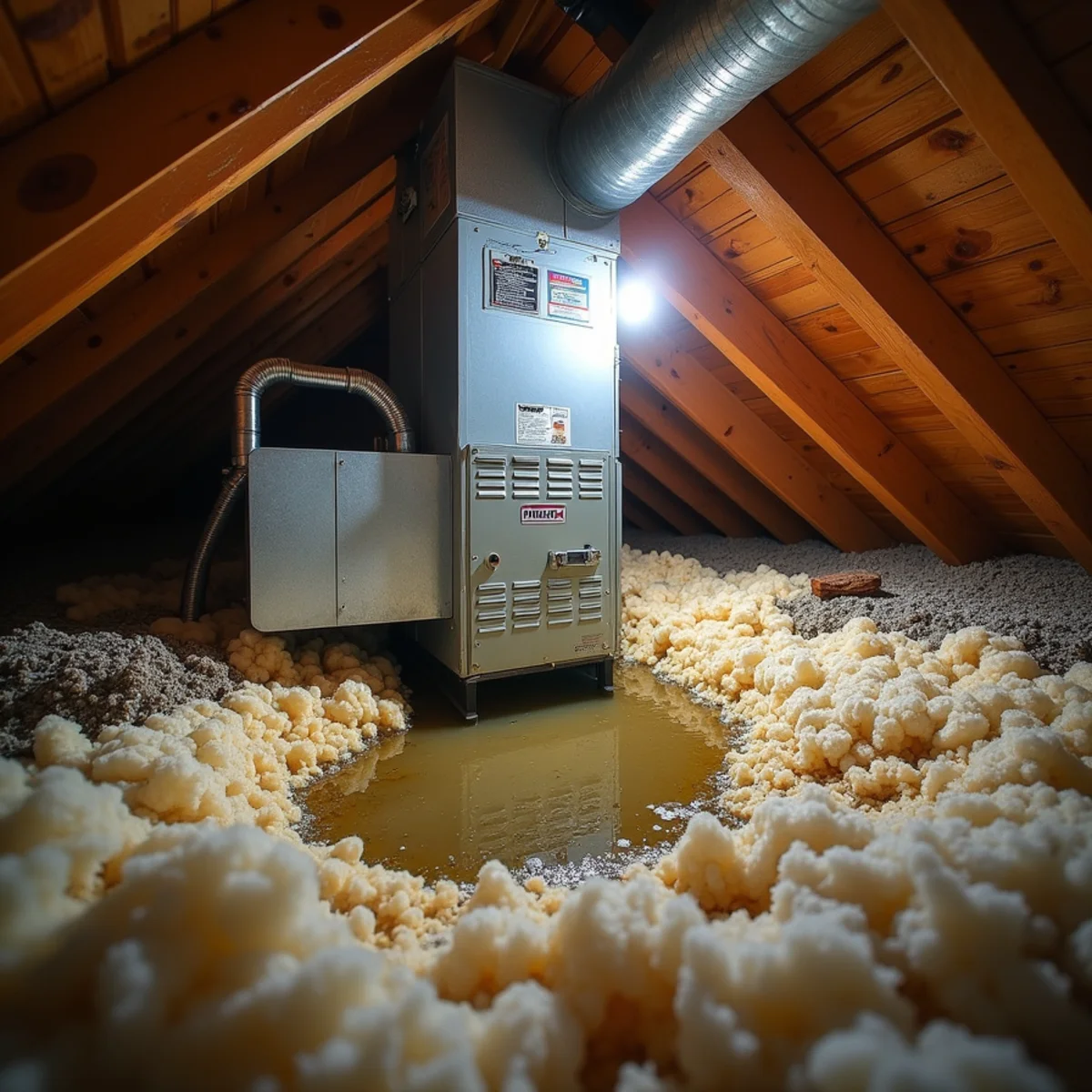
Mold remediation in Menifee means three things done together: containing the area so removal does not spread spores, removing the affected material properly, and fixing the moisture source behind it. Skip the third and you will be doing this again next year. Most Menifee mold is in attics, downstream of an air conditioner condensate overflow.
What is different here is where it grows. Not on bathroom walls, mostly. It grows in attics under air handlers, inside wall cavities behind slow slab leaks, under kitchen sink bases, and beneath flooring over a wet slab — the enclosed spaces where a small amount of water got in and nothing could dry it out.
Remediation means three things: contain it so removal does not spread spores, remove the affected material properly, and fix the moisture source. Skip the third and you will be doing this again next year.
How mold shows up in a Menifee home
It is usually smelled before it is seen, and by the time it is seen it has been growing a while.
A musty smell that returns when the house is closed up
The most reliable early sign. Odor that disappears with the windows open and comes back when you close them is coming from an enclosed cavity.
Dark staining on attic sheathing near the air handler
Very common here. Condensate overflow and duct condensation wet the sheathing above the ceiling, and the attic stays warm enough year-round for growth.
Discoloration under a sink or at a cabinet toe kick
A slow supply or drain leak inside a closed cabinet is an ideal growth environment — dark, still, and consistently damp.
Symptoms that improve when you leave the house
Congestion, irritated eyes, or a cough that eases at work and returns at home is worth investigating, especially alongside any other sign here.
White chalky deposits — often not mold
Efflorescence on concrete and mineral staining from hard water get mistaken for mold constantly in this valley. A proper inspection saves people a lot of unnecessary worry.
What a mold remediation job includes
The sequence follows accepted industry standards. Containment is first, always.
Moisture source identification before anything is touched
Thermal imaging, moisture meters and where warranted sampling. Without finding the water, remediation is temporary and expensive. We also rule out the two things mistaken for mold here constantly: hard-water mineral staining and efflorescence on concrete.Sealed containment with negative air pressure
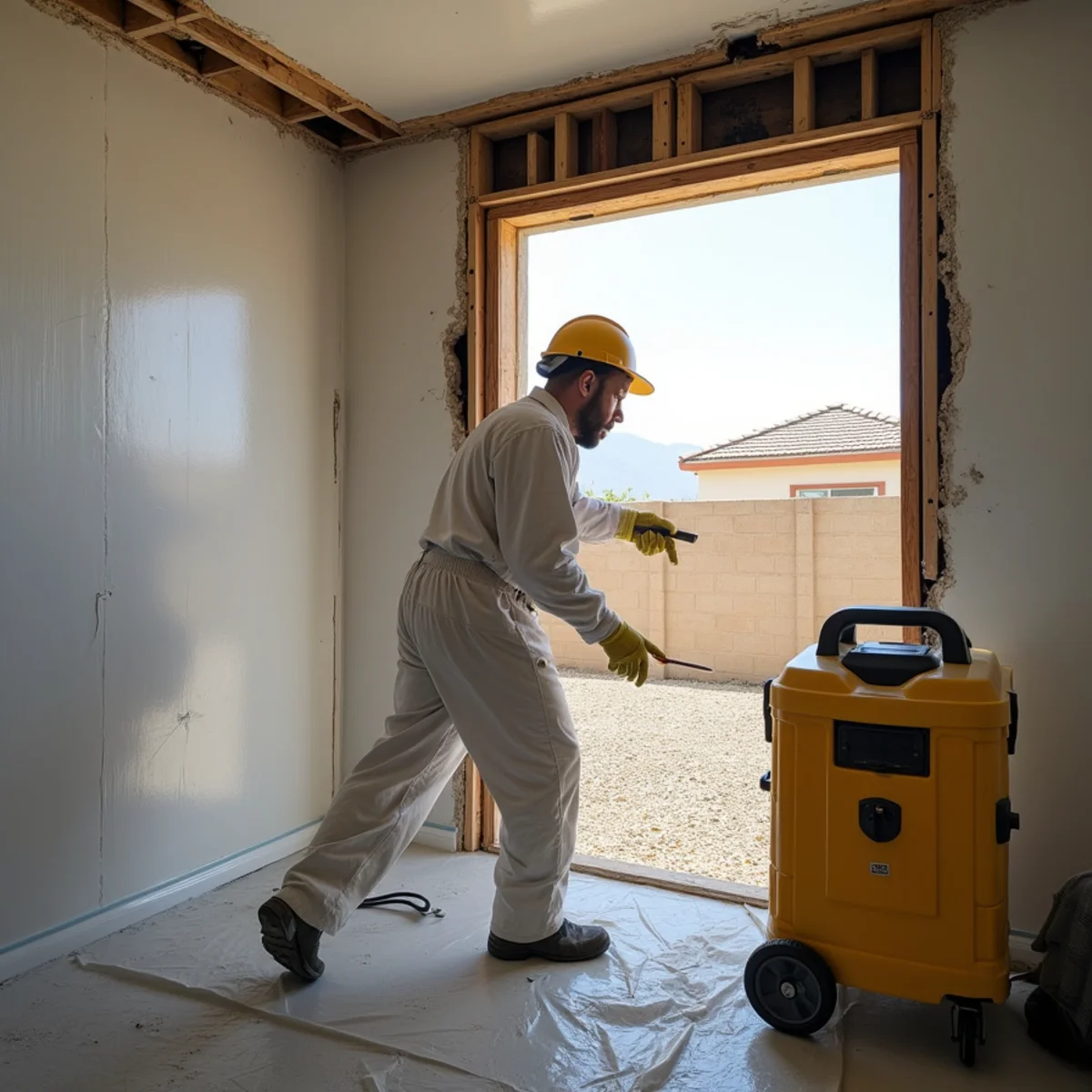
Poly barriers around the work area under negative pressure, so spores disturbed during removal cannot migrate. HEPA air scrubbers run continuously throughout the work rather than at the end.Removal of affected porous material
Drywall, insulation and carpet pad with growth are cut out and bagged inside containment. Semi-porous framing is HEPA-vacuumed, wiped and treated. Everything leaving containment is sealed before it exits.The moisture fix, then the rebuild
Clear the condensate line, repair the leak, correct the ventilation — whatever caused it. Then drywall, insulation, texture and paint. The repair is the last step, not the first.
Where mold actually grows in this climate
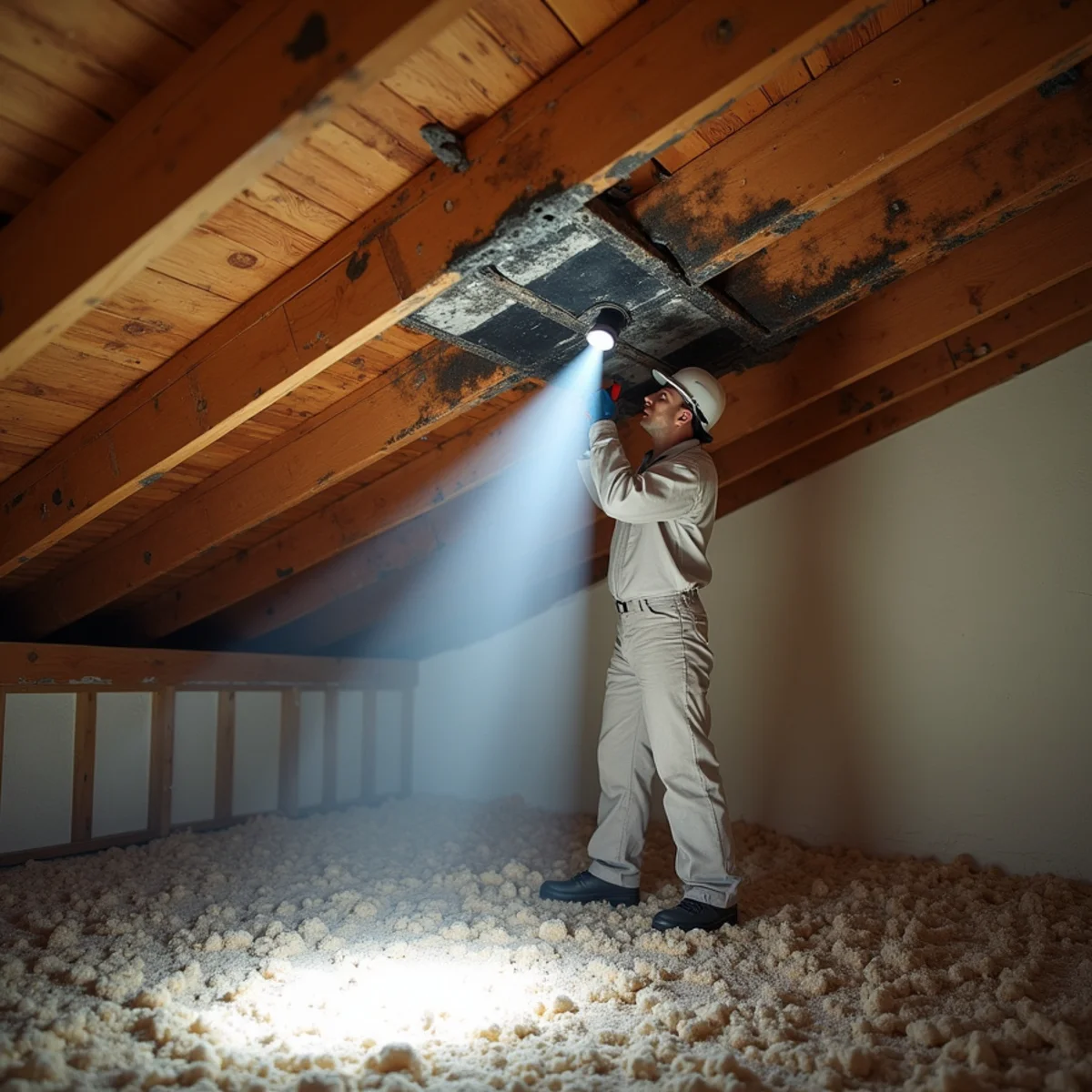
Menifee's outdoor air is dry for most of the year, and that genuinely suppresses surface mold on exposed walls. The problem is enclosed spaces, where outdoor humidity has no influence at all.
Attics are the leading location, and air conditioning is the reason. Every summer hour the AC runs, the coil produces condensate. When the drain line clogs — from dust, biological growth, or mineral scale — the pan overflows into insulation and sheathing. The attic is warm, dark, and now damp, which is everything mold requires. In 1990s tract homes with older secondary pans and no working float switch, this happens silently and repeatedly.
Wall cavities are second, usually downstream of a slab leak. Copper pinholes at the 25-to-40-year mark, water wicks up the bottom plate and drywall, and it grows inside the wall while the surface looks perfect.
Evaporative coolers deserve a mention too. They are still in service on some older Sun City and Quail Valley homes, and they deliberately add moisture to indoor air. Combined with a poorly ventilated attic, that changes the calculation in a house that would otherwise be dry.
One more local wrinkle: hard water leaves white mineral deposits that look alarming and are harmless. We test rather than assume, because telling someone they have mold when they have limescale is not a favor.
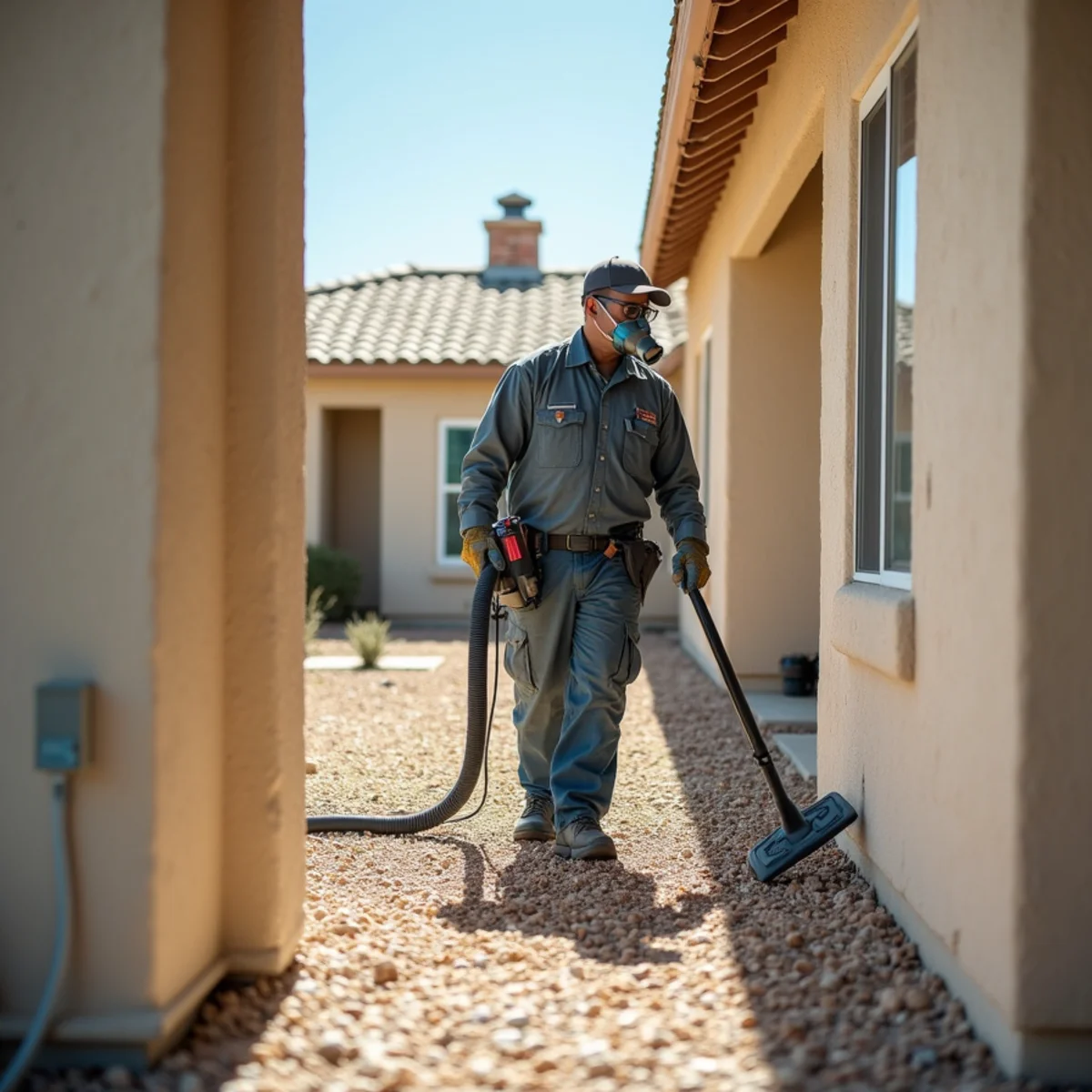
How professional mold remediation works
The sequence follows accepted industry standards. Containment first, always — removing mold without it is how a localized problem becomes a whole-house one.
- 1
1. Inspection and moisture source identification
We find the water before we touch the mold. Thermal imaging, moisture meters, and where warranted sampling. Without the source, remediation is temporary.
- 2
2. Containment
Sealed poly barriers around the work area with negative air pressure, so spores disturbed during removal cannot migrate into clean parts of the house.
- 3
3. HEPA air filtration
Air scrubbers run throughout the work, capturing airborne spores continuously rather than letting them settle elsewhere.
- 4
4. Remove affected materials
Porous materials with growth — drywall, insulation, carpet pad — are cut out and bagged inside containment. Semi-porous framing is HEPA-vacuumed and treated.
- 5
5. Clean and treat
Remaining surfaces are HEPA-vacuumed, wiped, and treated with an antimicrobial. Everything leaving containment is bagged and sealed before it exits.
- 6
6. Fix the moisture, then rebuild
Clear the condensate line, repair the leak, correct the ventilation — whatever caused it. Then drywall, insulation, texture, and paint go back.
What mold remediation costs in Menifee
Cost tracks the size of the containment and the amount of material removed, not the visible patch.
Affected area
A small contained area under a sink is a modest job. An attic plane above several rooms requires large containment, more equipment, and more disposal.
Where it is
Attic work in Menifee summer heat is slow, physically limited work. Wall cavities require opening and rebuilding finished surfaces. Both cost more than an open, accessible area.
Testing
Pre- and post-remediation sampling adds cost and is worth it in a real estate transaction or a health-related situation. Not every job needs it, and we will say so.
The underlying repair
Clearing a condensate line is minor. Repairing a slab leak or re-ventilating an attic is a separate scope — and it is the part that determines whether the mold returns.
Why call us for mold
Mold work is easy to do badly and expensive to do twice. These are the things that decide which one you get.
We look for the water first
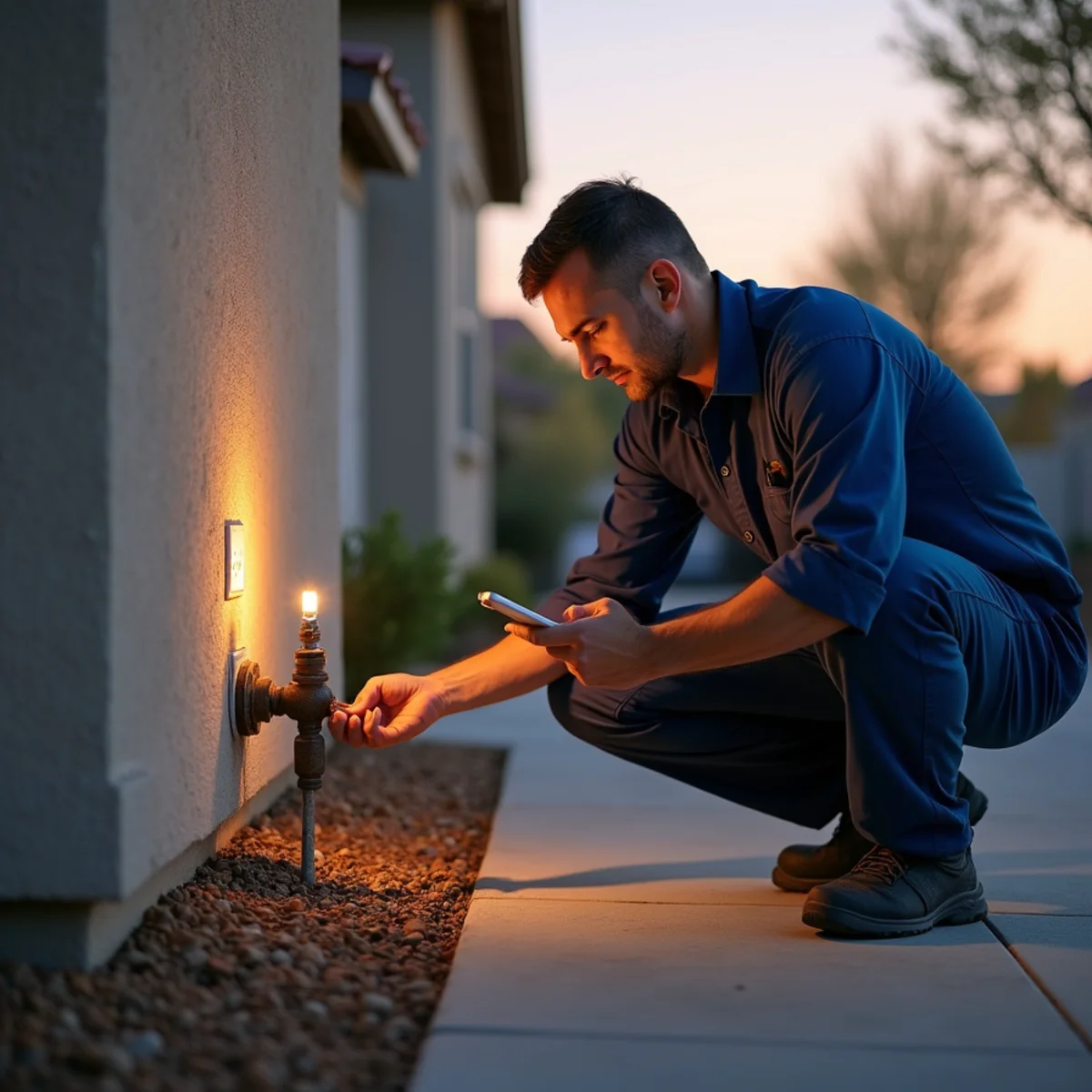
Cleaning visible growth without finding the source is the single most common failure in this trade. In Menifee the source is usually an AC condensate overflow, a slow slab leak, or an irrigation break against a foundation.
We will tell you when it is not mold
Hard water leaves white mineral deposits and concrete produces efflorescence, both of which look alarming and are harmless. Telling someone they have mold when they have limescale is not a favour, and we test rather than assume.
Honest guidance on testing
If growth is visible and the source is obvious, testing mostly confirms what we can already see and the money is better spent on remediation. It earns its cost for a sale, a claim, or a health situation — we will say which applies to you.
We explain the insurance sublimit up front
Mold from a covered sudden loss is often covered with a sublimit around $5,000 to $10,000; mold from a long-term leak is usually excluded outright. Documenting the original water event is what decides it.
Frequently asked questions
Do I need mold testing?
Not always. If growth is visible and the moisture source is obvious, testing mostly confirms what we can already see, and the money is better spent on remediation. Testing earns its cost when you need documentation for a sale or a claim, when someone in the house has health symptoms, or when we suspect hidden growth we cannot access.
Can I use bleach on it?
On a hard, non-porous surface like tile, bleach is fine. On drywall or wood it is counterproductive — it is mostly water, so it soaks into the porous material, kills surface growth, and leaves moisture behind that feeds regrowth from the roots. And it does nothing about what is inside the wall.
How fast does mold grow after water damage?
Standard guidance is 24 to 48 hours on wet material. In Menifee that is the fast end, not the slow one, because interior temperatures stay warm. This is exactly why we push so hard on same-day extraction — see what to do immediately after water damage.
Why does my attic have mold when the house is dry?
Almost always the air conditioner. A clogged condensate line overflows the drain pan into attic insulation and sheathing, and the attic is warm and unventilated enough to support growth. Fixing the mold without clearing that line just resets the clock — see AC condensate drain line maintenance.
Why does my attic have mold when the rest of the house is dry?
Almost always the air conditioner. Every summer hour the system runs, the coil produces condensate that drains through a small line. That line clogs with dust, biofilm and mineral scale, the drain pan overflows, and the water lands in attic insulation and sheathing. A Menifee attic is warm, dark and unventilated enough to support growth year-round. Remediating without clearing that line simply resets the clock.
Where we provide mold remediation in Menifee
We run this service across every Menifee neighborhood and out into the surrounding cities. Response times are honest drive-time bands from our shop on Palomar Road, not marketing numbers.
- Mold Remediation in Menifee, CA
- Mold Remediation in Menifee Lakes
- Mold Remediation in Audie Murphy Ranch
- Mold Remediation in Heritage Lake
- Mold Remediation in Quail Valley
- Mold Remediation in Sun City, Menifee
- Mold Remediation in Paloma Valley
- Mold Remediation in Canyon Hills
- Mold Remediation in Romoland
- Mold Remediation in Homeland
- Mold Remediation in McCall Boulevard
- Mold Remediation in Newport Road