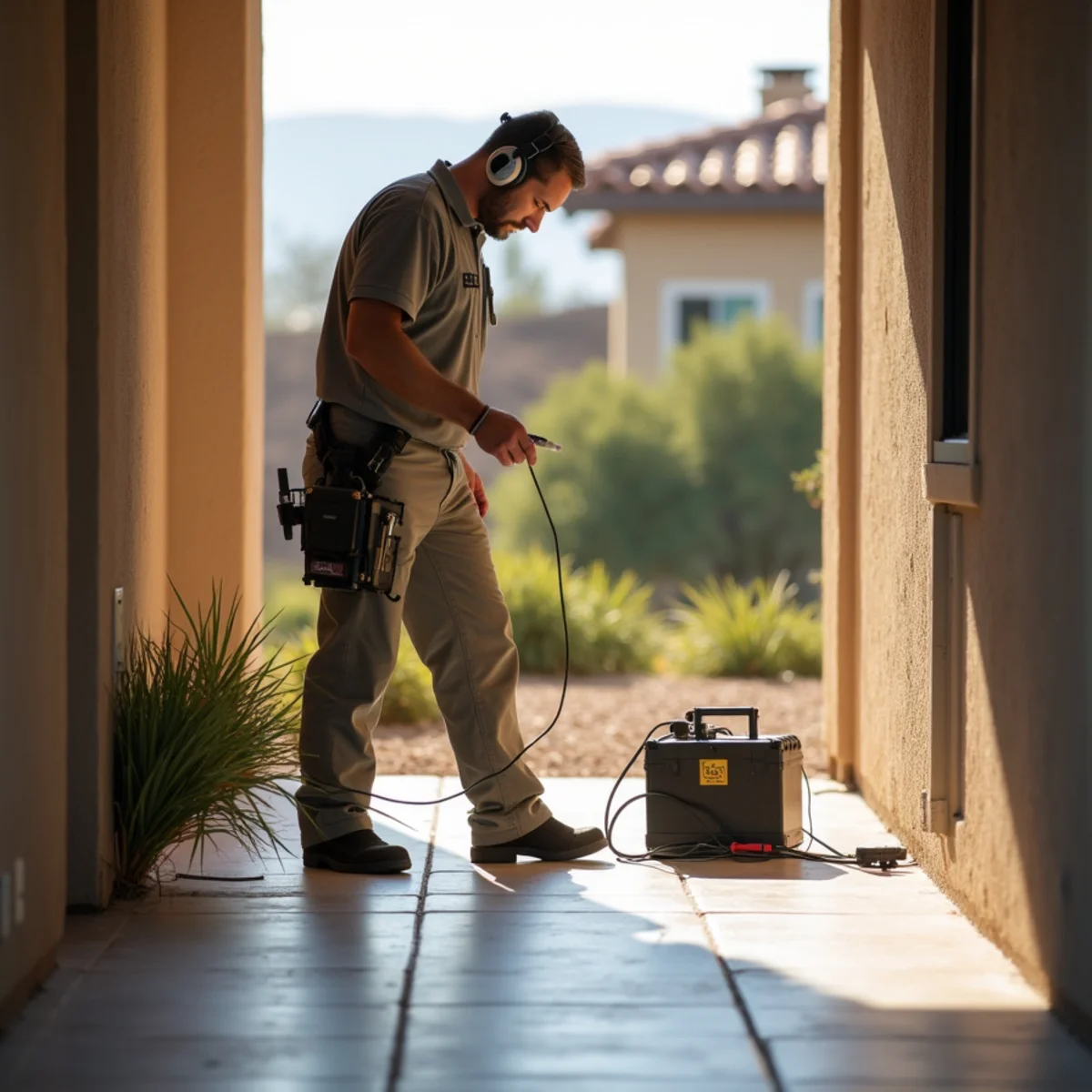
Leak detection and moisture inspection in Menifee finds hidden water without opening walls — acoustic listening for slab leaks, thermal imaging for moisture behind finishes, and meters to confirm it. Finding a leak early is dramatically cheaper than restoring what it does, and it is often the difference between a covered claim and one denied as gradual damage.
Finding it early is dramatically cheaper than restoring what it does. It is also the difference between a covered claim and a denied one — carriers pay for sudden damage and decline gradual damage, and a leak that ran for two months is squarely in the second category.
We locate leaks without tearing your house apart: acoustic listening, thermal imaging, moisture meters, and pressure isolation. Then we tell you exactly what we found, in writing.
When to book an inspection
Any one of these is worth an hour of a technician's time. Together, they are a leak you have not found yet.
A water bill that jumped with no change in usage
The most objective signal there is. A pinhole under a slab can waste hundreds of gallons a day and cost more in water than the inspection costs to find.
A warm patch on the floor
Localized floor warmth means the hot water line under the slab is leaking. It is one of the few slab leak signs you can detect with a bare foot.
A musty smell with no visible water
Odor without a source almost always means moisture in an enclosed space — a wall cavity, under a cabinet, or in the attic.
The meter moves with everything off
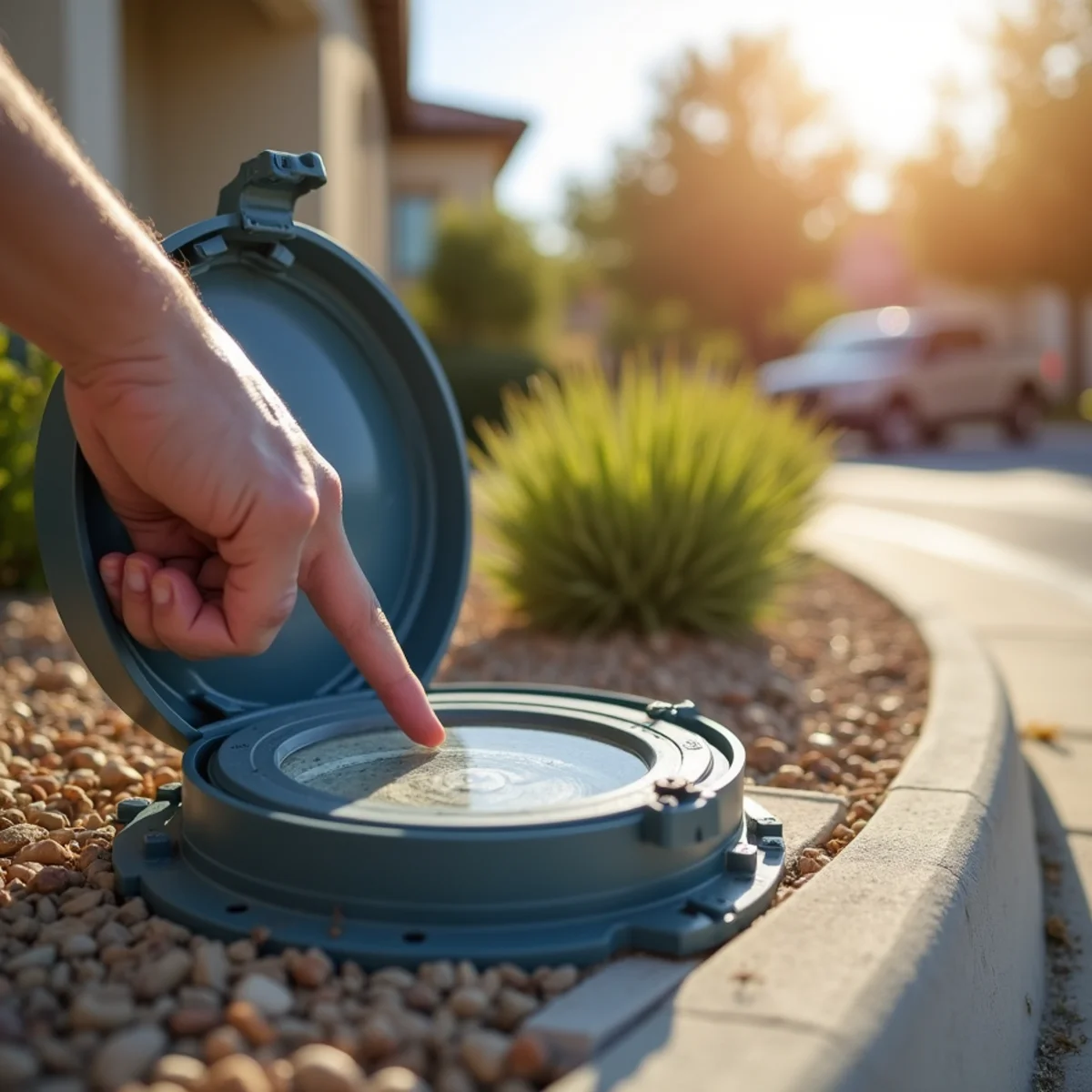
Shut every fixture and watch your EMWD meter. If the low-flow indicator is still turning, water is leaving the system somewhere.
Buying or selling a Menifee home
On a 30-year-old tract home with original copper, a moisture inspection is one of the highest-value pre-purchase checks available — and standard home inspections do not include thermal imaging.
What an inspection covers
Non-invasive first, always. Nothing gets opened until the evidence says exactly where to open it.
Meter test and pressure isolation
We confirm a leak exists and narrow it to supply, drain or irrigation by isolating sections and watching the meter. This alone eliminates most of the house before any equipment comes out of the van.Thermal imaging and moisture metering
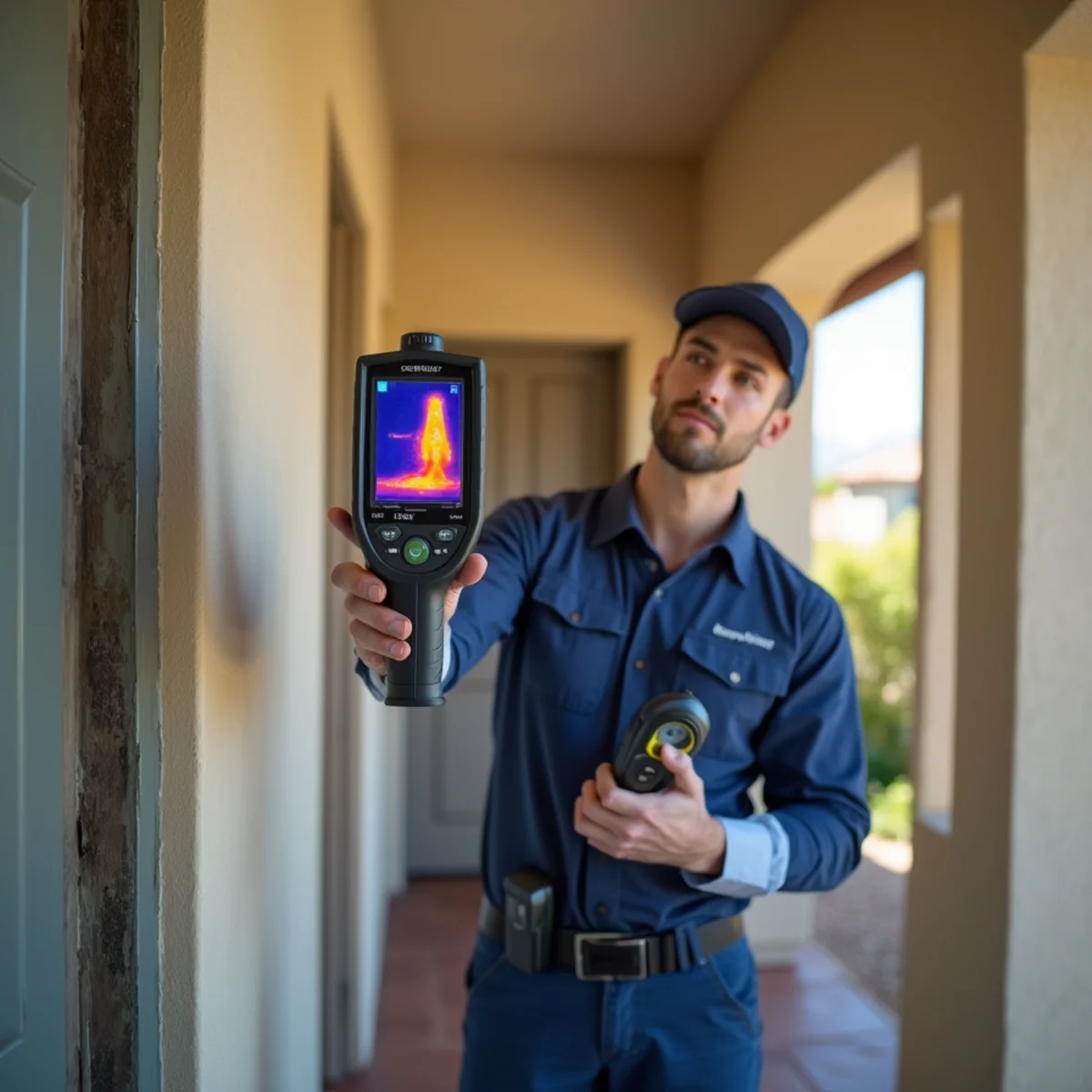
An infrared camera reveals the temperature differential of evaporative cooling behind finishes, then non-invasive and pin meters confirm depth and severity. Thermal shows us where to look; the meter is what proves it.Acoustic slab leak location
Ground microphones and amplification pick up the sound of pressurised water escaping under concrete and pinpoint it to a small area, so the floor is opened once rather than explored.A written report with imagery
Photos, thermal images, moisture readings and a clear recommendation. If nothing is wrong we tell you that and put it in writing — which is a genuinely good outcome and worth the visit.
What we look for in a Menifee home
The inspection is shaped by the address, because Menifee's housing stock is so clearly stratified by era.
In a 1970s or 1980s home in Quail Valley or Homeland, we are looking hard at supply lines, potentially galvanized, and at older drain connections with mature trees nearby. In a 1990s Menifee Lakes or Sun City home we are focused on original copper under the slab, water heaters well past a reasonable service life, and angle stops crusted with mineral. In a 2000s Heritage Lake or Paloma Valley home the likely candidates are shower pan failures, appliance connectors, and AC condensate systems. In 2010s Audie Murphy Ranch and Spencer's Crossing construction we are checking flashing details, exterior penetrations, and workmanship issues that surface in the first decade.
We check the AC condensate line and secondary pan on every summer inspection regardless of era, because that is such a frequent source here.
And we always check irrigation against the foundation. In this valley, a broken lateral will quietly saturate soil at the slab edge for months and nobody notices, because a green patch in a dry climate looks like good landscaping.
How we find a hidden leak
Non-invasive first, always. We do not open anything until the evidence says exactly where to open it.
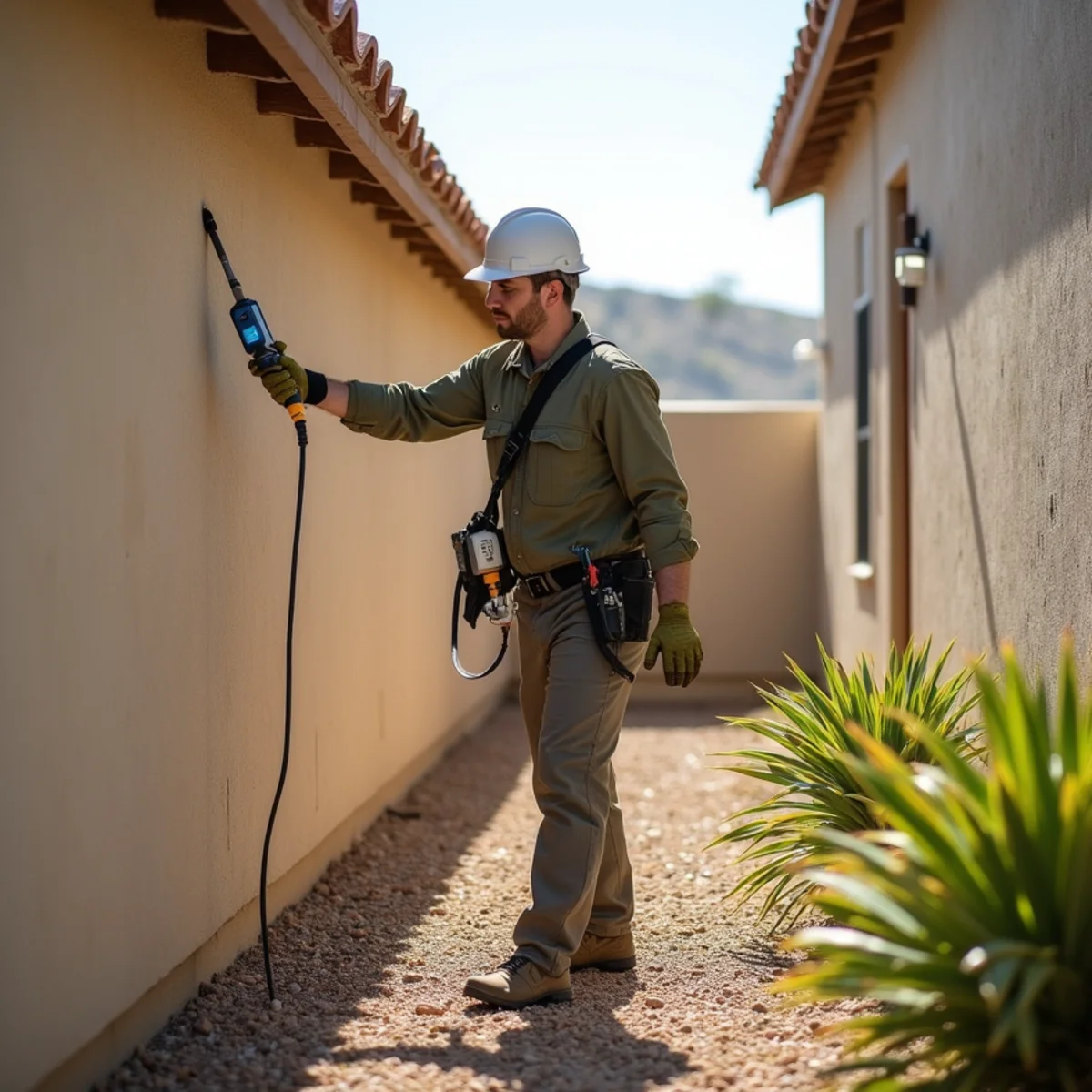
- 1
1. Meter test and pressure isolation
We confirm a leak exists and narrow it to supply, drain, or irrigation by isolating sections and watching the meter. This alone eliminates most of the house.
- 2
2. Thermal imaging
An infrared camera reveals temperature differentials from evaporative cooling behind finishes. It does not see water directly, but it shows us exactly where to place a meter.
- 3
3. Moisture metering
Non-invasive meters scan for elevated readings; pin meters confirm depth and severity at specific points. This is what turns a thermal anomaly into a confirmed wet area.
- 4
4. Acoustic leak location
For slab leaks, ground microphones and amplification pick up the sound of pressurized water escaping and pinpoint it to within a small area of concrete.
- 5
5. Camera inspection where needed
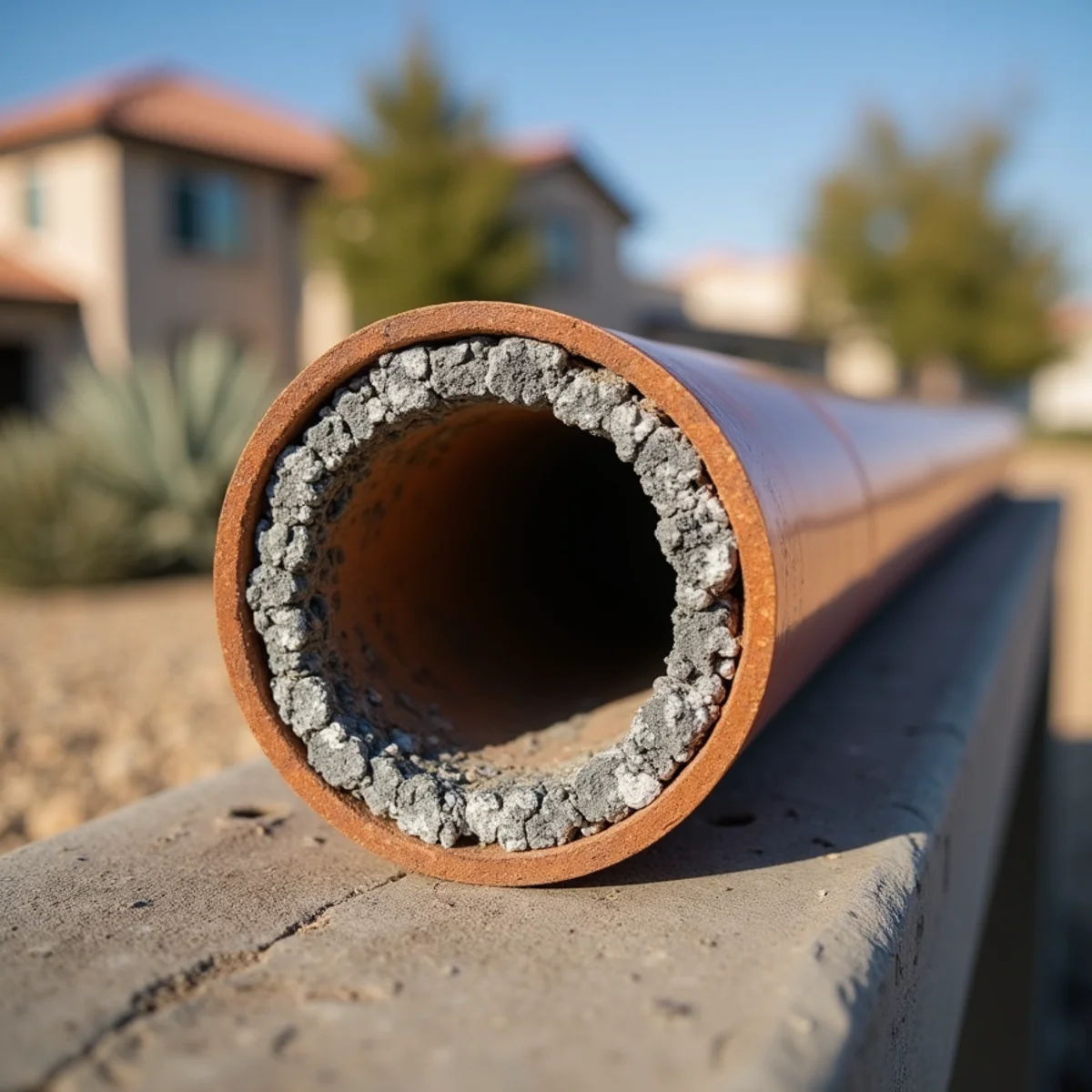
Drain and sewer lines get a camera run to find breaks, root intrusion, or scale buildup, with footage marked so you can see it yourself.
- 6
6. Written findings
You get a report with photos, thermal images, moisture readings, and a clear recommendation. If nothing is wrong, we tell you that too — and that is a good outcome.
What leak detection costs
Detection is a small, defined cost. Weighed against what an undetected leak becomes, it is the cheapest line item in this trade.
Scope of the inspection
A targeted look at one suspected area is quick. A whole-house moisture survey with full thermal imaging takes longer and costs more.
Detection method needed
A meter test and thermal scan is the standard. Acoustic slab leak location and sewer camera work are specialized services with their own equipment.
Access
Open floors and accessible walls are fast. Leaks under cabinetry, behind built-ins, or beneath a staircase take longer to isolate.
Documentation depth
A verbal walkthrough at the end of the visit is included. A formal written report with imagery for a claim or a real estate transaction is an add-on.
Why book an inspection here
Menifee's housing is stratified by era, so an inspection that knows the address is worth more than a generic one.
We inspect against your home's build era
A 1970s Quail Valley home gets checked for galvanized supply and root-intruded laterals. A 1990s Menifee Lakes home for slab copper and a long-overdue water heater. A 2010s Audie Murphy Ranch home for flashing details and appliance connectors.
We check the condensate line every summer visit
Regardless of what you called about. It is such a frequent source of hidden ceiling and attic moisture in this city that skipping it would be negligent.
We are honest about thermal imaging's limits
Infrared shows temperature differences — a stud, a duct or a shaded wall reads cool too. Anyone selling thermal imaging as standalone leak proof is overselling it. It tells us where to put a meter, and the meter decides.
The detection fee credits against the repair
If we find a leak and you have us do the restoration, the detection fee comes off the job. On an active covered loss, detection is generally part of the claim anyway.
Frequently asked questions
Can you find a leak without breaking anything?
That is the whole point of the equipment. Acoustic location, thermal imaging, and moisture meters let us narrow a slab leak to a small area before anything is opened. When we do open, it is one deliberate access point rather than exploratory demolition.
How do I check for a leak myself first?
Turn off every fixture and appliance that uses water, then look at your EMWD meter. Most have a small low-flow triangle or dial that spins with even a trickle. If it is moving with everything off, you have a leak. Note the reading, wait an hour, and read it again to confirm.
Is thermal imaging actually reliable?
It is reliable as a locator, not as proof. Infrared shows temperature differences, and evaporating water reads cool — but so does a stud, a duct, or a shaded exterior wall. It tells us where to put a moisture meter, and the meter is what confirms it. Anyone selling thermal imaging as standalone leak proof is overselling it.
Should I get an inspection before buying a Menifee home?
On anything built before about 2005, yes. Standard home inspections are visual and do not include thermal imaging or moisture metering. On a 30-year-old home with original copper under a slab, that gap is exactly where the expensive surprises live.
Should I get a moisture inspection before buying a Menifee home?
On anything built before roughly 2005, yes. Standard home inspections are visual — they do not include thermal imaging or moisture metering, and that gap is exactly where the expensive surprises live in a 30-year-old slab home with original copper. It is one of the highest-value pre-purchase checks available here, and it either finds something while it is still the seller's problem or tells you the plumbing has time left.
Where we provide leak detection and moisture inspection in Menifee
We run this service across every Menifee neighborhood and out into the surrounding cities. Response times are honest drive-time bands from our shop on Palomar Road, not marketing numbers.
- Leak Detection & Moisture Inspection in Menifee, CA
- Leak Detection & Moisture Inspection in Menifee Lakes
- Leak Detection & Moisture Inspection in Audie Murphy Ranch
- Leak Detection & Moisture Inspection in Heritage Lake
- Leak Detection & Moisture Inspection in Quail Valley
- Leak Detection & Moisture Inspection in Sun City, Menifee
- Leak Detection & Moisture Inspection in Paloma Valley
- Leak Detection & Moisture Inspection in Canyon Hills
- Leak Detection & Moisture Inspection in Romoland
- Leak Detection & Moisture Inspection in Homeland
- Leak Detection & Moisture Inspection in McCall Boulevard
- Leak Detection & Moisture Inspection in Newport Road