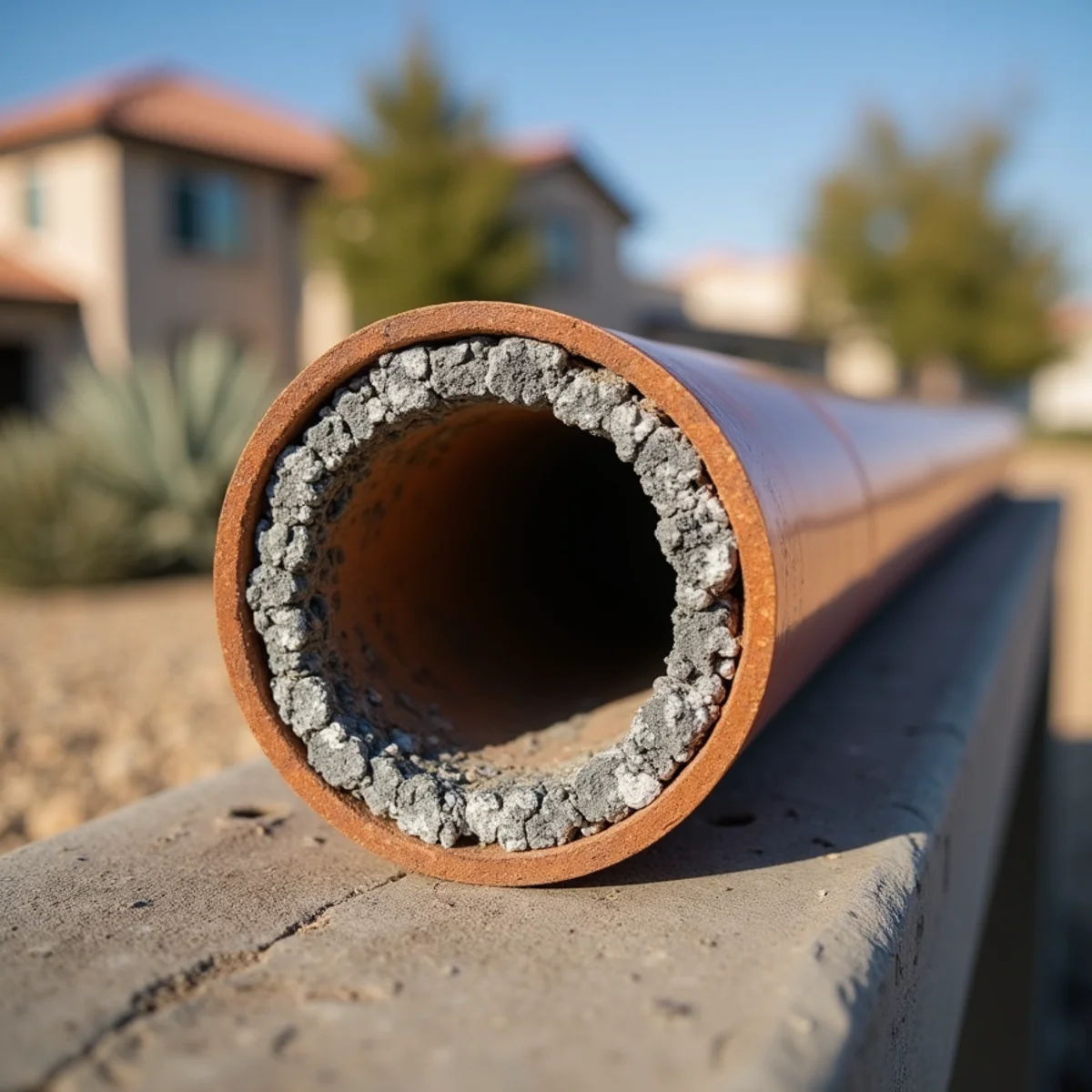
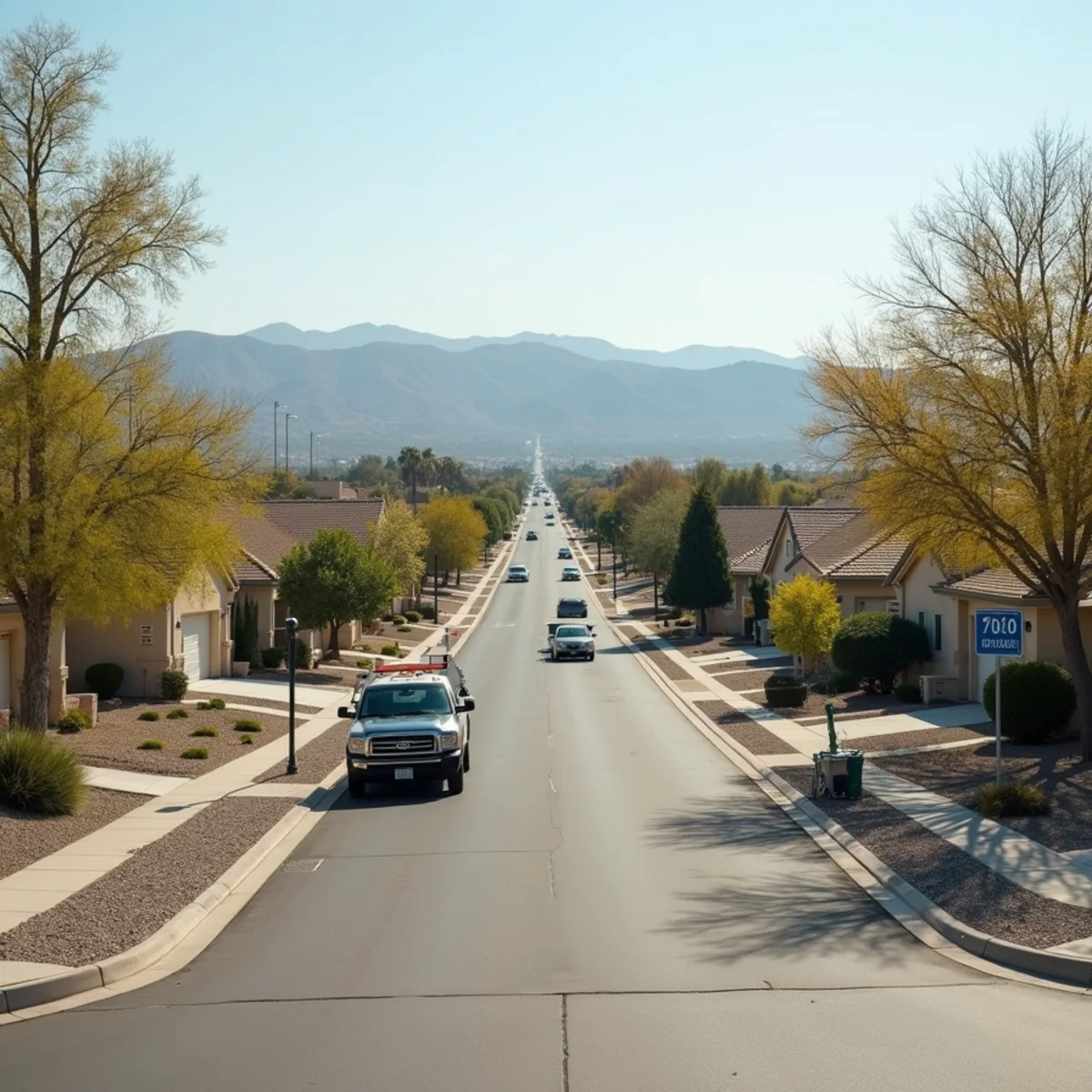
The construction here runs from the 1990s through the 2000s, which puts most of the original plumbing at 20 to 30 years. That is the age where copper starts pinholing and water heaters are on borrowed time.
Water damage risks specific to Paloma Valley
Every neighborhood in this region fails in its own way, and it is usually predictable from the construction era and the terrain. Here is what we actually respond to here.
1Heavy daily use in family households
Multiple loads of laundry, dishwashers running every day, and bathrooms in constant rotation put more cycles on valves, seals, and connectors than a lightly occupied home ever will. Appliance connectors here reach the end of their service life measurably sooner.
2Original plumbing entering the failure window
Homes built in the 1990s and early 2000s are now 20 to 30 years old. Copper under the slab starts producing pinholes in this band, and mineral scale from EMWD water has been building at every fitting for that entire time.
3AC condensate lines under sustained summer load
Summer here regularly exceeds 100°F, and air handlers run for months without a real break. Condensate lines clog with dust and biofilm, drain pans overflow, and the water lands in attic insulation before coming through a hallway ceiling. It is one of the most common calls we take from this area in August.
4Upstairs plumbing over first-floor ceilings
Two-story plans put bathrooms and often laundry above finished living space. A failed supply line or wax ring upstairs travels along the floor framing and drops through the ceiling below, frequently well away from where the leak actually is.
The housing stock we work in Paloma Valley
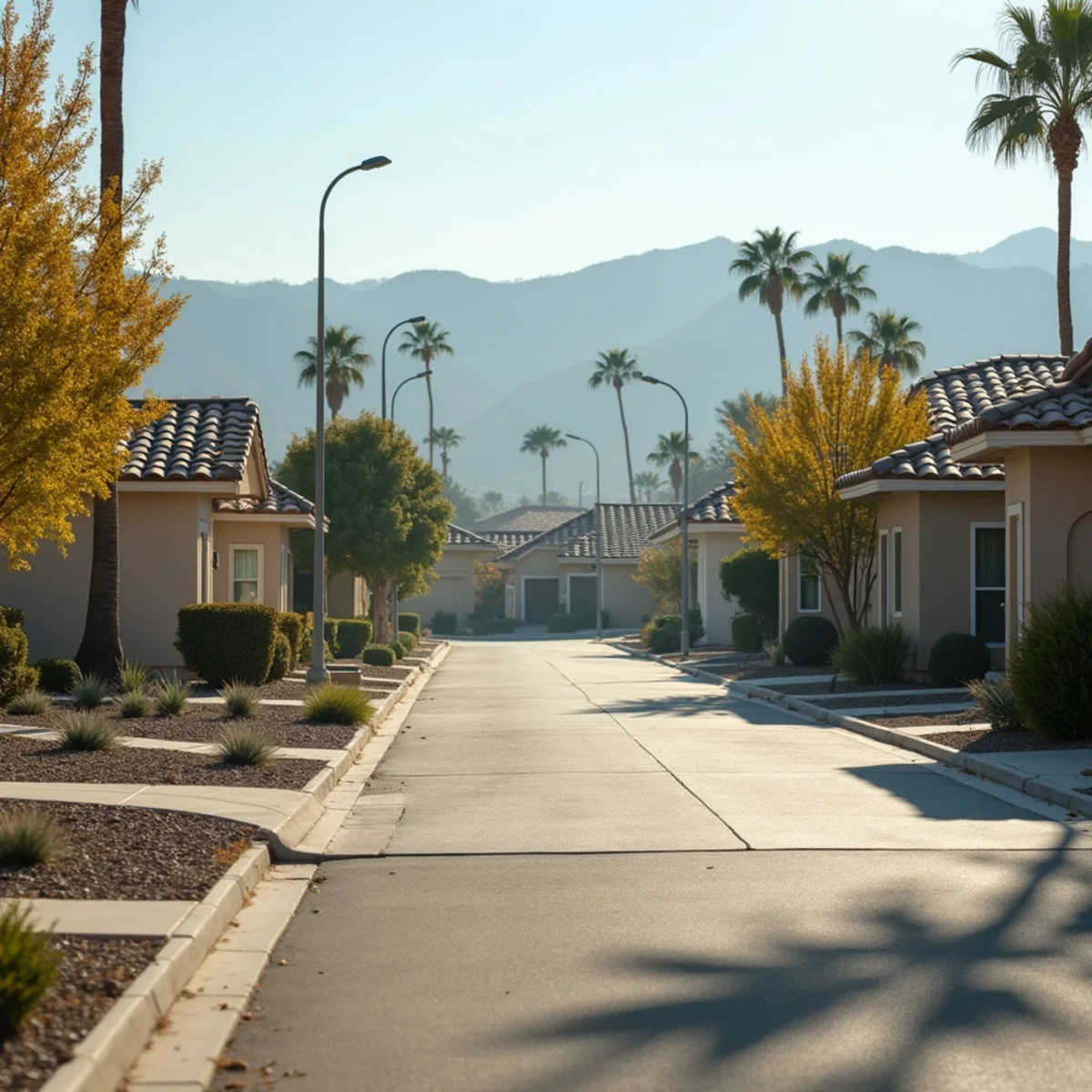
Mostly 1990s and 2000s single-family tract homes with a high proportion of two-story plans, on slab-on-grade foundations. Copper supply in the older phases, mixed materials in the newer ones. Builder-grade cabinetry and standard ceiling textures — which makes matching repairs straightforward when we do have to open something up.
Local landmarks
Paloma Valley High School · Menifee Valley Community Cupboard · Newport Road corridor
Services we run most often in Paloma Valley
Every service we offer is available here. These are the ones this area calls for most, based on what actually breaks in these homes.
- Ceiling Water Damage RepairA stain that is growing is an active leak. We find the source, dry the cavity, and match the texture on the repair.
- Appliance Leak Water DamageWater heaters, washers, dishwashers, and ice maker lines — the failures Menifee's mineral-heavy water brings on early.
- Burst Pipe & Slab Leak RepairThe failure Menifee sees most: pinholed copper under a slab. We find it, dry it, and put the floor back.
- Water Damage RestorationFull-scope extraction, structural drying, and repair — one crew from the first moisture reading to the last coat of paint.
- Carpet Water Damage RestorationThe pad holds most of the water. Deep extraction and in-place drying usually save the carpet — if we get there fast.
Why Paloma Valley families call us
Busy households wear plumbing faster, and this area has a very consistent failure pattern we can usually predict from the build year.
10 to 15 minutes from Palomar Road
One of our fastest neighbourhoods. On an upstairs laundry failure that has already come through a first-floor ceiling, that is the difference between one room and three.
We expect heavy-use appliance failures
Multiple laundry loads a day and dishwashers running constantly put far more cycles on valves, seals and connectors than a lightly occupied home. In this area the connector usually fails before the pipe does.
Condensate overflow is our first summer hypothesis
Air handlers here run for months without a real break, and a clogged line overflowing into attic insulation is the most common August ceiling call we take from this area.
We trace two-storey leaks properly
A stain in a first-floor ceiling of a Paloma Valley two-storey rarely sits under the actual failure. We follow the floor framing rather than opening the ceiling where the stain happens to be.
Getting to you in Paloma Valley
Ten to fifteen minutes, and one of the more straightforward runs in the 92584.
Newport Road is the route and occasionally the delay
We come in along the Newport Road corridor, which is quick outside peak but does back up around school times and around the retail frontage. At 3 a.m. this is a ten-minute trip; at 3 p.m. on a school day it can be closer to twenty.
Two-storey plans mean upstairs failures are the norm
The high proportion of two-storey product here means a large share of our calls start on the first floor and end up in the ceiling of the ground floor. We plan for the floor cavity between them from the outset, because that space is the one most often left wet by companies that dry only what they can see.
Original copper in the older section
The 1990s portion of Paloma Valley is now well into the range where copper pinholing starts in this water. If your home is from that era and you have had one leak, it is worth asking about the rest of the system rather than treating it as an isolated event.
The Paloma Valley pattern is predictable enough to get ahead of. Flush the water heater every year, replace washer hoses on schedule, and pour a cup of vinegar down the AC condensate line each spring. Three small habits, most of our summer call volume from this area avoided.
Paloma Valley questions we get asked
Why does my ceiling stain in summer with no rain?
The AC condensate line. It clogs, the drain pan overflows, and the water goes into the attic and through the ceiling. It is the most common non-storm ceiling failure in Menifee and it is almost entirely preventable with an annual line flush.
How old does a home have to be before slab leaks start?
Around the 25-year mark is when we start seeing the first pinholes in copper, and it accelerates from there. Paloma Valley homes from the 1990s are squarely in that window now; the early-2000s homes are entering it.
Water is coming through my downstairs ceiling — what do I do first?
Shut off the water at the main, keep everyone out from under any sagging area, and cut power to lights or fans in that ceiling if you can reach the breaker safely. Then call. Do not puncture a bulging ceiling while standing underneath it.
Why does my Paloma Valley ceiling stain in summer when it has not rained?
The air conditioner condensate line. It clogs with dust, biofilm and mineral scale, the drain pan overflows, and the water goes into the attic insulation before it comes through a hallway ceiling. It is the most common August call we take from this area, and it is almost entirely preventable with an annual line flush each spring.