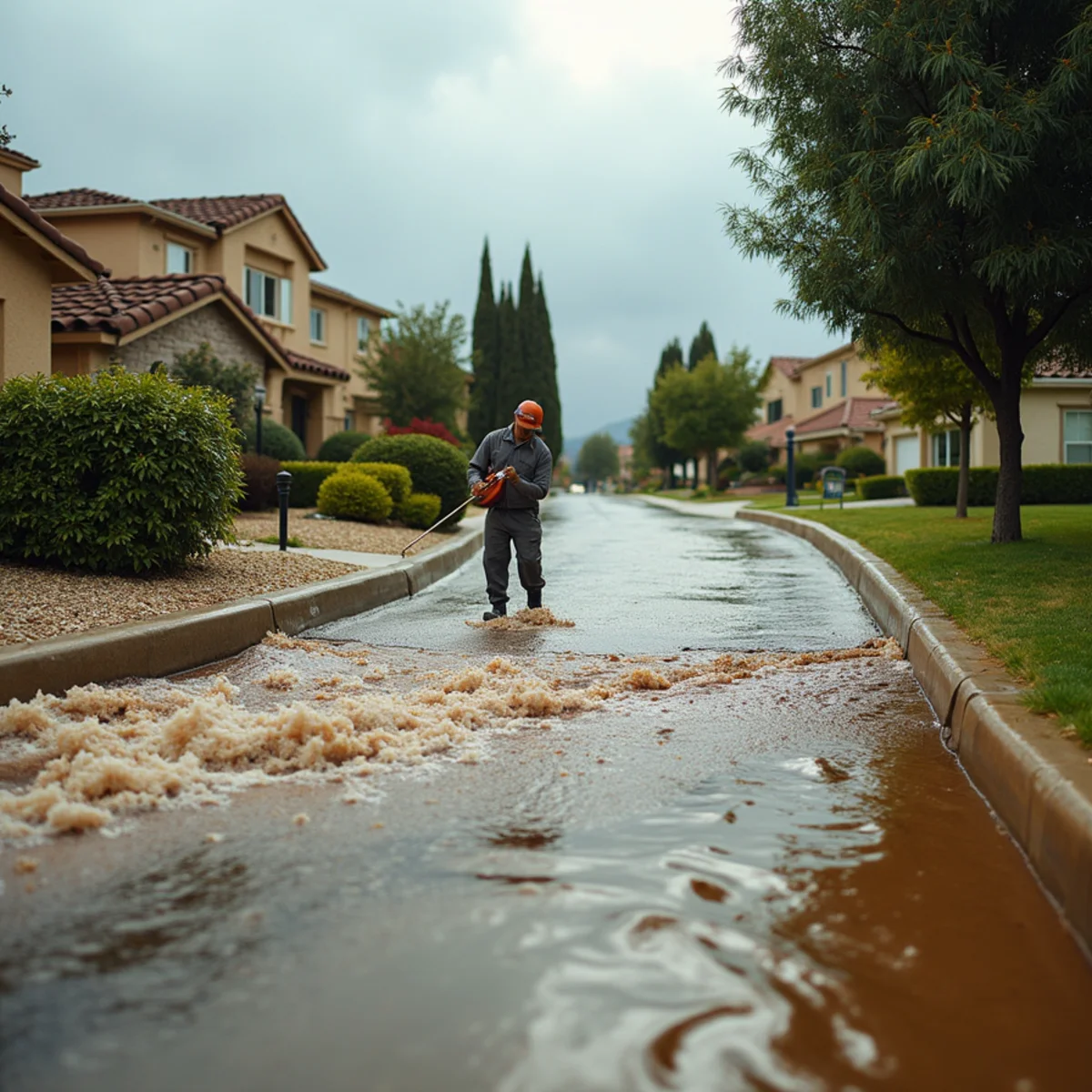
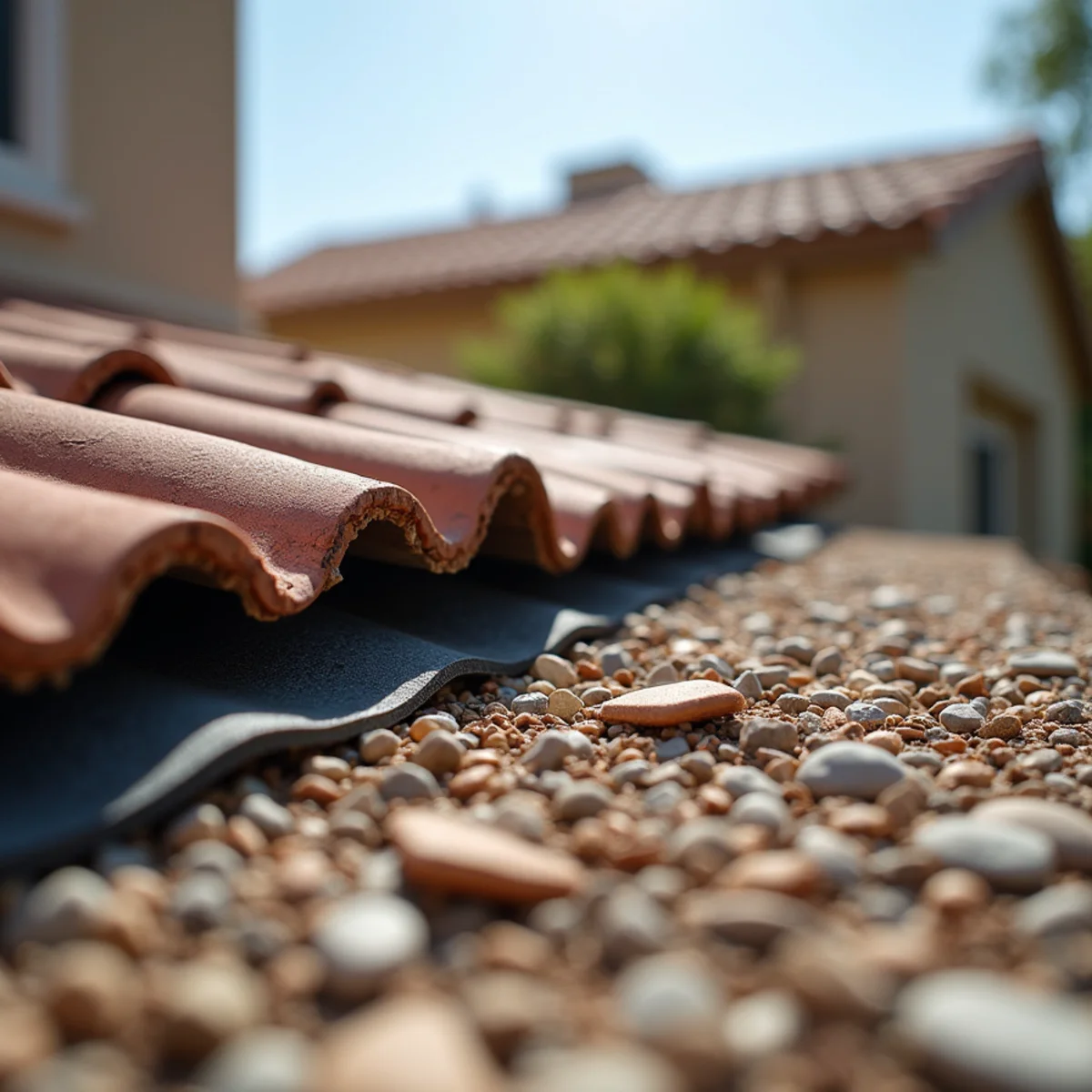
Roof leak water damage restoration in Menifee covers the emergency tarp, the attic dry-out and the permanent repair. Roofs here rarely fail from rain alone — summer UV and 40-to-50-degree daily temperature swings embrittle the underlayment, then a Santa Ana gust lifts a tile or breaks a shingle seal, and the next storm goes straight through.
A decade of intense UV, plus a 40-degree swing between a 105° afternoon and a 60° night, embrittles underlayment and opens up nail penetrations. Then a Santa Ana event lifts a course of tile or peels a shingle tab, and the compromised layer underneath is all that is left between the weather and your attic.
We stop the water tonight with a tarp, then handle the roof repair, the attic drying, and the ceiling restoration as one job.
What a roof leak looks like from inside
Water rarely appears directly under the breach. It travels along framing first, so the stain and the hole are often several feet apart.
Daylight visible in the attic
Go up mid-morning and look at the sheathing. Any pinpoint of daylight is a hole, and a hole is a leak waiting for the next storm.
Dark or matted insulation
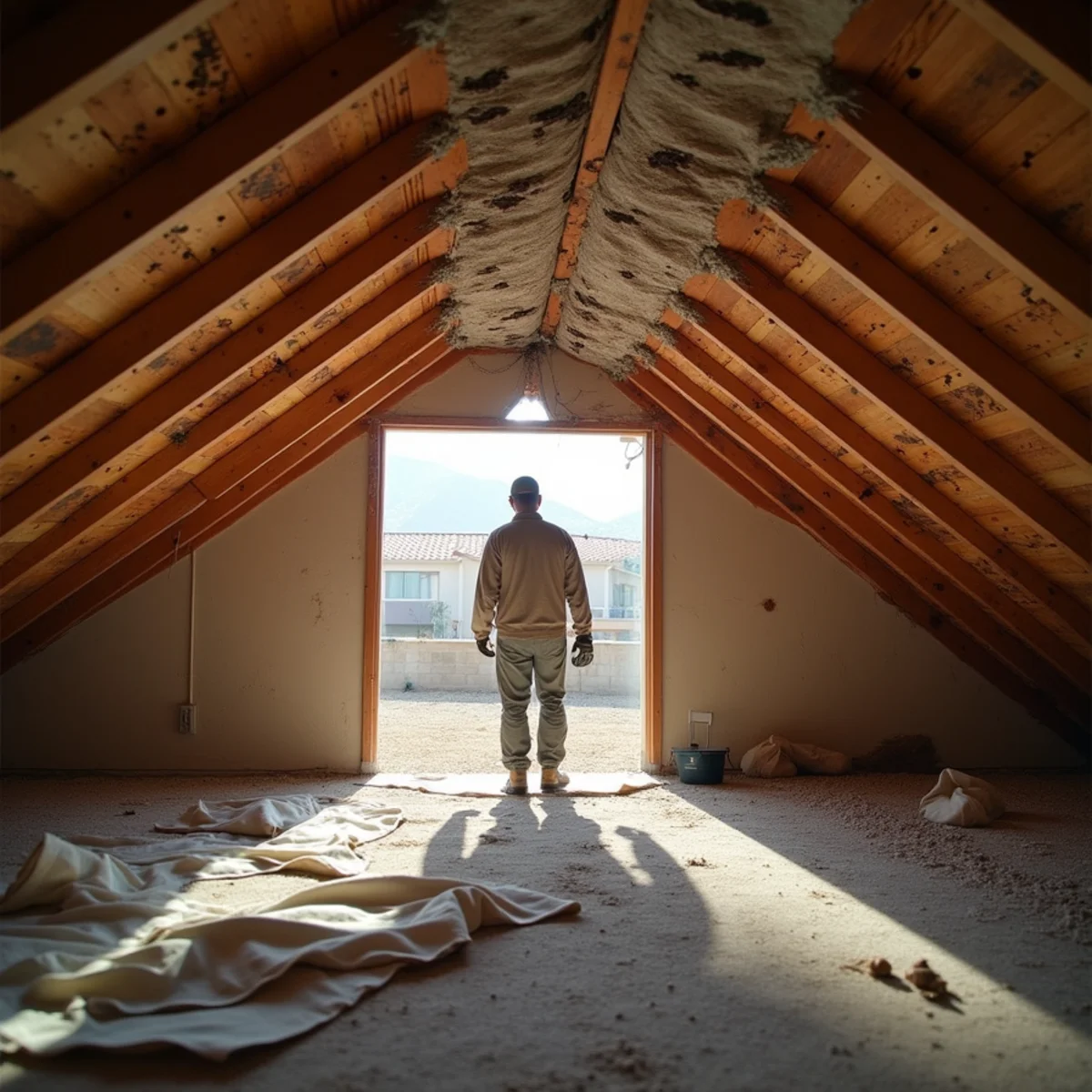
Blown-in insulation that looks compressed, dark, or crusted has been wet. Follow the pattern uphill along the rafters and you will usually find the entry point.
Rusted nail tips or staining on the sheathing
Rusty nail points and dark rings on the underside of the deck are the record of repeated wetting. This is a leak that has been happening for a while.
A stain that only appears in wind-driven rain
If the ceiling stains during a storm from one direction but not others, the breach is on that side, usually at a flashing or a ridge line.
Broken tile or granule loss at the downspouts
Tile fragments in the yard mean movement. A pile of granules where the downspout discharges means the shingle is at the end of its service life.
What a roof leak job includes
From stopping the water tonight to a ceiling you cannot tell was ever open.
Emergency tarp, properly fastened
Over the breach and secured, not weighed down with bricks. This is what your policy requires you to do to prevent further damage, and it is the cheapest line on the estimate relative to what it prevents.Attic water tracing and insulation removal
Water entering at a ridge can run the length of an attic before it appears at a ceiling. We trace the path along the framing, pull saturated insulation, and check the sheathing and any electrical it crossed.Underlayment, flashing and tile or shingle repair
The tile is not what keeps water out — the underlayment beneath it is. We restore that layer, the flashing and the ridge cap, matching the tile profiles and shingle lines used across Menifee tracts.A straight answer on repair versus re-roof
If underlayment has failed across a whole slope, patching individual tiles just moves the next leak a few feet. We photograph what we find on the deck and show you, rather than asking you to take our word for it.
What this climate does to a roof
Menifee roofs take a beating that coastal roofs do not. Summer UV at this latitude and elevation degrades asphalt binder and dries out the felt or synthetic underlayment beneath the surface layer. That is invisible from the ground and from the driveway, and it is the actual weatherproofing layer.
Thermal cycling does the rest. A tile roof that hits 150°F on the surface in the afternoon and drops to 60°F overnight expands and contracts every single day. Fasteners work loose. Sealant at flashings and penetrations cracks. Mortar at ridge and hip lines crumbles.
Then the wind arrives. Santa Ana events from September through April push 40 to 60 mph gusts across the valley, and the uplift concentrates exactly at ridges, hips, rakes, and eaves — the places already loosened by heat cycling. A single course lifting is enough.
The compounding factor is age. Many original roofs on Menifee Lakes, Sun City, and Quail Valley homes are at or past their design life. The tile itself may last decades more, but the underlayment beneath it does not, and that is the layer doing the work.
From tarp to finished repair
Emergency mitigation and permanent repair are different jobs. We do both, in that order.
- 1
1. Emergency tarp
A properly fastened tarp over the breach, not a sheet weighed down with bricks. This is what your policy requires you to do to prevent further damage.
- 2
2. Attic assessment
We trace the water path from the entry point through the framing to where it reached the ceiling — often a surprising distance — and check the electrical it crossed.
- 3
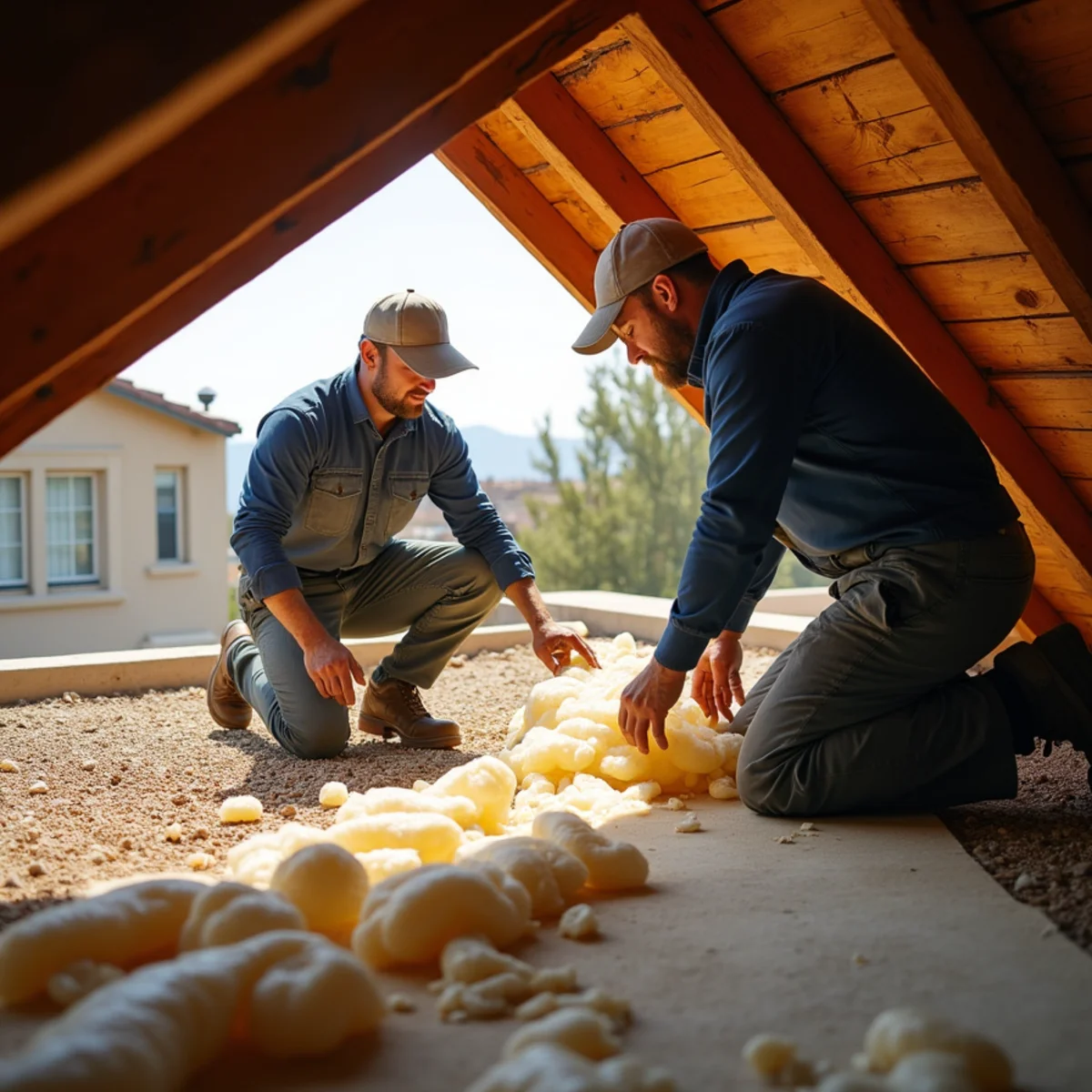
3. Remove saturated insulation
Wet blown-in insulation is dead weight that holds water against the drywall. It comes out.
- 4
4. Dry the attic and ceiling assembly
Airflow and dehumidification in the attic space, metered daily. Sheathing and framing must reach the dry standard before anything is closed up.
- 5
5. Roof repair
Underlayment, flashing, tile or shingle, and ridge cap restored. We match the tile profiles and shingle lines common in Menifee tracts, and we tell you honestly if the roof needs replacing rather than patching.
- 6
6. Interior restoration
Insulation replaced to spec, ceiling drywall repaired, texture matched, paint finished across the plane.
What roof leak water damage costs
The roof repair is often the smaller half. What the water did once it got inside is usually the larger one.
Roofing material
Asphalt shingle repairs are the least expensive. Concrete tile requires matching profile and color. Clay tile on the older Spanish-style tracts is the most costly to source and set.
Repair versus re-roof
If underlayment has failed across a slope, patching individual tiles is throwing money at a symptom. We will tell you which situation you are in and show you why.
Attic access and travel distance
How far the water ran along the framing determines how much attic has to be dried and how much insulation comes out.
Interior damage extent
Ceiling drywall, texture, paint, and any wall or flooring the water reached on its way down.
Why call us for a roof leak
The usual failure is a split scope: a roofer fixes the roof, somebody else dries the ceiling, and the claim falls between them.
Roof and interior in one contract
We tarp, repair the roof, dry the attic and finish the ceiling. One scope submitted to your adjuster means no gap for a carrier to fall into and no argument about which company owned what.
We understand what this climate does to roofing
A tile surface hitting 150°F in the afternoon and 60°F overnight expands and contracts every single day. Fasteners loosen, sealant cracks, mortar at ridges crumbles. That is why routine wind takes tile off roofs that look fine from the driveway.
Attic-first diagnosis
We go into the attic mid-morning and look for daylight, dark staining on the sheathing and rusted nail tips. That tells us where the breach is and roughly how long it has been leaking, which is what the claim turns on.
Documentation before repair
Carriers scrutinise wind claims hard on older roofs. Photographs of fresh breaks and lifted courses, taken before anything is touched, are what separate a covered claim from a denied maintenance one.
Frequently asked questions
Do you do the roof work or just the interior?
Both. We tarp immediately, handle the roof repair, and complete the attic and ceiling restoration as one scope. That matters on an insurance claim, because a split scope between a roofer and a restoration company is where coverage gaps appear.
How do I know if I need a repair or a new roof?
The tile or shingle is not usually the deciding factor — the underlayment is. If it has degraded across a slope, patching just moves the next leak a few feet. We photograph what we find in the attic and on the deck and show you, rather than asking you to take our word for it.
My roof looks fine from the ground. Could it still be leaking?
Easily. Most Menifee roof leaks come from failed underlayment, cracked flashing sealant, or a lifted tile that has settled back into place — none of which are visible from a driveway. If you have a ceiling stain and no plumbing above it, the roof is the first place we look.
How soon after a Santa Ana event should I check?
Within a day or two, before rain arrives. Walk the perimeter and look for tile fragments and granules, then look up at ridges and rakes for anything sitting out of line. Ten minutes then can save a ceiling later — see Santa Ana winds and water damage.
My roof is 25 years old. Will insurance still cover a leak?
It depends on cause, not age alone. Wind is a covered peril on essentially every policy, so damage from a Santa Ana event is claimable even on an older roof — but carriers look hard at whether an end-of-life roof simply failed on its own. The deciding factor is documentation: dated photographs of fresh tile breaks, lifted courses and debris in the yard, plus attic evidence of a specific entry point. We produce that before any repair starts.
Where we provide roof leak water damage restoration in Menifee
We run this service across every Menifee neighborhood and out into the surrounding cities. Response times are honest drive-time bands from our shop on Palomar Road, not marketing numbers.
- Roof Leak Water Damage in Menifee, CA
- Roof Leak Water Damage in Menifee Lakes
- Roof Leak Water Damage in Audie Murphy Ranch
- Roof Leak Water Damage in Heritage Lake
- Roof Leak Water Damage in Quail Valley
- Roof Leak Water Damage in Sun City, Menifee
- Roof Leak Water Damage in Paloma Valley
- Roof Leak Water Damage in Canyon Hills
- Roof Leak Water Damage in Romoland
- Roof Leak Water Damage in Homeland
- Roof Leak Water Damage in McCall Boulevard
- Roof Leak Water Damage in Newport Road