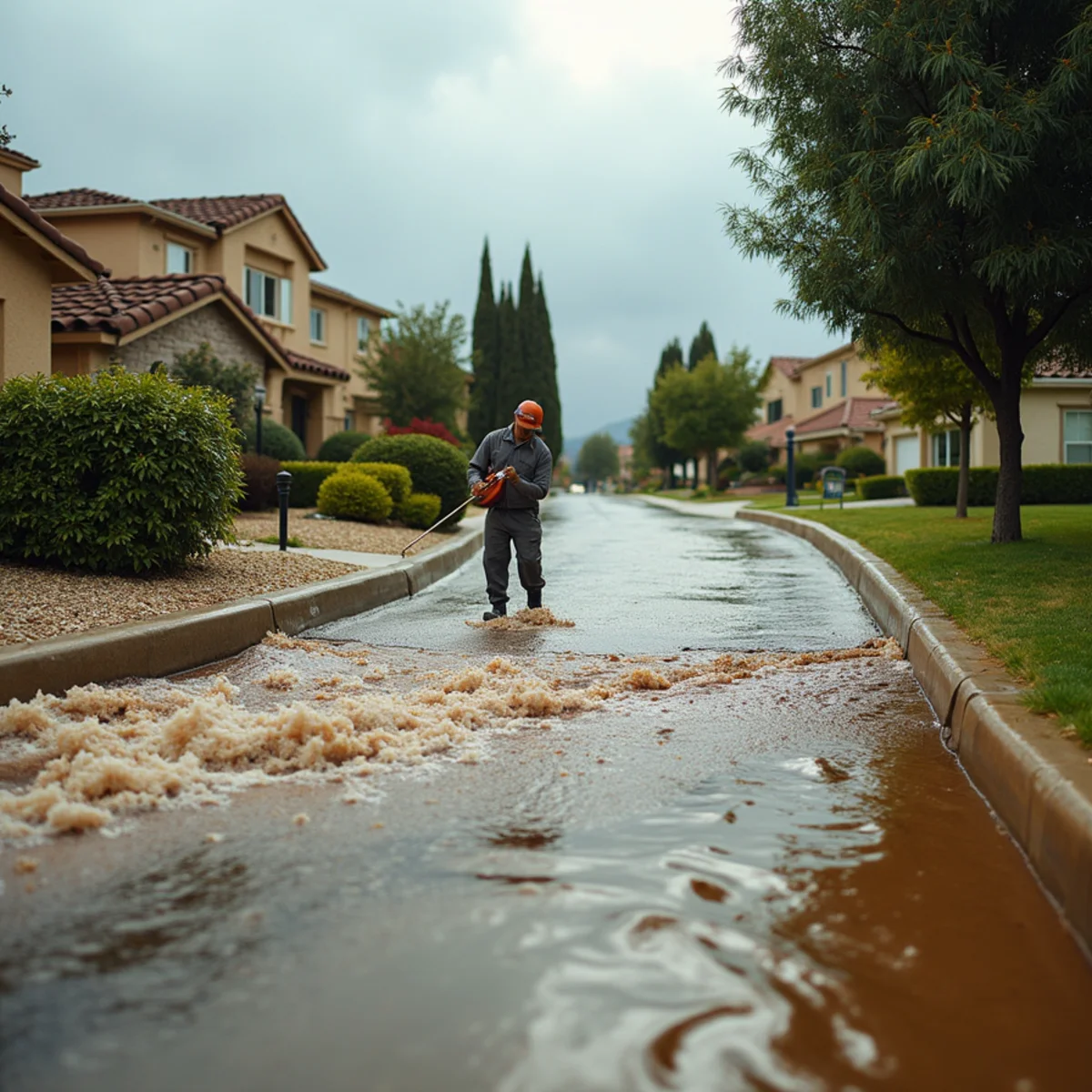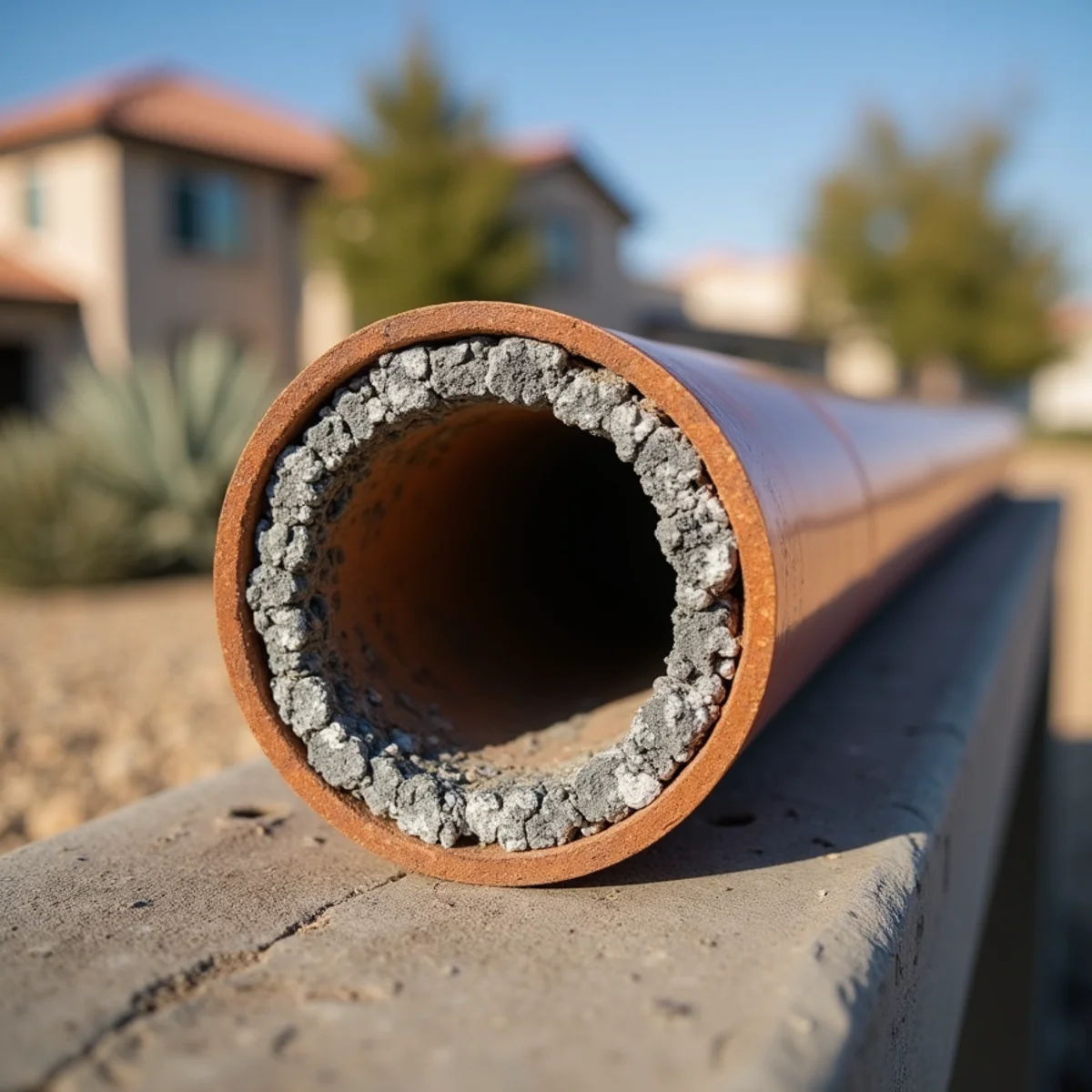
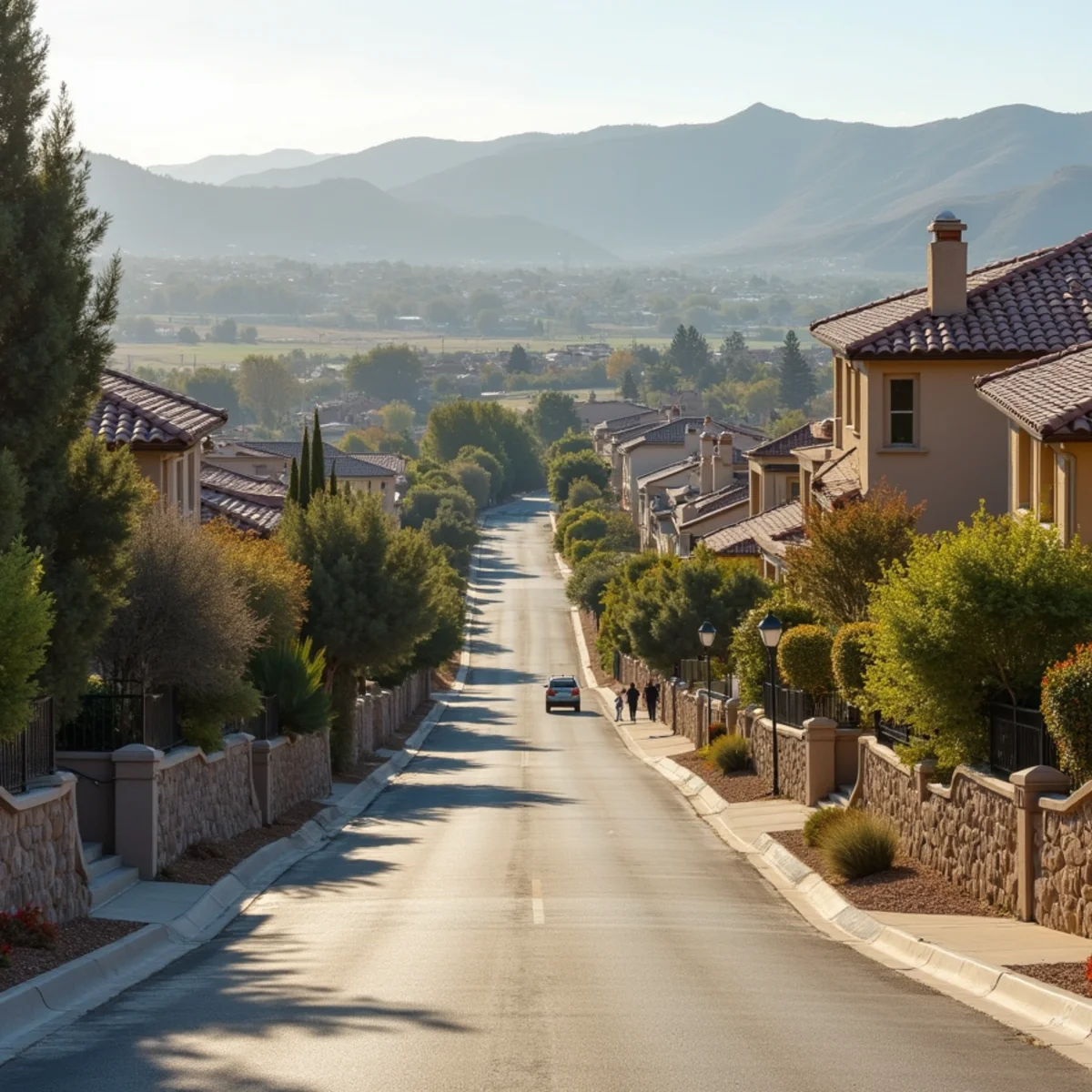
That makes this one of the few Menifee neighborhoods where storm water intrusion competes with plumbing failure as the leading cause of loss.
Water damage risks specific to Canyon Hills
Every neighborhood in this region fails in its own way, and it is usually predictable from the construction era and the terrain. Here is what we actually respond to here.
1Runoff from uphill lots
Water that lands on a neighboring property upslope does not stay there. During a monsoon cell, sheet flow crosses lot lines and arrives at downhill foundations, patios, and garage doors in minutes. Homes at the bottom of a run take volume that has been collecting across several properties.
2Retaining walls and drainage systems that need maintenance
Sloped lots here rely on retaining walls with weep holes and subsurface drains. Those clog with soil and debris over the years, and nobody thinks about them until a storm. A blocked drain behind a retaining wall builds hydrostatic pressure and pushes water toward the structure instead of away from it.
3Flash flooding in canyon drainage paths
Summer monsoon cells are intense and localized. Ground that has been baked for months sheds water almost like pavement, and natural drainage paths through canyon terrain fill fast. Properties near those paths can see significant flow from a storm that lasted twenty minutes.
4Exposed foundations on stepped lots
Homes built into a slope often have more foundation exposed on the downhill side. That surface is directly in the path of landscape runoff, and over time it becomes a route for moisture into the slab edge and any under-floor space.
The housing stock we work in Canyon Hills
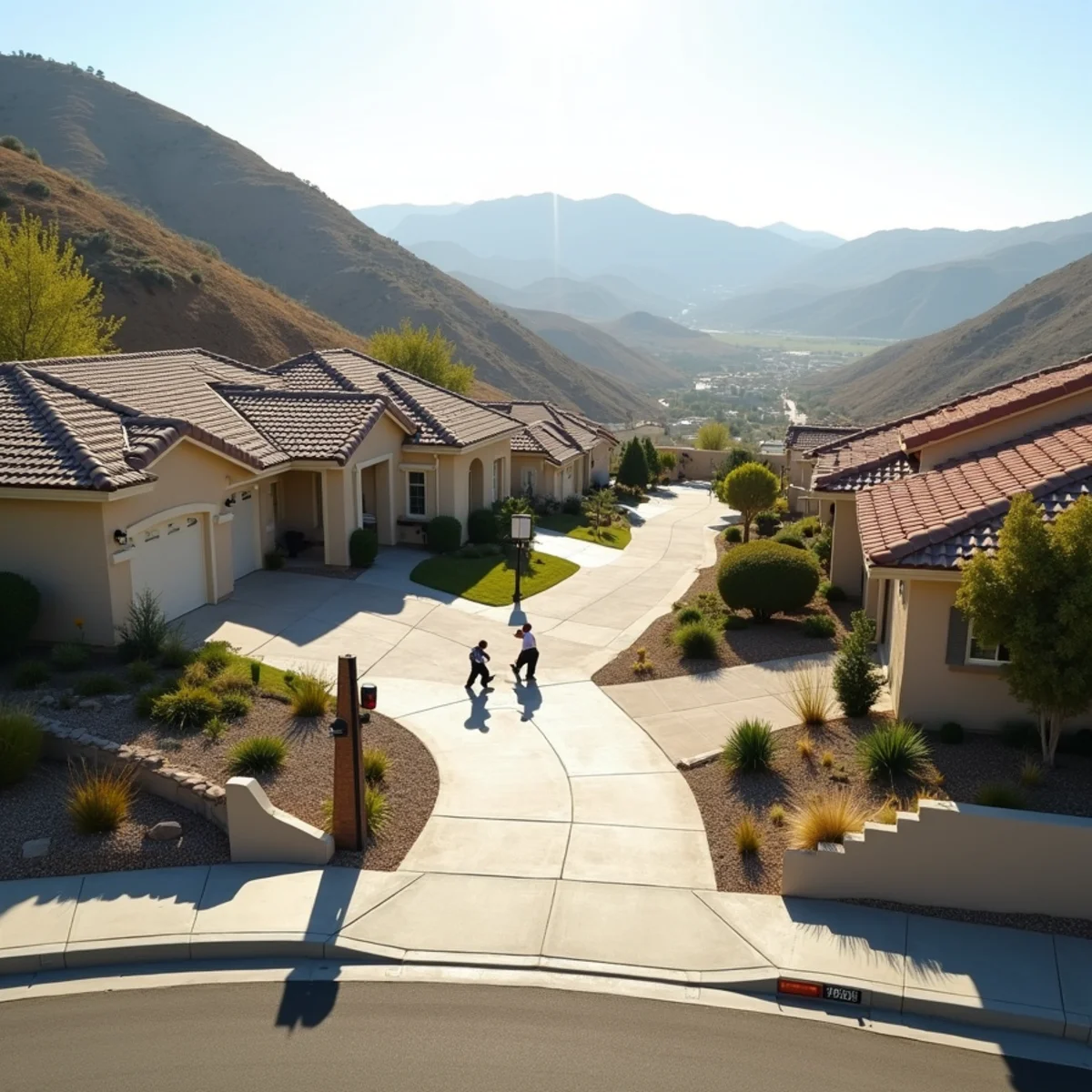
Primarily 1990s and 2000s homes on sloped and stepped lots, frequently with retaining walls, engineered drainage, and valley views. Slab-on-grade construction with the same copper-plumbing age profile as the rest of the city, plus the drainage considerations that come with building on a grade.
Local landmarks
Canyon Hills trails and open space · Views across the San Jacinto Valley
Services we run most often in Canyon Hills
Every service we offer is available here. These are the ones this area calls for most, based on what actually breaks in these homes.
- Flood Damage RestorationMonsoon runoff, winter storm intrusion, and drainage failures — handled as the Category 3 losses they actually are.
- Crawl Space & Sub-Floor Water DamageMenifee has almost no basements — it has wet slabs, crawl spaces, and irrigation soaking foundations. That is what we dry.
- Storm Damage RestorationEmergency tarping and board-up the same night, then the full repair — wind, rain, and fallen-limb damage handled end to end.
- Water Damage RestorationFull-scope extraction, structural drying, and repair — one crew from the first moisture reading to the last coat of paint.
- Emergency Water ExtractionStanding water out first. Truck-mounted extractors on site 24/7, because the first hour decides how big this job becomes.
Why Canyon Hills homeowners call us
Terrain changes everything here, and drainage is as much a part of the job as drying.
We arrive expecting a water path, not a leak
On a slope, runoff from uphill lots crosses property lines and arrives at downhill foundations in minutes. We look at where the water came from across the whole run, not just where it entered your house.
We check retaining walls and subsurface drains
Weep holes and buried drains silt up over the years and nobody thinks about them until a storm. A blocked drain builds pressure and pushes water toward the structure rather than past it.
Flash flooding needs a Category 3 response
Monsoon runoff has crossed soil and pavement, so it is contaminated regardless of how it looks. We bring containment and PPE on storm calls here as standard, not as an afterthought.
20 to 25 minutes, and we know the canyon routes
The southern edge of the city is not a grid. During a storm the shortest route is often not the passable one, and we route around the low crossings.
Getting to you in Canyon Hills
Twenty to twenty-five minutes, and the terrain is what makes this area different to work in.
Sloped and stepped lots change truck positioning
Canyon Hills sits on graded hillside, and a good number of properties have the affected level well below or above the street. That affects hose runs for extraction and where equipment can physically be staged, so it is worth telling us on the phone which level of the house the water is on.
Retaining walls and engineered drainage are part of the picture
Where a property has retaining walls and engineered drainage, a water problem inside the house may have started outside it — a blocked area drain or a failed subdrain behind a wall. We look at the exterior grade here as a matter of course rather than only when the interior source is unclear.
Valley views usually mean more glazing
Larger window and slider runs on the view elevations are a genuine water entry point in a driven rain event, and they are also a significant thermal factor when we are trying to hold a stable drying environment. Both get accounted for in the equipment plan.
If you own on a slope in Canyon Hills, the highest-value maintenance you can do is clearing drains and weep holes before monsoon season. Ten minutes with a hose in June is worth more than any amount of preparation in August.
Canyon Hills questions we get asked
Water came in from my neighbor's property uphill. What now?
Document it thoroughly — photographs of the flow path while it is happening are far more useful than photographs of the aftermath. Then get the water out and the structure dry. Drainage disputes between neighbors are a separate conversation, and having a dated record helps that conversation considerably.
How do I prepare for monsoon season here?
Clear the weep holes in retaining walls, flush any subsurface drains, clean gutters and downspouts, and check that the grade still slopes away from the house. Soil settles over time and a grade that worked ten years ago may now direct water back toward the foundation.
Is storm runoff damage covered by insurance?
Usually not under a standard homeowners policy — rising surface water and mudflow are typically excluded and require separate flood coverage. Given the terrain here, it is worth checking your parcel on the FEMA map and pricing a policy before you need one.
Water came onto my Canyon Hills property from the lot above. What should I do?
Photograph the flow path while it is actually happening — that footage is far more useful than pictures of the aftermath, both for your claim and for any conversation with a neighbour or the HOA. Then get the water out and the structure dried. Note that storm runoff has crossed soil and pavement, so it is Category 3 and needs containment rather than a wet vac.