Crawl space and sub-floor water damage restoration in Menifee usually means one of three things, because almost no home here has a basement: a wet slab under the flooring, standing water in a crawl space beneath a raised floor, or water pushing in at the foundation from irrigation or storm runoff. All three behave differently from a basement and all three get missed by crews that treat them like one.
So when someone here searches for basement flooding, what they usually have is one of three things — a wet slab under the flooring, standing water in a crawl space beneath a raised floor, or water pushing in at the foundation from outside. All three behave differently from a basement, and all three get missed by crews that treat them like one.
We dry slabs, crawl spaces, and foundation intrusion, and we deal with the drainage or irrigation problem that caused it.
Signs of water under your floor
Sub-floor moisture is invisible almost by definition. These are the signals that reach the living space.
Flooring that has cupped, lifted, or gone hollow
Moisture rising out of a slab pushes laminate and engineered wood upward at the seams and breaks the bond under glued-down tile.
Persistent musty odor near the floor
A smell that is strongest at floor level, in a closet, or at a floor register usually means moisture in the sub-floor assembly or crawl space.
White chalky residue on exposed concrete
Efflorescence is mineral left behind as water moves through concrete and evaporates. It means water is passing through the slab, not just sitting on it.
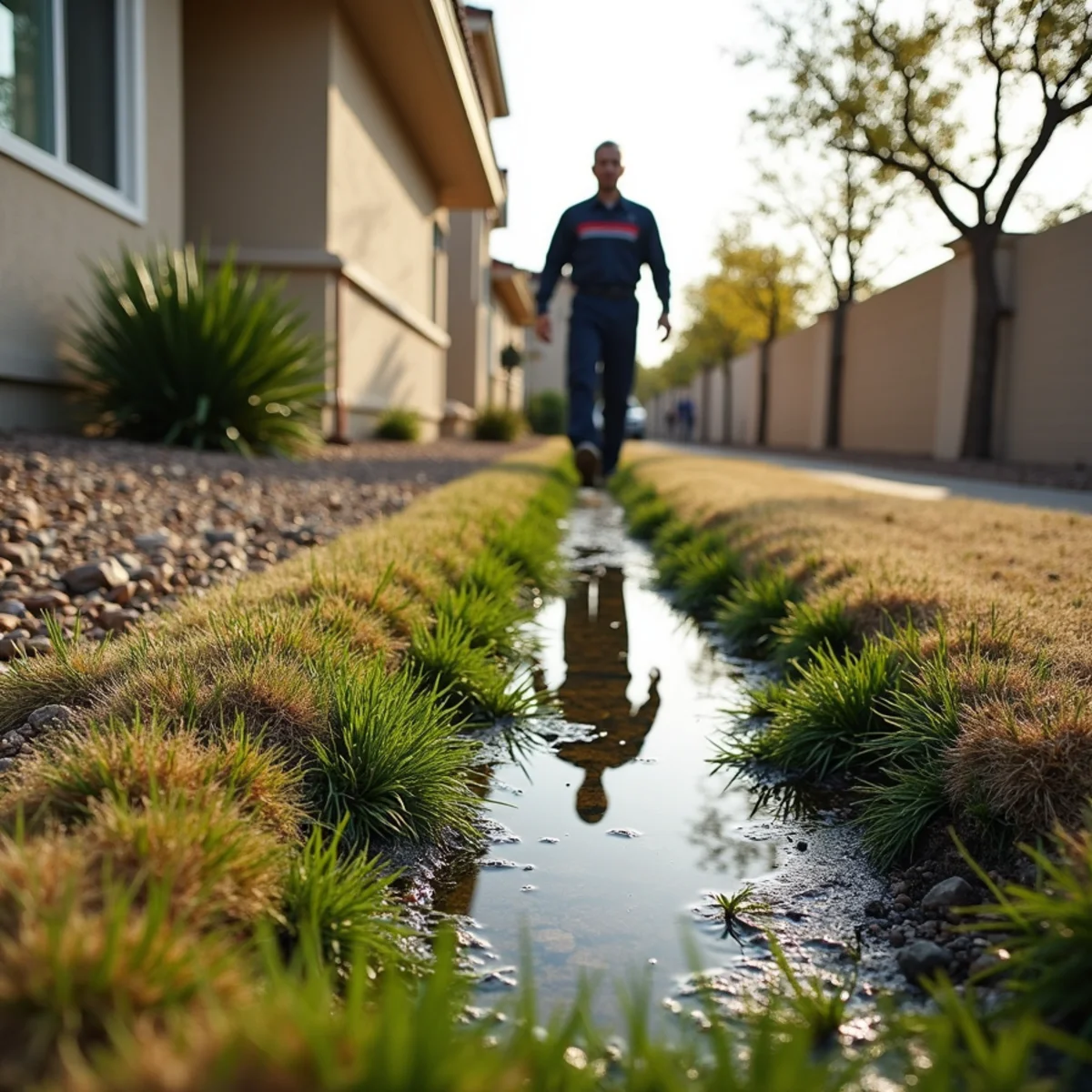
Soggy ground or a green stripe along the foundation
A line of unusually lush growth or perpetually damp soil against the house is a broken irrigation lateral — one of the most common causes of foundation intrusion in Menifee.
Rusting duct boots or damp insulation underneath
In raised-floor homes, ductwork in the crawl space shows moisture problems first. Rust at the boots or sagging, damp insulation means the space is staying wet.
What a sub-floor job includes
Confined spaces and concrete are the slowest materials we work with. Rushing either is what produces recurring odour.
Source identification — irrigation, plumbing or drainage
An irrigation pressure test, plumbing isolation or a drainage assessment. On large-lot Menifee properties a broken lateral can push water at a foundation for weeks with nothing visible except unusually good grass.Confined-space extraction and material removal
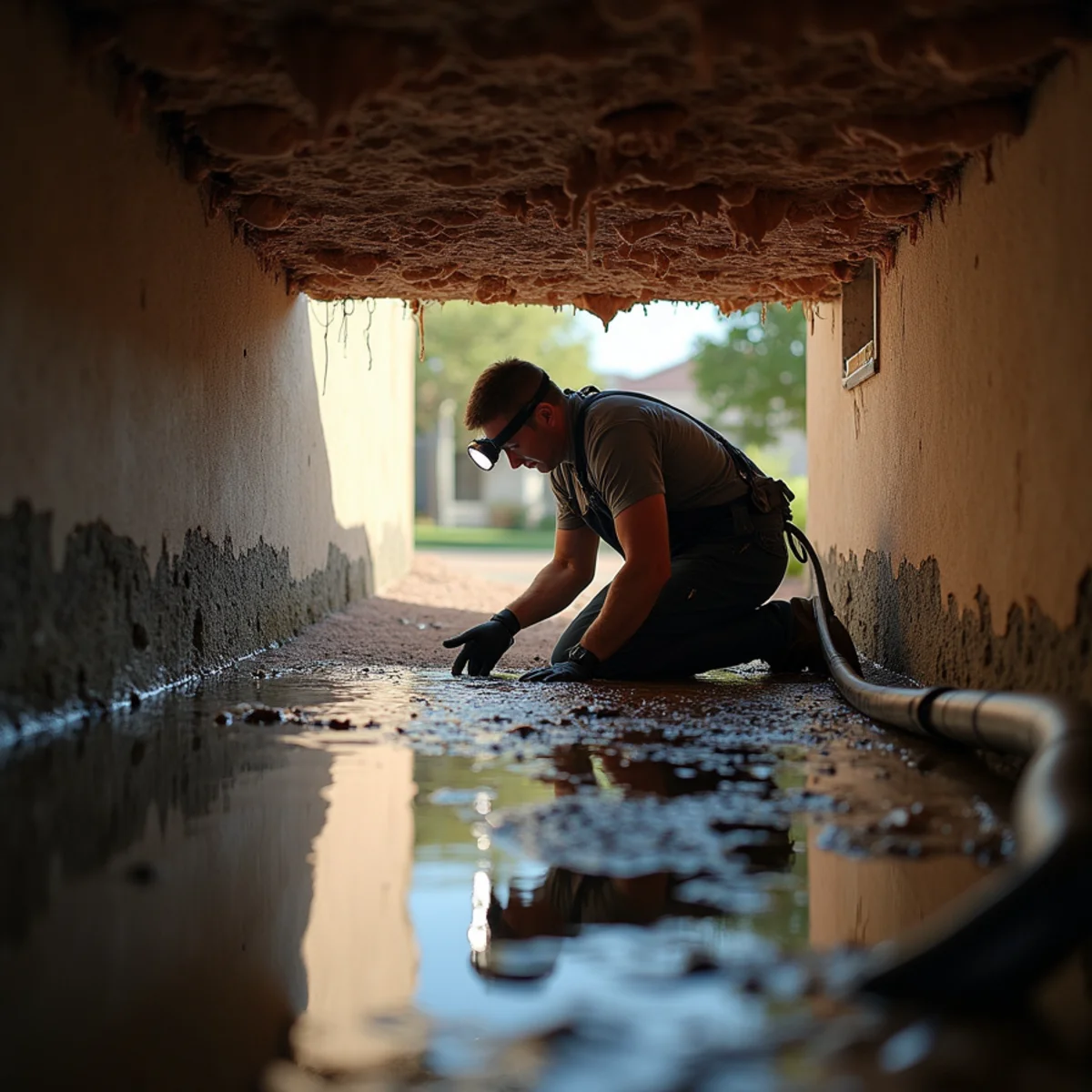
Pumps and confined-space equipment for crawl spaces, lifting flooring where water is trapped against a slab. Wet under-floor insulation and compromised vapour barrier come out — neither recovers.Slab and crawl space drying as a controlled zone
Slabs get directed airflow and dehumidification, with mat systems where flooring must stay down. Crawl spaces are sealed and dried as a controlled zone rather than vented to outdoor air, which can make things worse.Correcting what caused it
Irrigation repair, regrading, drain installation or vapour barrier replacement. Drying without this is a temporary result and we will say so on the estimate.
What water under a Menifee floor really means
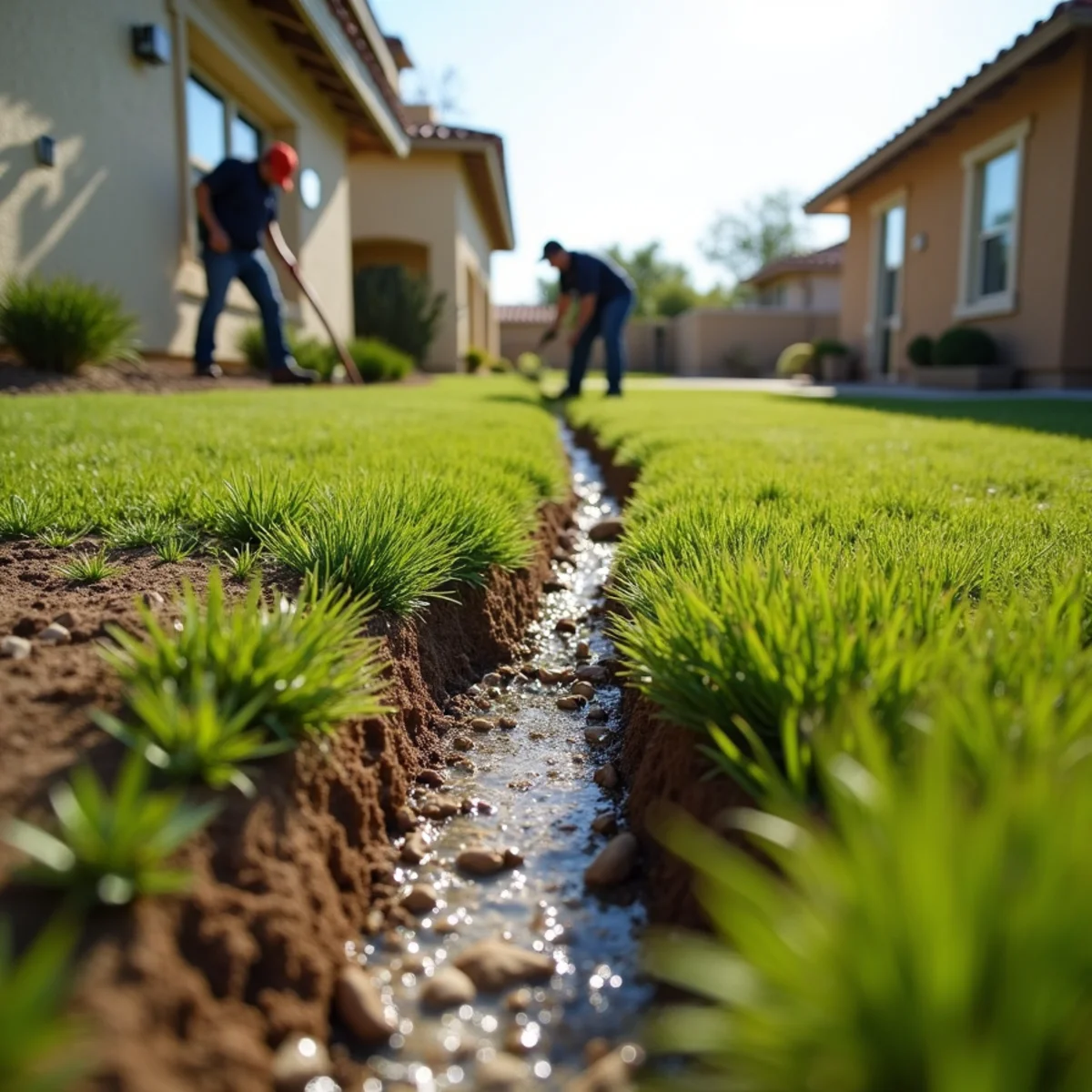
Irrigation is the leading cause, and it is badly underrated. The larger-lot communities — Audie Murphy Ranch, Greer Ranch, parts of Romoland and Winchester — run extensive irrigation systems, and a broken lateral or a stuck valve can push water toward a foundation for hours a day without anyone noticing. In a climate this dry, no one questions a green patch. Meanwhile it is saturating soil against the slab edge.
Landscape overwatering does the same thing more slowly. Menifee HOA landscaping and mature yards frequently run more water than the soil can take, and the excess ends up at the footing.
The third source is monsoon and winter storm runoff. Water that sheets across a flat lot, or channels down toward a home in the sloped Canyon Hills pockets, arrives at the slab edge and looks for a way in — usually the garage door, a slider threshold, or a low utility penetration.
And on slab construction, the physics are unforgiving. Concrete is porous. Water in the soil beneath it wicks upward through the slab and stops at whatever flooring is on top. A vapor barrier that has been compromised — or was never installed in some older builds — turns the whole slab into a moisture source that no amount of surface drying will fix.
How we dry a slab or crawl space
Concrete and enclosed under-floor spaces are the slowest materials we deal with. Rushing them is how people end up with recurring odor.
- 1
1. Locate the water source
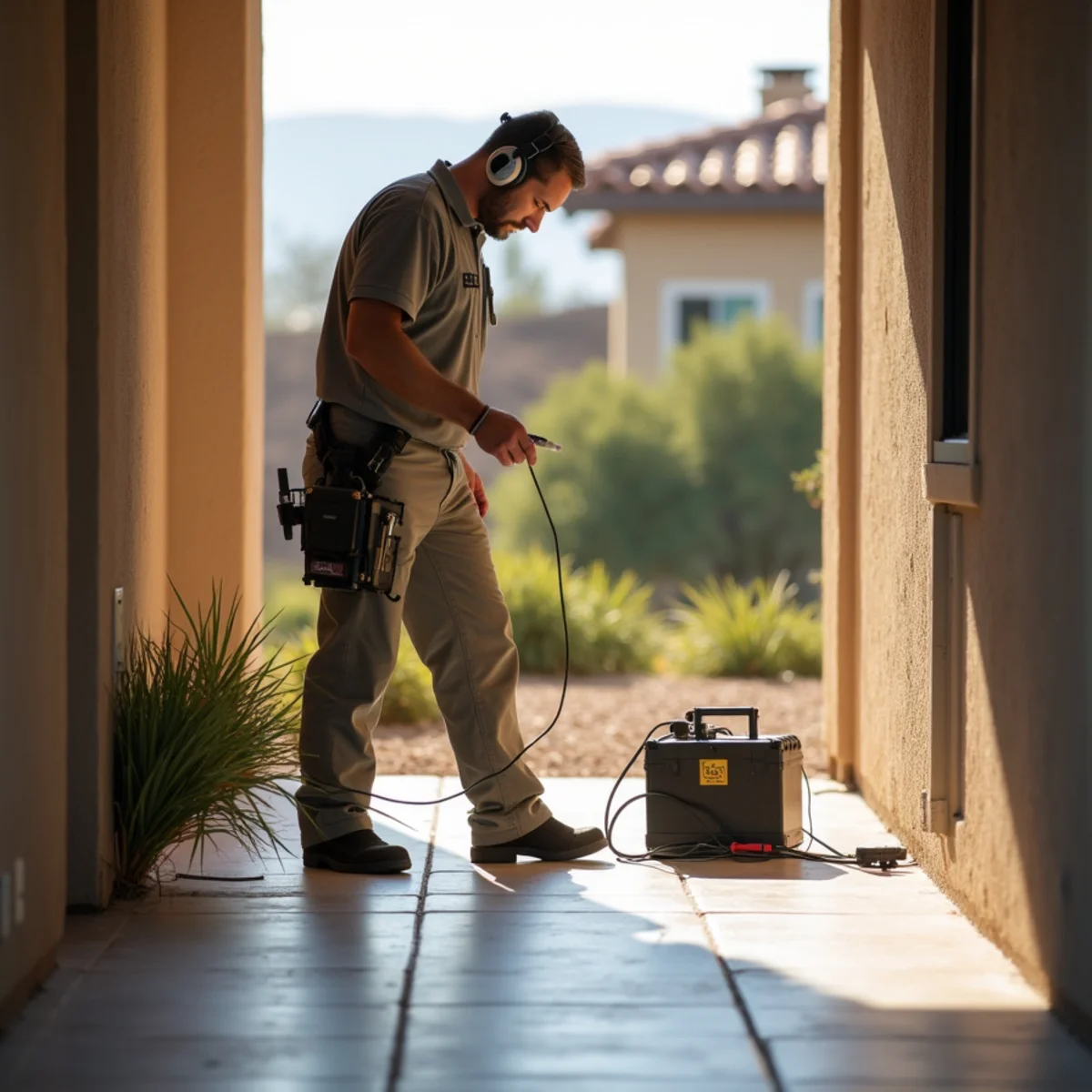
Irrigation pressure test, plumbing isolation, or drainage assessment. If it is a slab leak we locate it acoustically — see burst pipe and slab leak repair.
- 2
2. Extract standing water
In a crawl space that means pumps and confined-space equipment. On a slab it means lifting flooring where water is trapped beneath it.
- 3
3. Remove saturated material
Wet insulation, vapor barrier, and any porous material in the crawl space comes out. Under-floor insulation that has been wet does not recover.
- 4
4. Targeted drying
Slabs get directed airflow and dehumidification, with mat systems where flooring must stay in place. Crawl spaces get sealed and dried as a controlled zone rather than vented to outdoor air.
- 5
5. Antimicrobial treatment
Under-floor spaces sit dark and still, which makes them prone to growth. Surfaces are treated before anything is closed back up.
- 6
6. Fix the cause
Irrigation repair, grading and drainage correction, vapor barrier replacement, or foundation sealing. Drying without this is a temporary result.
What crawl space and slab drying costs
Access drives the price more than square footage. Confined spaces are slow, and slow is expensive.
Access
A crawl space with a full-size hatch and standing clearance is straightforward. An 18-inch clearance with a small access panel is confined-space work and is billed accordingly.
Drying duration
Concrete releases moisture slowly. Slab drying commonly runs longer than a typical carpet or drywall job, and equipment time is a real cost.
Flooring removal
Trapped moisture under glued-down or floating flooring often means lifting it. Removal, disposal, and reinstall is frequently the largest line.
The correction work
Irrigation repair, regrading, drain installation, or vapor barrier replacement is separate from drying and is what stops it recurring.
Why call us for sub-floor moisture
This is the service most often diagnosed wrong, because the damage is never where the symptom is.
We know Menifee has almost no basements
Southern California tract construction is slab-on-grade. When someone here searches for basement flooding, what they have is a wet slab, a crawl space or foundation intrusion — and treating it as a basement gets the drying plan wrong from day one.
Irrigation is the first thing we check
It is the leading cause here and the most underrated. In a climate this dry nobody questions a green patch, so a broken lateral saturates soil against a slab edge for weeks before anyone notices.
We plan for concrete's drying curve
Slab drying commonly runs five to ten days rather than three to five. We build that into the schedule and the estimate up front instead of discovering it on day four and asking for more time.
Honest coverage guidance
A sudden slab leak is usually covered. Seepage from groundwater, chronic overwatering or poor grading is normally excluded as maintenance. We tell you which one you have before you file.
Frequently asked questions
Do any Menifee homes actually have basements?
Very few. Southern California tract construction is overwhelmingly slab-on-grade. You will find the occasional daylight basement or partial under-house storage on older custom builds and some hillside lots in Canyon Hills, but the standard Menifee home has none.
How do I know if my slab is wet?
A calcium chloride test or an in-situ relative humidity probe measures moisture emission from concrete directly. The quick field check is to tape a two-foot square of clear plastic tightly to the bare slab and leave it 24 hours — condensation underneath means the slab is passing moisture.
My irrigation caused this. Is it covered?
Usually not. Carriers typically treat irrigation seepage as a maintenance issue rather than a sudden accidental loss, especially if it ran for weeks. It is worth filing anyway with proper documentation, and worth adding an annual irrigation check to your routine — see irrigation system maintenance.
How long does slab drying take?
Longer than drywall — typically five to ten days depending on how deep the moisture went and how long it sat. Concrete gives up water slowly. Replacing flooring over a slab that has not verified dry is the most expensive shortcut in this trade.
How can I tell if moisture is coming up through my slab?
Tape a two-foot square of clear plastic tightly to the bare slab and leave it 24 hours. Condensation underneath means the slab is passing moisture. The other tells are white chalky efflorescence on exposed concrete, flooring that has cupped or gone hollow, and a musty smell that is strongest at floor level or in a closet. A calcium chloride test or in-situ RH probe measures it properly, and we run one before any new flooring goes down.
Where we provide crawl space and under-floor water damage restoration in Menifee
We run this service across every Menifee neighborhood and out into the surrounding cities. Response times are honest drive-time bands from our shop on Palomar Road, not marketing numbers.
- Crawl Space & Sub-Floor Water Damage in Menifee, CA
- Crawl Space & Sub-Floor Water Damage in Menifee Lakes
- Crawl Space & Sub-Floor Water Damage in Audie Murphy Ranch
- Crawl Space & Sub-Floor Water Damage in Heritage Lake
- Crawl Space & Sub-Floor Water Damage in Quail Valley
- Crawl Space & Sub-Floor Water Damage in Sun City, Menifee
- Crawl Space & Sub-Floor Water Damage in Paloma Valley
- Crawl Space & Sub-Floor Water Damage in Canyon Hills
- Crawl Space & Sub-Floor Water Damage in Romoland
- Crawl Space & Sub-Floor Water Damage in Homeland
- Crawl Space & Sub-Floor Water Damage in McCall Boulevard
- Crawl Space & Sub-Floor Water Damage in Newport Road