Maintenance & Prevention
Irrigation Leaks: The Water Damage Nobody Sees Coming
It runs underground, at night, on a timer, and the only visible sign is grass that looks slightly better than the neighbours have.
The short answer
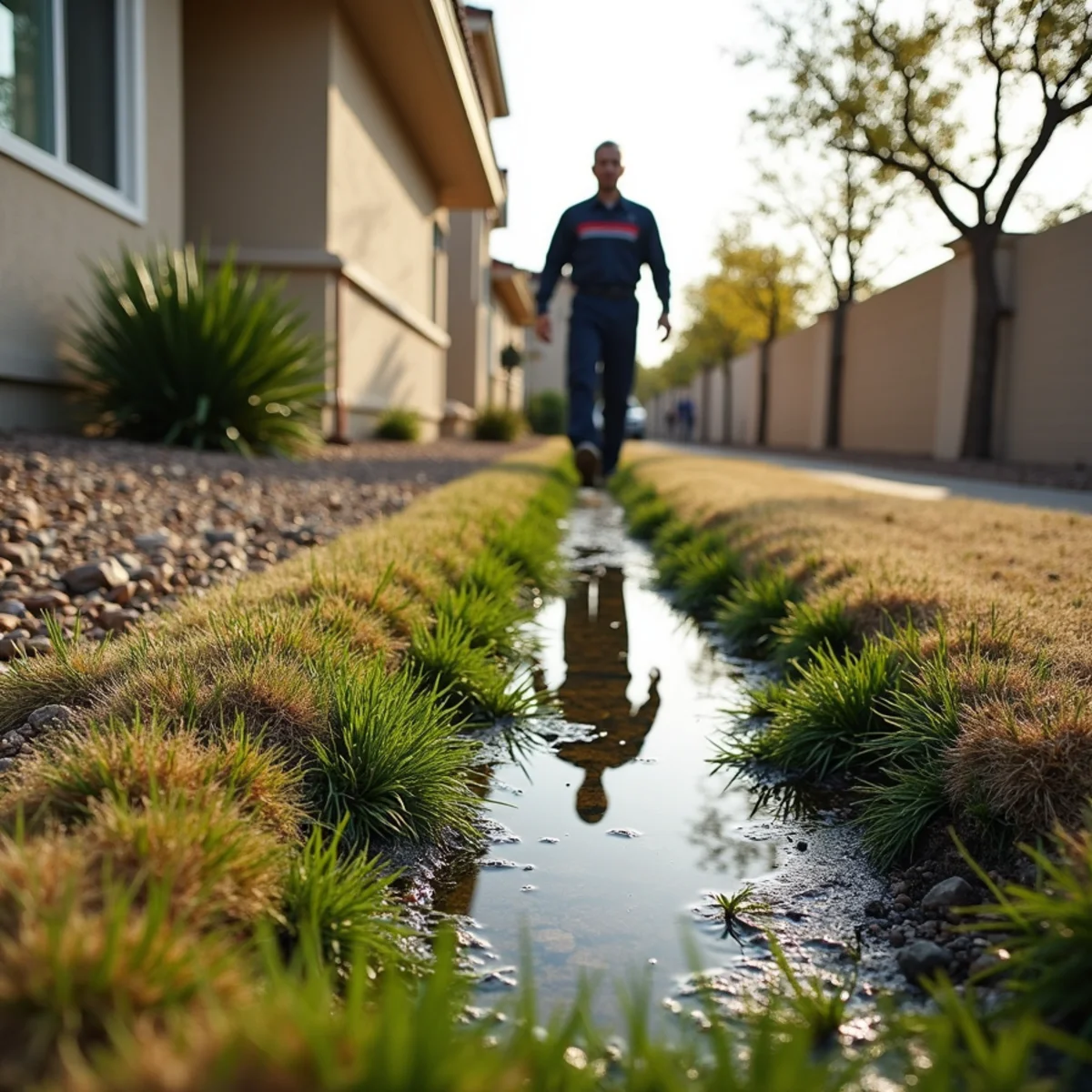
A broken irrigation lateral can run water into the soil against your slab every night for weeks on a timer. In a climate this dry the only visible sign is a patch of unusually green grass, which reads as good landscaping rather than a warning. Check your EMWD meter with every fixture off to confirm it.
Of every water damage cause we deal with in Menifee, irrigation is the one homeowners are least likely to suspect and most likely to have.
The reason is almost comic. In a climate this dry, a patch of unusually green, lush grass does not read as a warning. It reads as a landscaping win. Meanwhile a broken lateral has been running water into the soil against your slab edge for six weeks, every night, on a timer.
Why Menifee is particularly exposed
Three factors stack up here.
Large lots and long runs. Communities like Audie Murphy Ranch, Greer Ranch, and the rural parcels around Romoland and Winchester have extensive buried irrigation. More line and more valves means more failure points, and on acreage the visible wet patch can be nowhere near the structure it is undermining.
Heavy watering schedules. Keeping landscape alive through a Menifee summer requires real volume, and systems here run frequently and for extended cycles. A break during a cycle discharges a lot of water in a short time, night after night.
Slab-on-grade construction. With no basement or crawl space, saturated soil sits directly against the slab edge. Concrete is porous — water in the soil beneath and beside it wicks up through the slab and stops at whatever flooring sits on top.
What it does to a house
- Moisture through the slab. Flooring cups, laminate lifts at the seams, glue-down tile releases, and carpet at the perimeter develops odour. Homeowners usually blame the flooring installer.
- Wet bottom plate and drywall. Water reaching the slab edge wicks into the framing and the bottom four inches of drywall, which is exactly where you cannot see it.
- Soil movement. Repeated saturation and drying cycles move soil, and in clay soils that movement stresses the slab and anything cast into it.
- Efflorescence. White chalky deposits on exposed concrete are minerals left behind as water passes through and evaporates. It is proof that water is moving through the slab, not merely sitting on it.
- Mold in enclosed spaces. A wall cavity kept damp for weeks is a growth environment regardless of how dry the outdoor air is.
How to find a leak you cannot see
The meter test
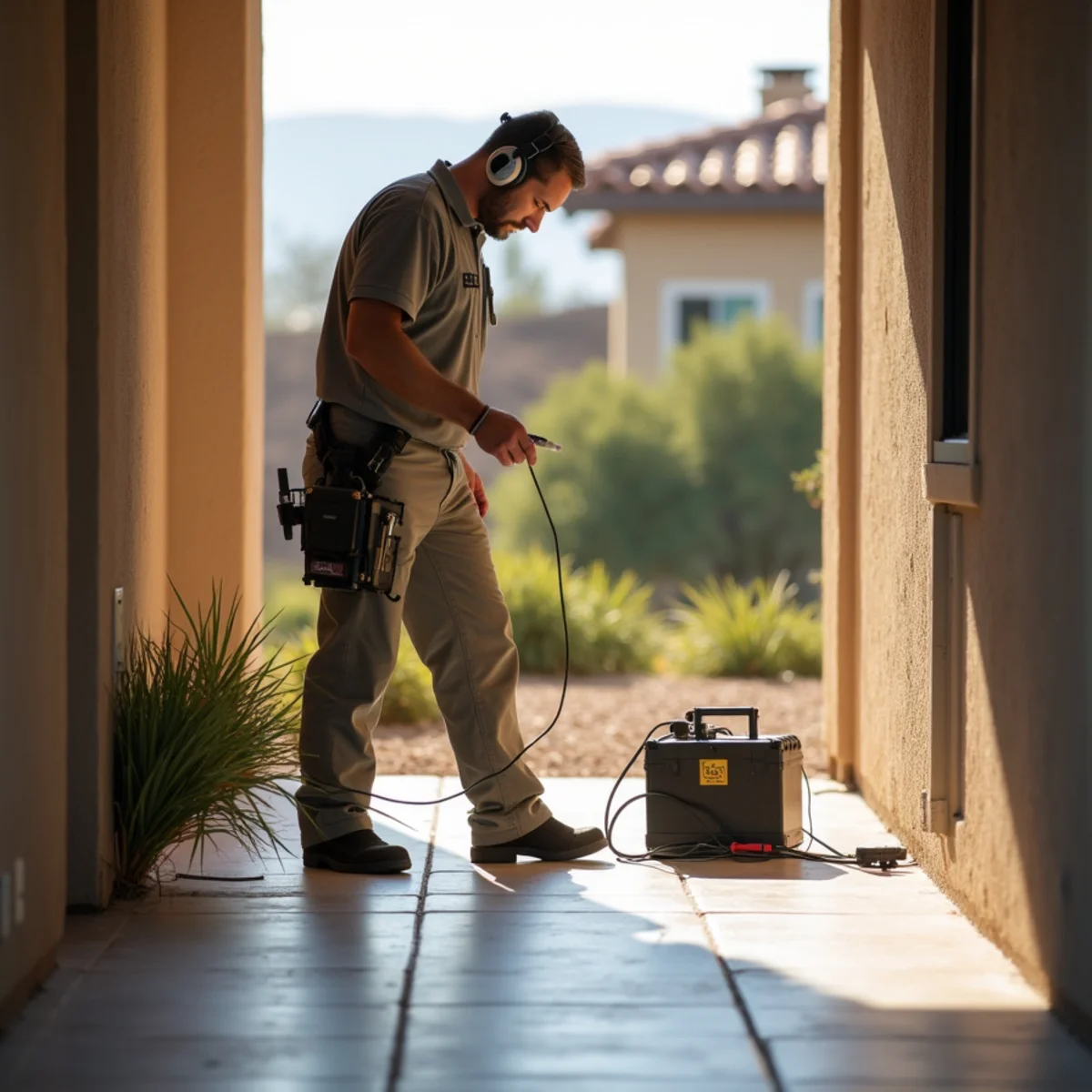
Shut off every fixture and appliance in the house, then find your EMWD meter and watch the low-flow indicator — usually a small triangle or dial that spins with even a trickle. If it moves with everything off, water is leaving the system.
To isolate irrigation specifically, close the valve on the irrigation supply line and repeat. If the indicator stops, the leak is on the irrigation side. That single test narrows the problem enormously.
The walk-around
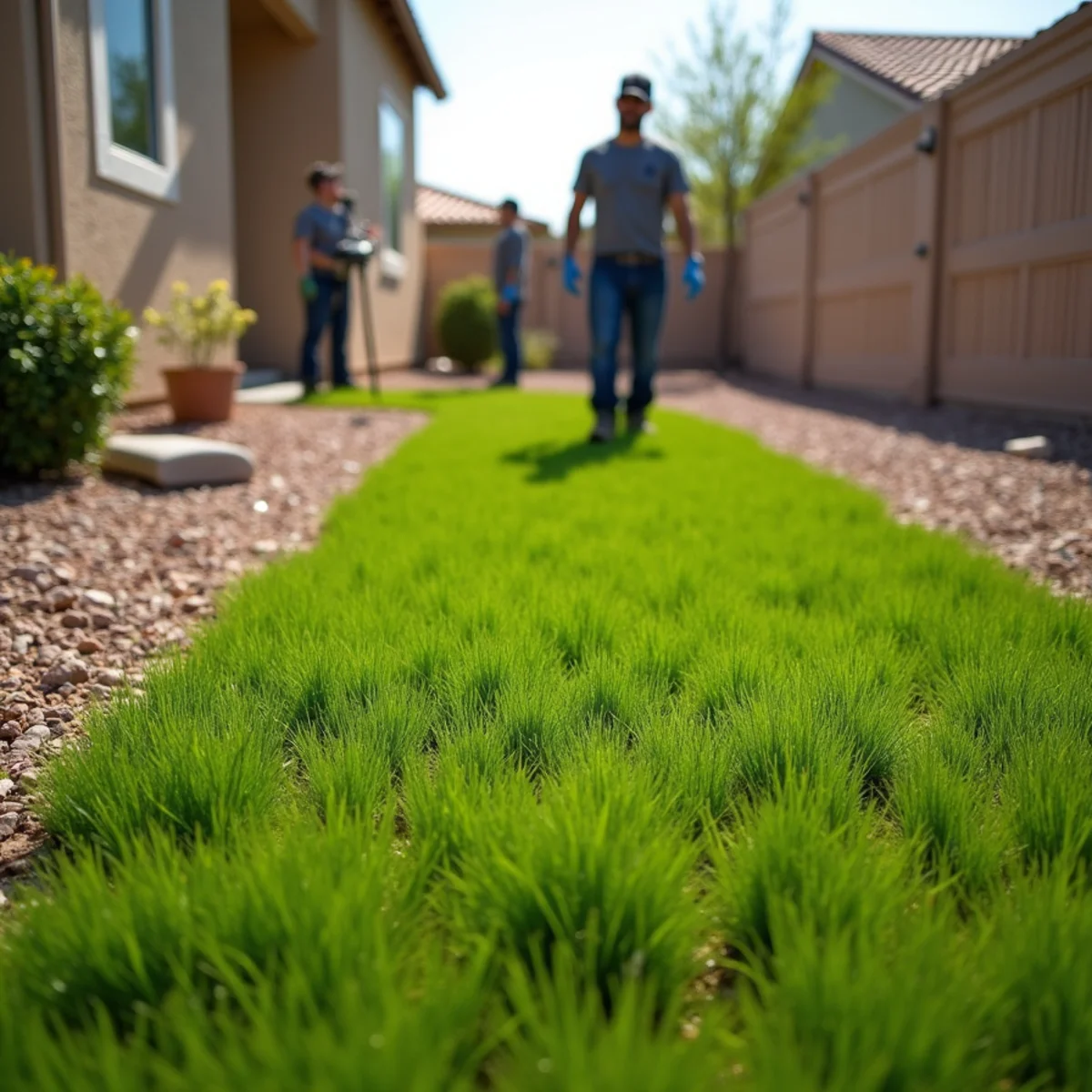
Look for the green patch. Grass that is visibly better than its surroundings, particularly near the house, is the classic sign.
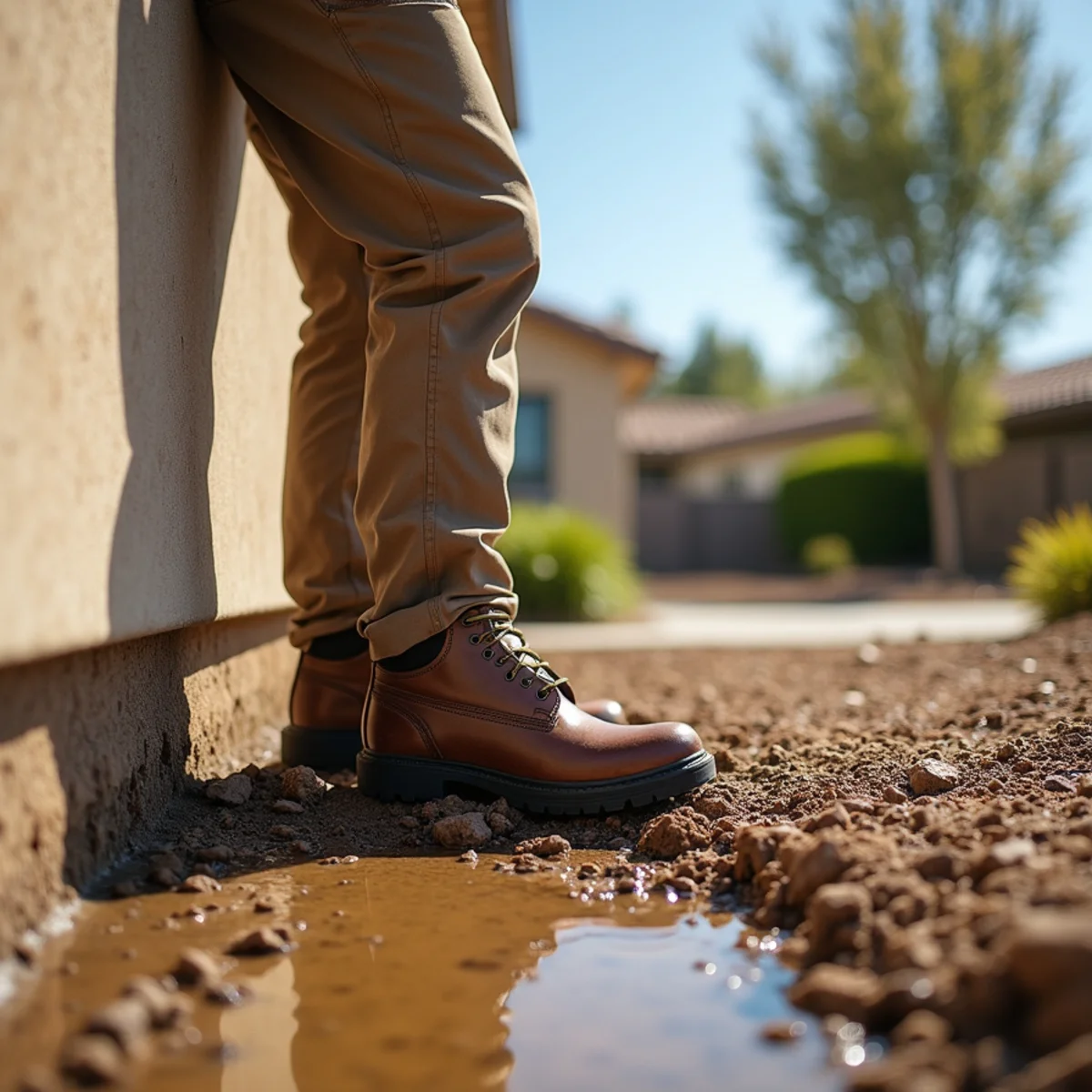
Feel for soft or spongy ground, especially along the foundation line and near valve boxes.
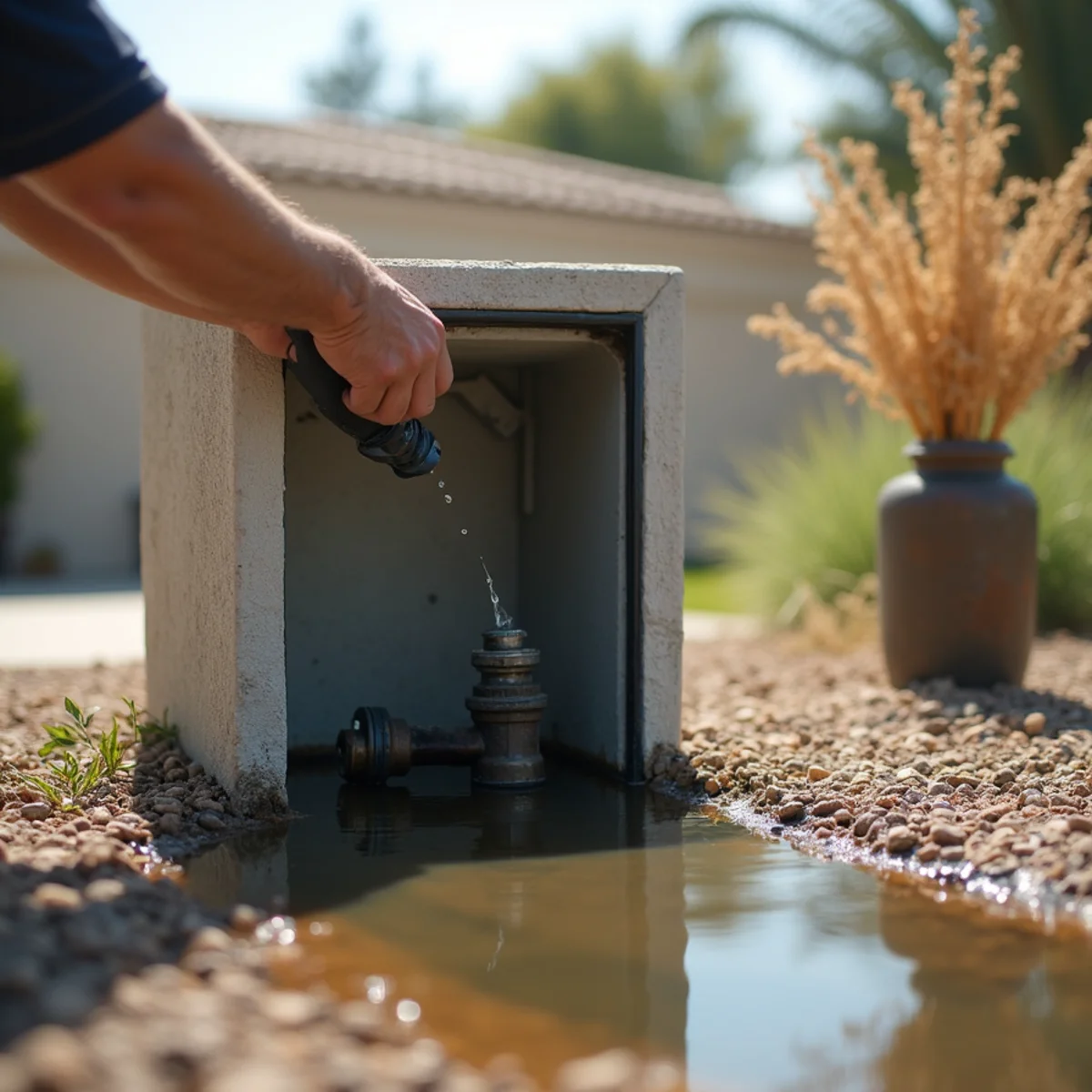
Open the valve boxes. Standing water inside a box means a leaking valve or fitting right there.

Run each zone manually and watch. Look for heads that mist rather than spray (a pressure problem, often from a break elsewhere), heads that keep weeping after the zone shuts off, and any water surfacing where it should not.
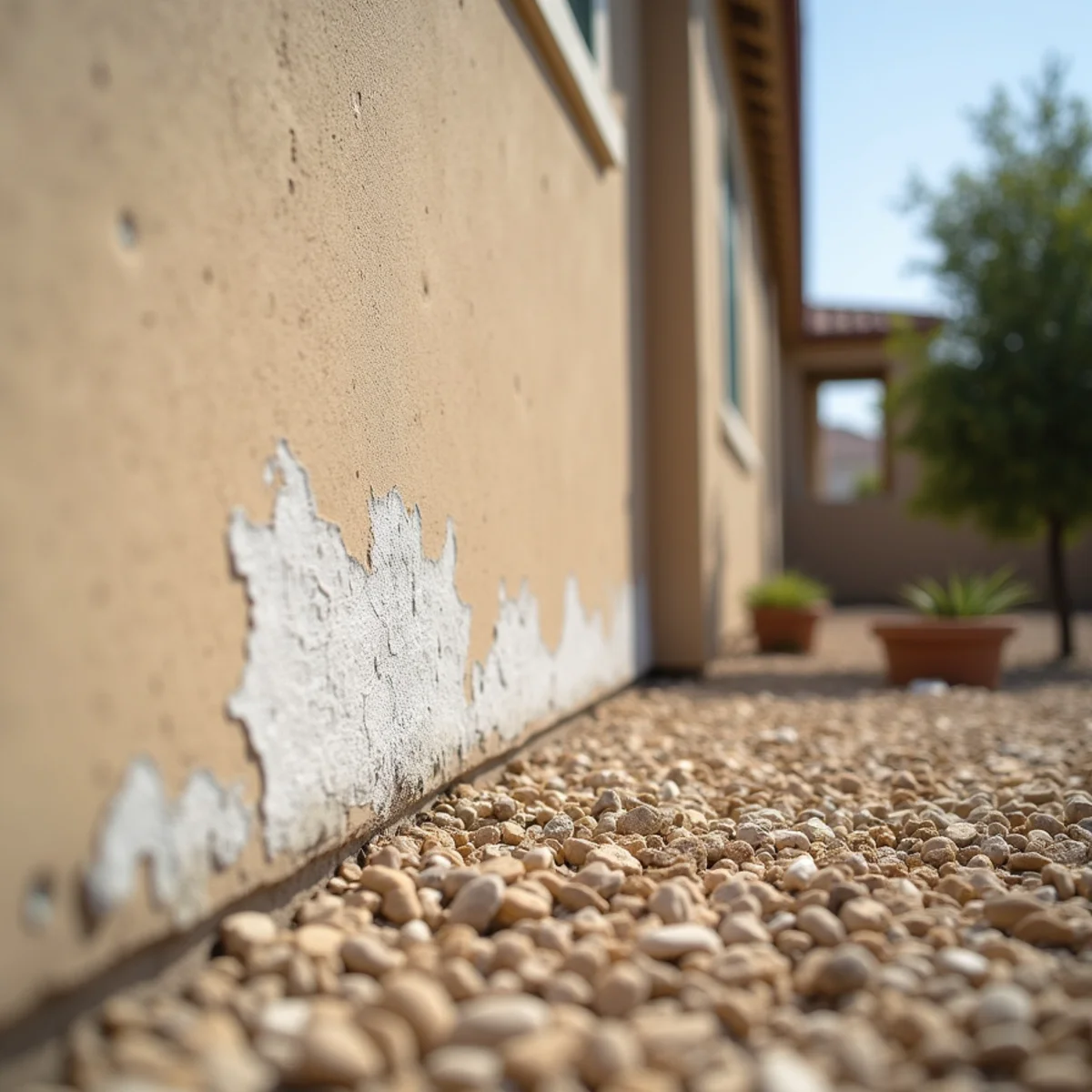
Check the wall where irrigation runs closest to the house. Efflorescence or discolouration on the exterior stucco at the base is a strong signal.
The maintenance that prevents it
- Run every zone manually twice a year — spring and autumn — and actually watch it. Ten minutes per system, and it catches most problems while they are still small.
- Move heads away from the foundation. Nothing should be spraying directly onto the house or wetting the soil within a couple of feet of the slab edge. Redirect or cap them.
- Check your controller after a power outage. Controllers reset to factory defaults, and a default programme can water far more than you intended without anyone noticing for weeks.
- Install a rain sensor if you do not have one. It stops the system running during and after a monsoon cell, which is when saturated soil least needs more water.
- Watch the bill monthly. Irrigation leaks show up in usage long before they show up in the house.
If it has already reached the house
Shut the irrigation supply off entirely and leave it off. Then get a moisture assessment before deciding anything — the affected area is almost always larger than the visible one, and slab moisture takes considerably longer to dry than a surface spill.
Slab drying typically runs five to ten days rather than the three to five of a normal loss, and the fix is not complete until the irrigation problem is corrected. Our pages on crawl space and sub-floor water damage and leak detection cover both halves of that.
Why irrigation damage is discovered so late
An irrigation leak is the quietest way to do serious damage to a house. There is no ceiling stain, no sound of running water, no wet carpet, and for a long time no symptom inside at all. The water is going into the soil beside the foundation on a timer, at night, several times a week.
What it does there is gradual and structural. Persistently saturated soil against a slab edge migrates moisture through the concrete, which is why the first interior sign is often a musty smell in a room with no visible water source, or skirting board that feels faintly cool and looks slightly swollen along one exterior wall. In clay-bearing soils it can also cause differential movement, which shows up as new stucco cracking or doors that have stopped closing squarely.
Because it runs on a controller rather than continuously, it also hides from the most obvious detection method. A homeowner who checks the water meter mid-afternoon sees nothing unusual, because the leak only exists for the twelve minutes the zone is running.
The meter test, done properly
Checking a meter for an irrigation leak needs a different method from checking for a household leak, and doing it the standard way will miss it entirely.
- Turn the irrigation controller to off — fully off, not to a shortened schedule.
- Read the meter, including the small sweep hand or the leak indicator triangle, and write down the exact figure with the time.
- Leave the system off overnight, using no outdoor water at all, and read it again in the morning. Movement here points at a household leak, not an irrigation one.
- Now run a single irrigation zone manually for its normal duration, then turn everything off again, and read the meter immediately.
- Read it once more thirty minutes later. If it has moved while the system is off but shortly after a zone ran, that zone has a leak downstream of its valve.
- Repeat zone by zone. It is tedious, and it is the only reliable way to isolate which valve or line is at fault without excavation.
Frequently asked questions
How much water can a broken irrigation line waste?
A great deal — a broken lateral running on a normal schedule can discharge hundreds of gallons a night. The cost usually shows up on the EMWD bill well before any damage is visible in the house, which is why a monthly glance at usage is worth the thirty seconds.
Is irrigation damage covered by insurance?
Usually not. Carriers typically classify it as maintenance rather than a sudden accidental loss, particularly when it has been running for weeks. File anyway with proper documentation, but do not plan around coverage.
How far from the foundation should sprinklers be?
Far enough that spray never contacts the house and the wetted area stays a couple of feet clear of the slab edge. Drip irrigation close to the foundation should be checked especially carefully, because emitters fail quietly and put water in exactly the wrong place.
My stucco has cracked along one wall. Could irrigation be the cause?
It is worth investigating, particularly if the cracking is on an exterior wall with planting beds against it and it has appeared or worsened over a season. Persistently saturated soil against a foundation can cause differential movement in the clay-bearing soils common here. It is not the only possible cause and we would not diagnose it from a photograph — but if there is a sprinkler head or a valve box within a few feet of the crack, start there.
Should I just move the planting beds away from the house?
Increasing the distance between irrigated soil and the foundation genuinely helps, and so does converting the strip immediately against the house to drip rather than spray. What matters more than the plants is where the water is delivered and whether it drains away from the structure — a bed with correct grade and drip irrigation is far less of a risk than lawn spray heads throwing against a stucco wall twice a week.