Maintenance & Prevention
Annual Water Heater Maintenance for Menifee Hard Water
The highest-return hour of home maintenance available to a Menifee homeowner, and almost nobody does it.
The short answer
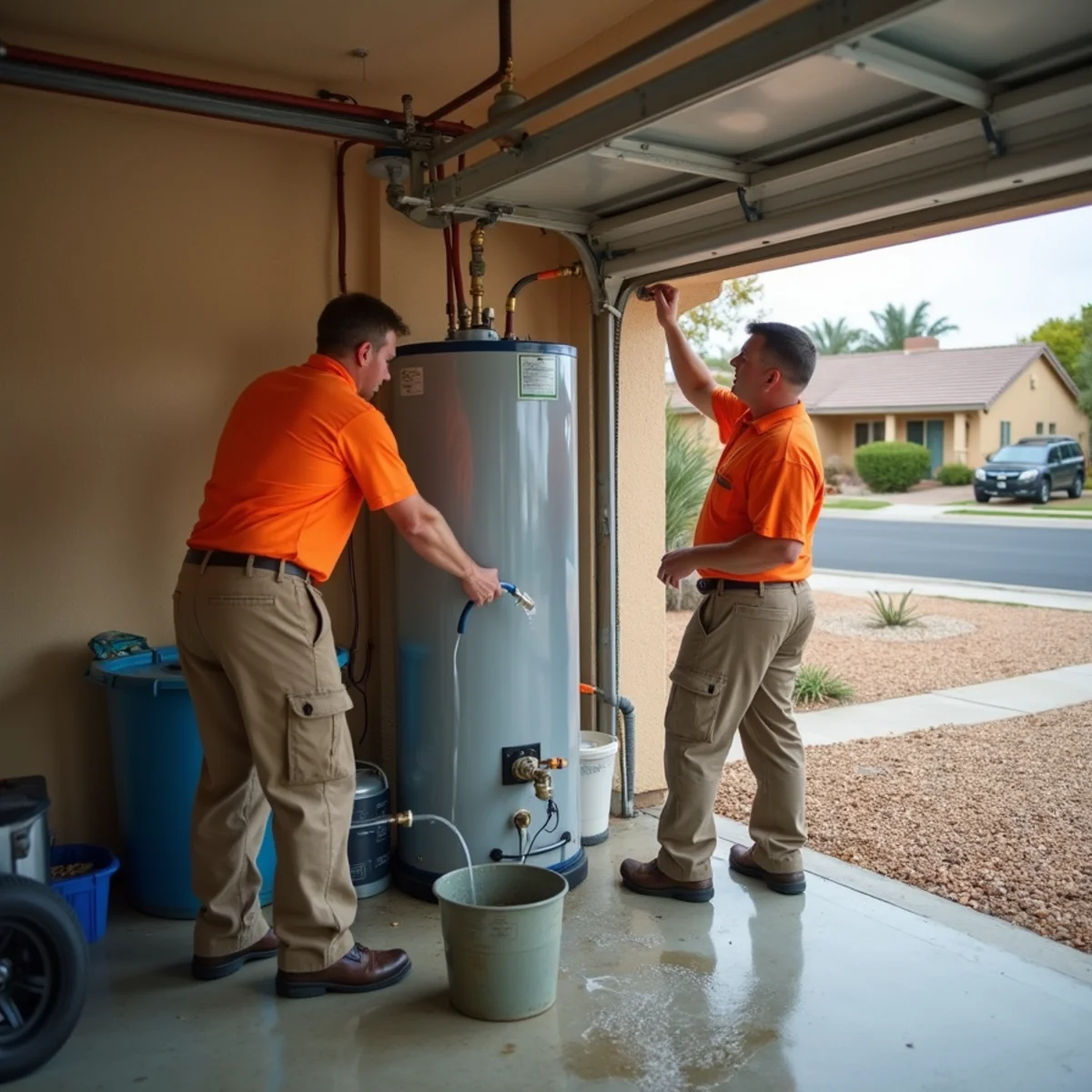
Flush your water heater once a year, minimum. Menifee water is mineral-rich enough that EMWD runs desalination plants, and that sediment settles on the tank floor, insulates the burner and drives the steel hotter than designed. Also check the anode rod every two to three years and test the temperature and pressure relief valve annually.
A water heater failure is one of the most destructive things that can happen to a Menifee house, and one of the most avoidable.
When a tank lets go it releases forty or fifty gallons at once, and then keeps releasing at line pressure until somebody shuts the supply. Most Menifee heaters sit in a garage that shares a wall with the house, which means the water goes under that wall and into the hallway, the laundry, and whatever is carpeted beyond.
Why Menifee tanks fail early
Eastern Municipal Water District draws from a brackish groundwater basin and runs reverse-osmosis desalination facilities to treat it — the Menifee Desalter since 2002, plus Perris I and II. The result is safe, good water that still carries substantial dissolved mineral.
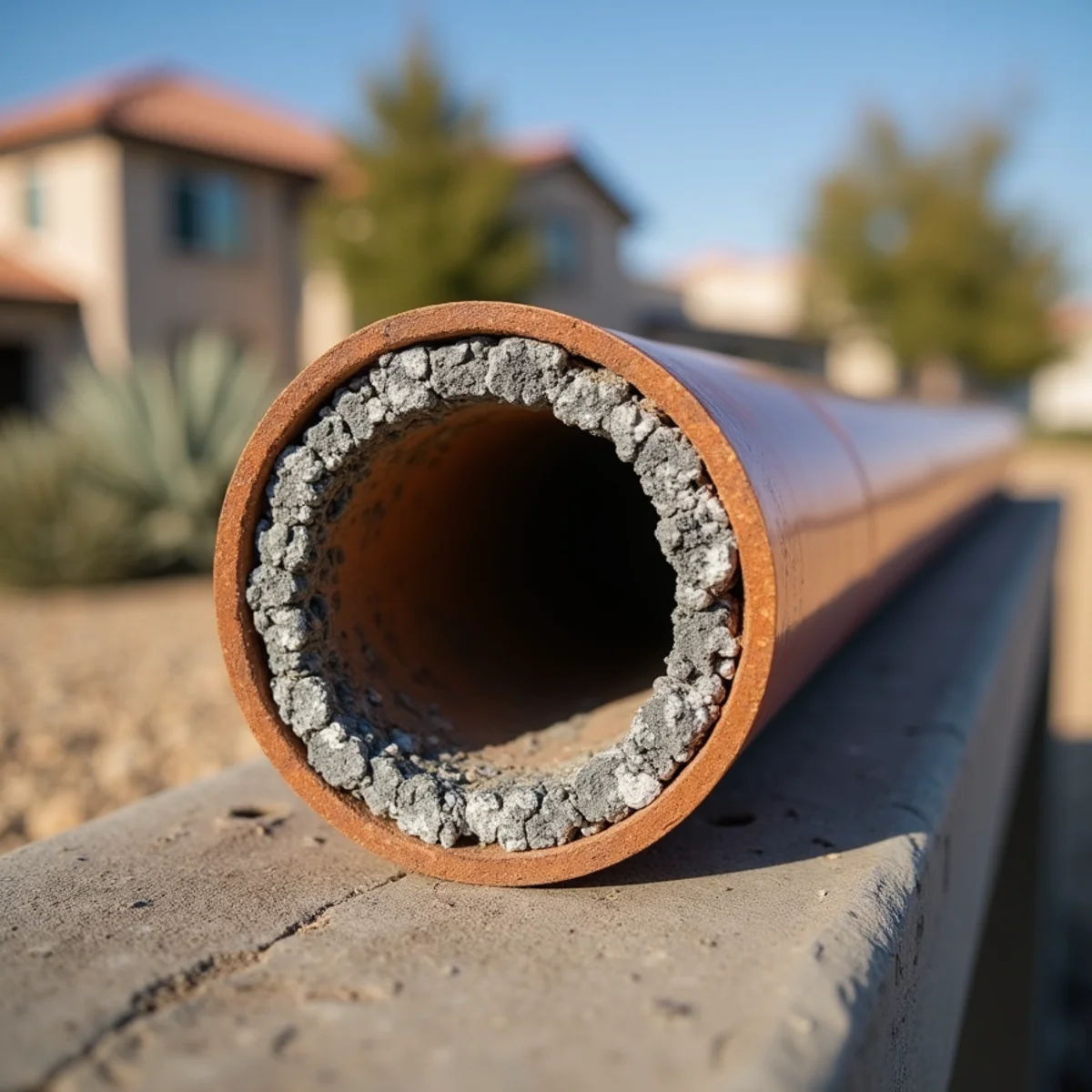
Heating drives those minerals out of solution. They settle on the tank floor as sediment, and that sediment layer does something specific and destructive: it insulates the water above from the burner below.
The burner then runs longer to reach temperature, and the steel at the base of the tank runs hotter than it was designed to. Over years, that overheated steel loses its glass lining and begins to corrode. Hotter steel fails sooner, which is why manufacturer lifespan estimates based on average water do not hold up in this valley.
How to flush a tank
Once a year, minimum. It takes about an hour, mostly waiting.
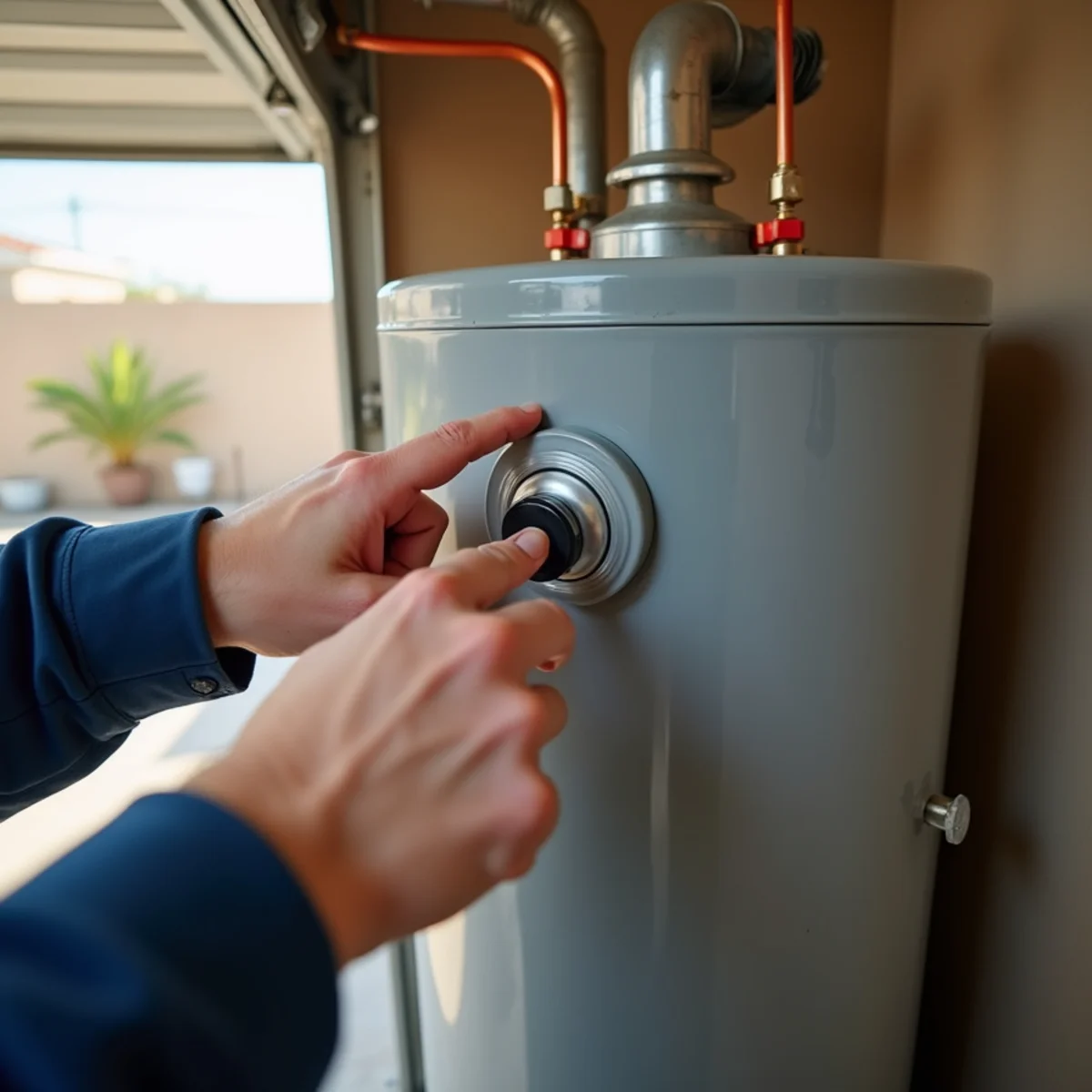
Shut off the heat. Gas: turn the thermostat dial to "pilot". Electric: switch the breaker off. Do not skip this — heating elements burn out instantly if exposed in an empty tank.
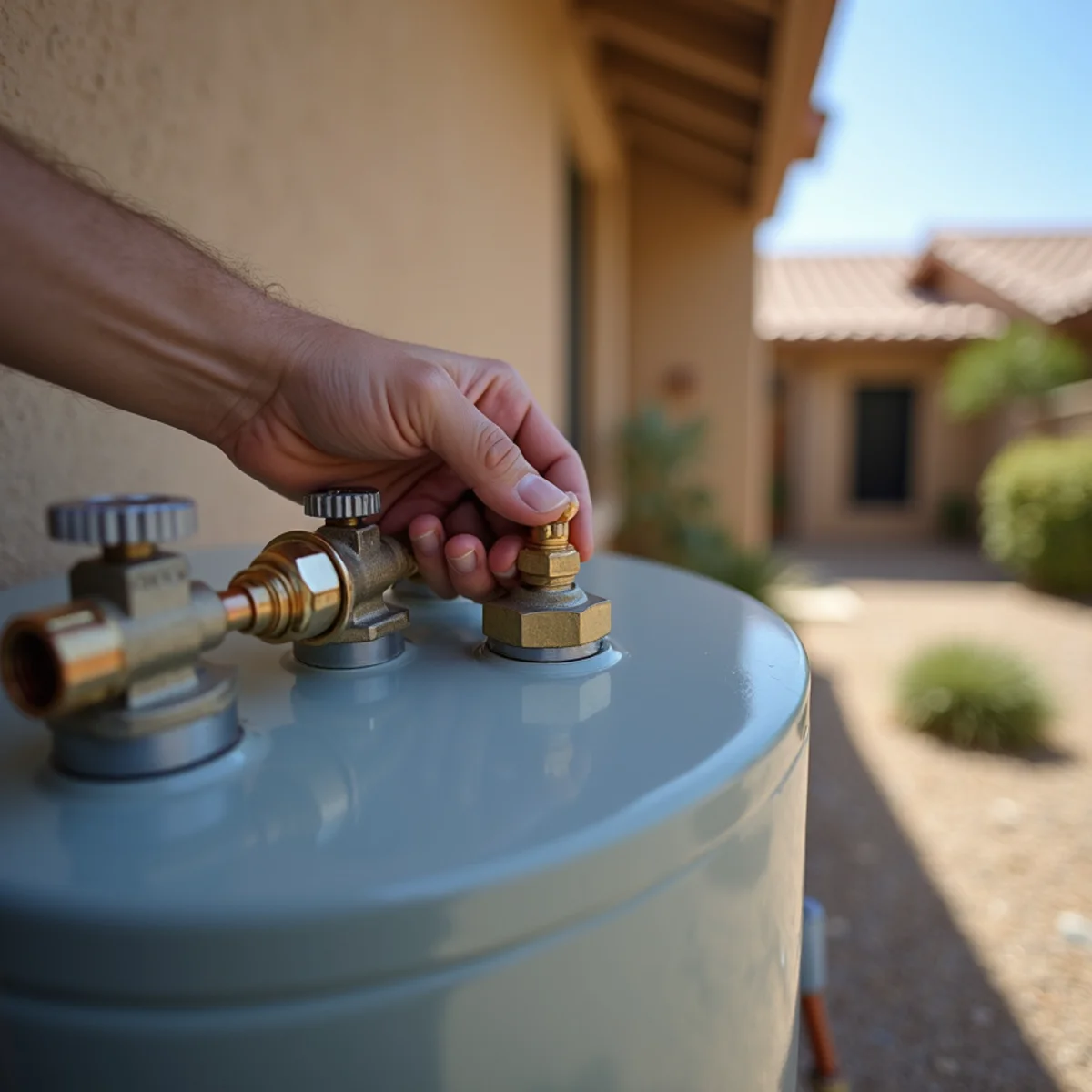
Close the cold water inlet valve at the top of the tank.
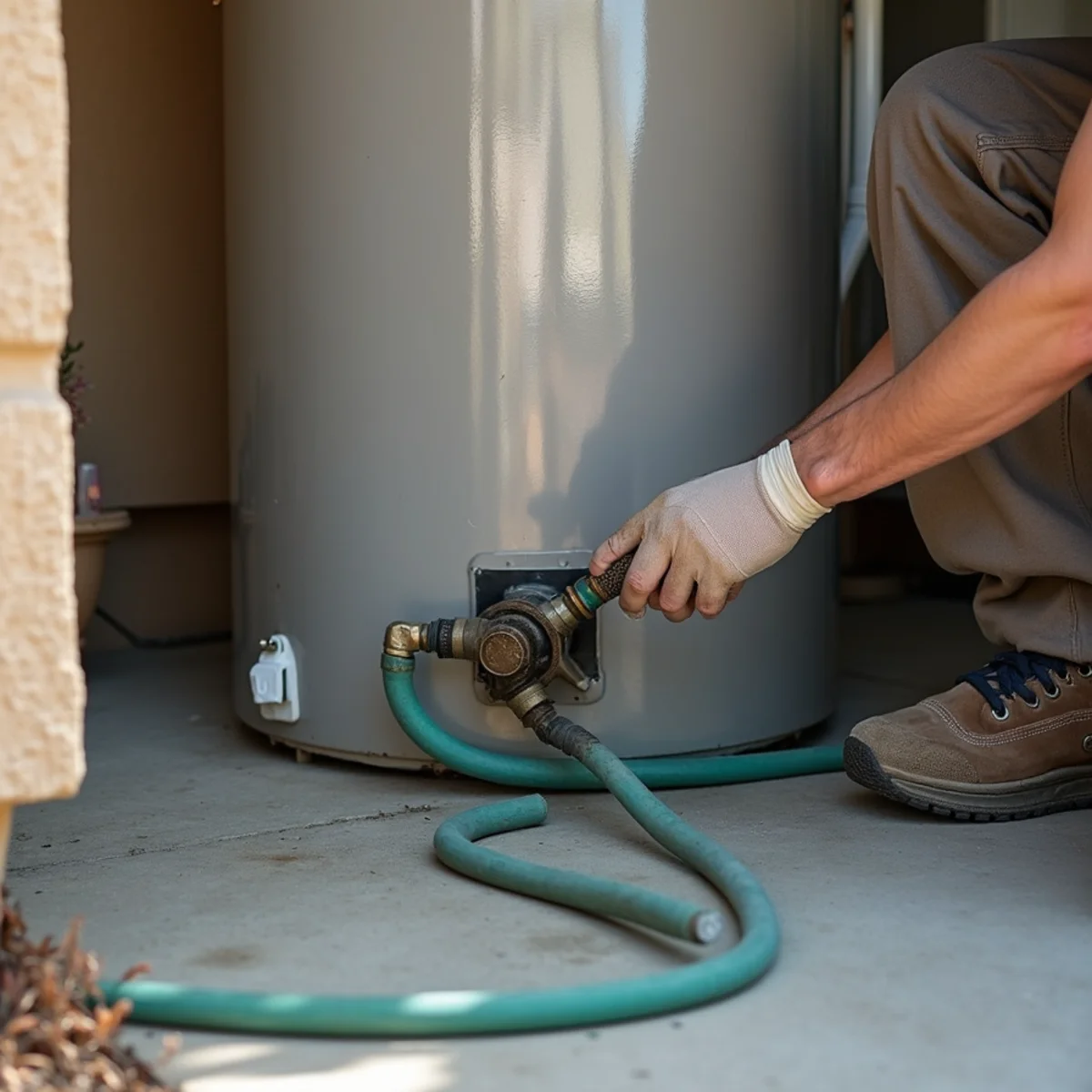
Attach a garden hose to the drain valve at the base and run it to a floor drain, a driveway, or the yard. The water will be hot.
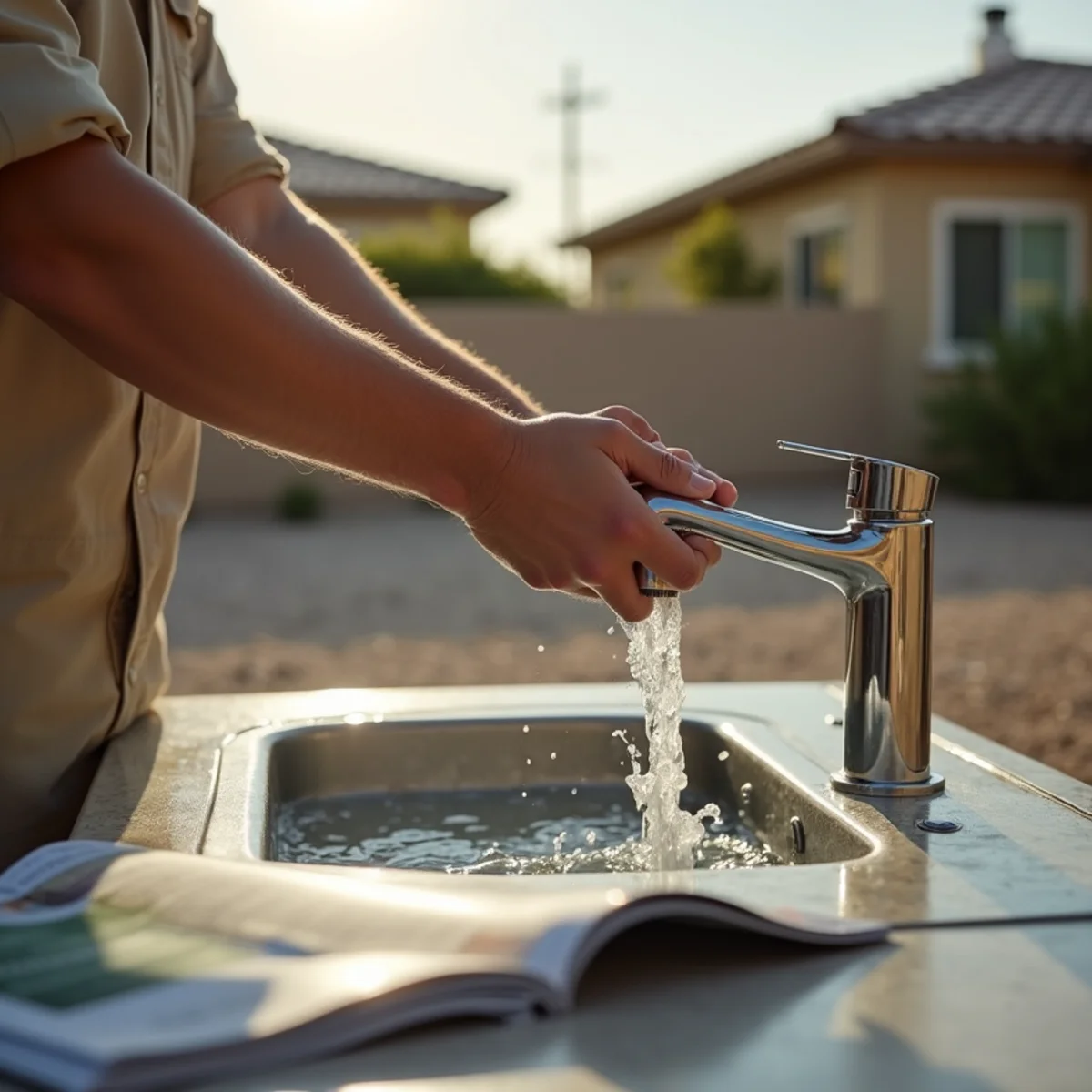
Open a hot water tap somewhere in the house to break the vacuum, otherwise the tank drains slowly or not at all.
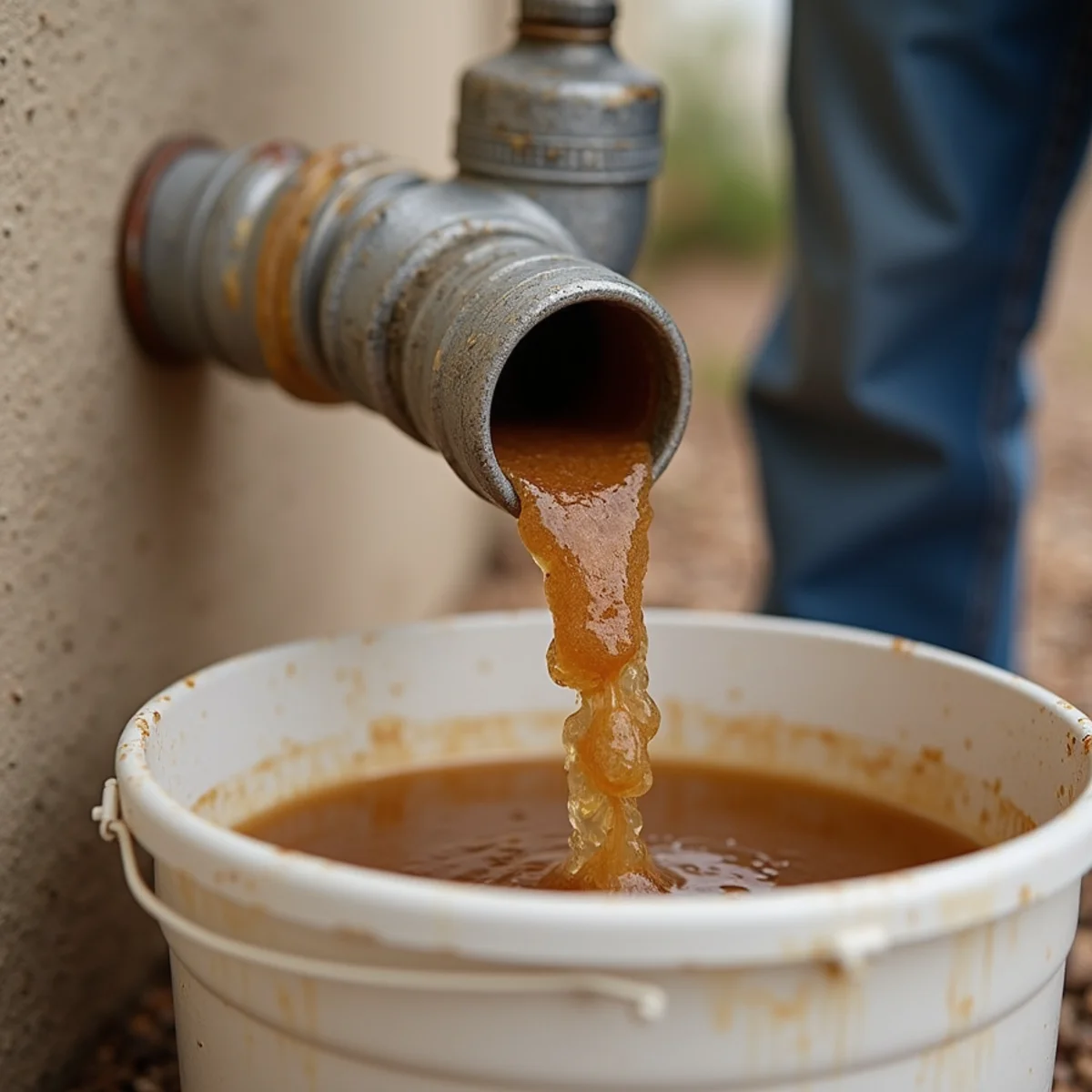
Open the drain valve and let it run until the water is clear. On a tank that has never been flushed, expect brown or grey water carrying grit.
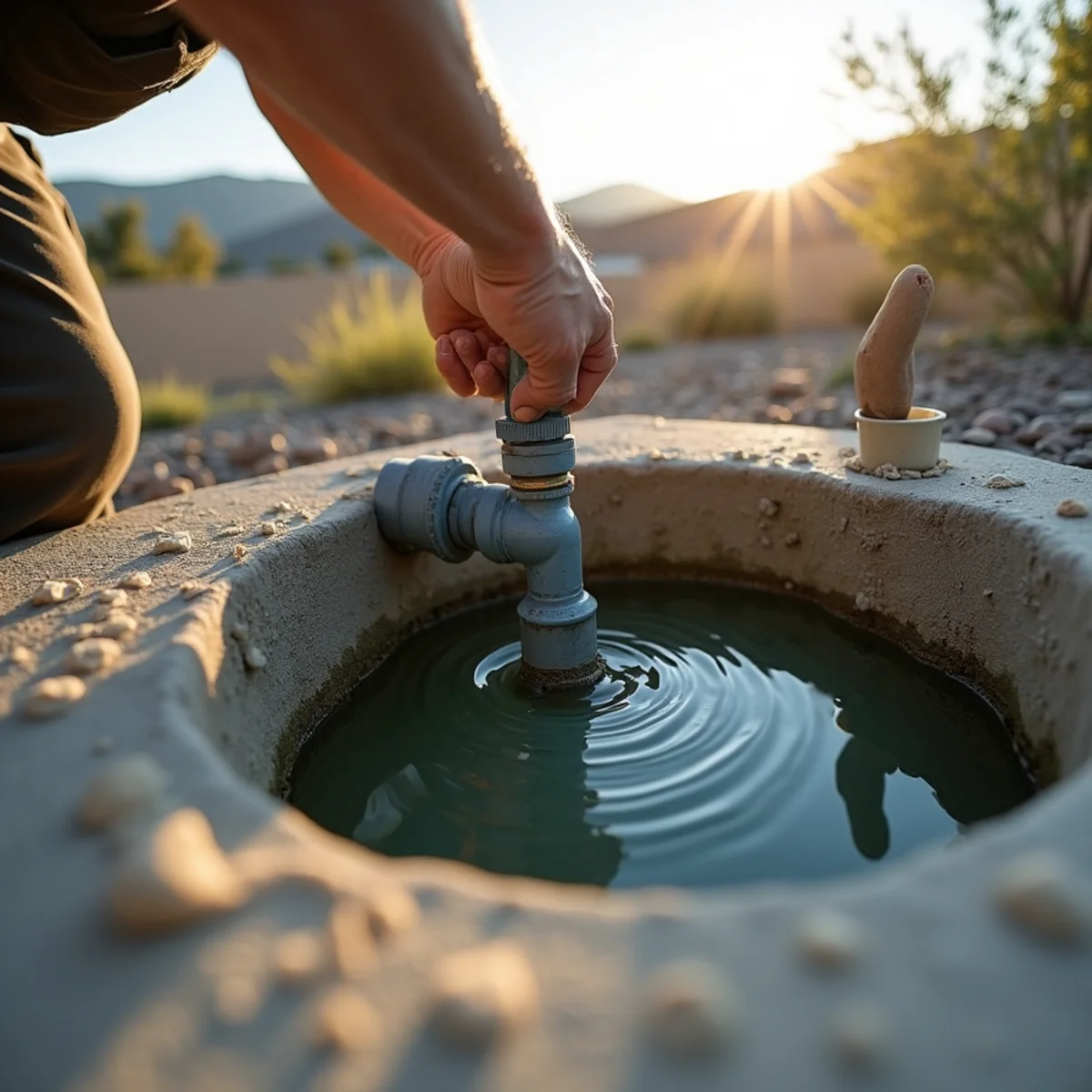
Flush the sediment loose. With the drain still open, briefly open the cold inlet to stir the tank floor. Repeat two or three times until it runs clear.
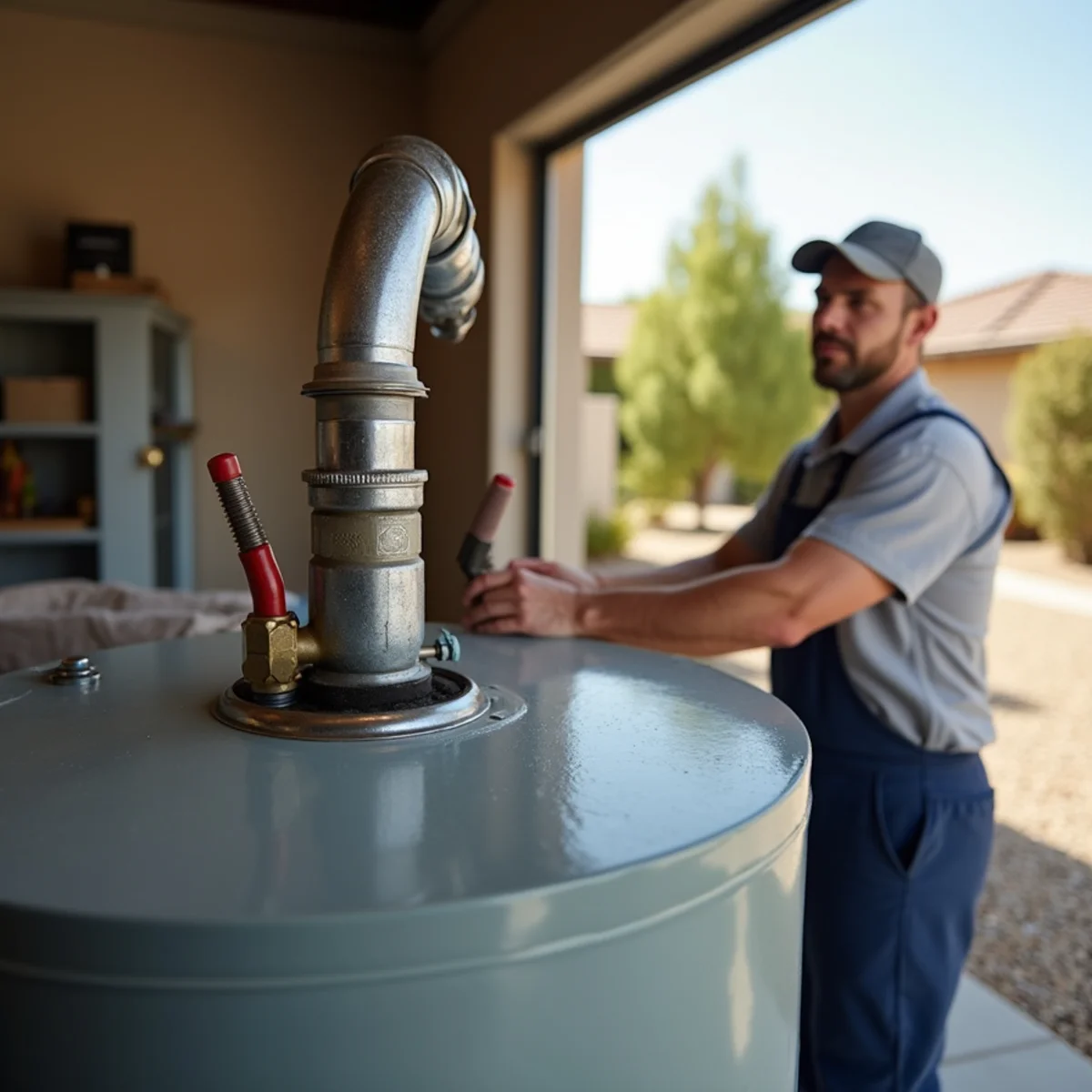
Close the drain, refill, and only then restore the heat. Do not re-light or re-energize until the tank is full and water flows steadily from that open hot tap.
The part almost nobody checks
The anode rod is a sacrificial magnesium or aluminium rod inside the tank whose entire job is to corrode so the steel does not. It is the single most important component for tank longevity and the least-known.
It should be inspected every two to three years and replaced when substantially consumed. In mineral-heavy water it depletes faster, and a tank running on a spent anode rod is corroding on borrowed time.
Replacing one is inexpensive. Replacing a tank because nobody replaced the rod costs considerably more — and often comes with a flooded hallway attached.
Test the T&P valve
The temperature and pressure relief valve is a safety device that opens if the tank over-pressurizes. Once a year, lift the lever briefly and let it snap back. Water should discharge through the overflow pipe and then stop cleanly.
If nothing comes out, the valve is seized with mineral deposit and needs replacing. If it drips afterward, it needs replacing. This is a genuine safety item, not just a leak prevention one.
When to replace rather than maintain
- Any moisture at the base of the tank. A weeping tank is a failing tank. There is no repair for a corroded tank body.
- Rust-coloured hot water, when cold water runs clear. That is the tank interior.
- Over ten years old and never flushed. At that point sediment has been insulating the base for a decade. Weigh a planned replacement against an unplanned one at 2 a.m.
- Repeated pilot or element failures, which often indicate sediment interfering with the burner or elements.
Three cheap upgrades worth doing at replacement
- A drain pan with a plumbed drain line. If the tank is in a garage or anywhere above or beside living space, this alone converts a flooded house into a wet garage floor.
- Braided stainless flex connectors rather than rigid or older rubber connections.
- A leak detection shutoff. A sensor at the base that closes the supply and alerts your phone. Inexpensive, and it works whether you are home or in another state.
Should you soften the water?
For most Menifee homes, the appliance case is strong. A softener reduces the scale that shortens water heater life, keeps dishwasher and washer components working, and stops angle stops seizing.
What it will not do is rescue thirty-five-year-old copper that is already pitting, and it adds a maintenance routine of its own. Treat it as a way to slow the clock rather than reset it — the full picture is in how hard water damages your Menifee plumbing.
If your tank has already failed and water reached the house, that is an appliance leak water damage job — and the first thing we will do after extraction is tell you what else in your house is on the same schedule.
Where to put it, and what to put under it
Most of what determines whether a water heater failure becomes a restoration job is decided at installation, long before the tank fails. Every tank eventually leaks. The question is what happens in the hour after it does.
A drain pan under the heater, plumbed to somewhere sensible, is the difference between a wet pan and a wet house. Many Menifee garages have a pan that was installed and never connected to anything, which means it holds a couple of gallons and then overflows in exactly the same place it would have without the pan. If yours is not piped to a drain or to the exterior, that is a short plumbing job with a very high return.
The other component worth knowing about is a leak sensor. A battery-powered water alarm sitting in the drain pan costs very little and screams when it gets wet. A smart version will send a notification to your phone, which matters enormously if the tank lets go while you are at work or away for a weekend — the difference between fifty gallons and fifty gallons plus everything that arrives afterwards while nobody is home.
- A drain pan that is actually plumbed to a drain or to the exterior, not a pan that simply exists
- A leak sensor in the pan — battery alarm at minimum, connected sensor if the property is ever empty
- An automatic shut-off valve if the heater is on a wall shared with living space, which is the worst-case position
- Nothing absorbent stored on the garage floor within reach of a fifty-gallon discharge
- A known, tested shut-off valve on the cold inlet that you have actually turned in the last twelve months
What the noises mean
A water heater in a hard-water city gives you audible warning long before it fails, and the sounds are specific enough to be diagnostic.
Rumbling or popping during a heating cycle is the classic sign of sediment. Water trapped underneath a layer of hardened scale on the tank bottom flashes to steam and forces its way up through it, which is what you are hearing. It means the burner is heating scale rather than water, the tank steel is running hotter than it was designed to, and the unit is on an accelerated path to failure. Once a tank is popping loudly, flushing frequently will not shift what has already hardened.
A high-pitched whistle or hiss usually points at the temperature and pressure relief valve, and that is not something to leave. Ticking as the system heats and cools is normally just thermal expansion in the pipework and is harmless. What matters most is any change — a tank that has been quiet for years and has recently started making a noise it did not make before is telling you something, and in this water it is usually telling you about sediment.
Frequently asked questions
How often should I flush in Menifee?
Annually at minimum. If your tank rumbles or you have never flushed it, do it now and then again in six months to see how much sediment returns — that tells you the right interval for your house.
How long should a water heater last here?
Manufacturer estimates assume average water. In EMWD territory, plan on the shorter end and treat anything past ten years without maintenance history as living on borrowed time. A well-maintained tank does considerably better than a neglected one.
Is a tankless heater a better option in hard water?
It avoids the sediment-on-the-tank-floor problem entirely, which is a real advantage. But it needs annual descaling in this water, and skipping that scales the heat exchanger internally. Better, not maintenance-free.
My tank is popping loudly. Is flushing still worth doing?
Once a tank is popping consistently, the sediment has generally hardened into a layer that a standard flush will not remove, so the honest answer is that flushing will help a little and will not fix it. It is still worth doing, and it is worth getting a realistic view of the tank age at the same time. If the unit is past ten years in this water and it is audibly full of scale, the money is usually better spent on planned replacement than on chasing a flush.
Is a leak sensor worth it if I am home most of the time?
Yes, because water heaters have an inconvenient habit of failing overnight or during the one weekend you are away. A battery alarm in the drain pan costs very little and buys you the difference between noticing at once and noticing in the morning. If the heater shares a wall with a bedroom or a hallway, that gap is the whole restoration job.