Maintenance & Prevention
The AC Drain Line That Floods Menifee Ceilings Every Summer
If your ceiling stains in August and the roof is fine, this is almost certainly why — and it is one of the easiest failures to prevent.
The short answer
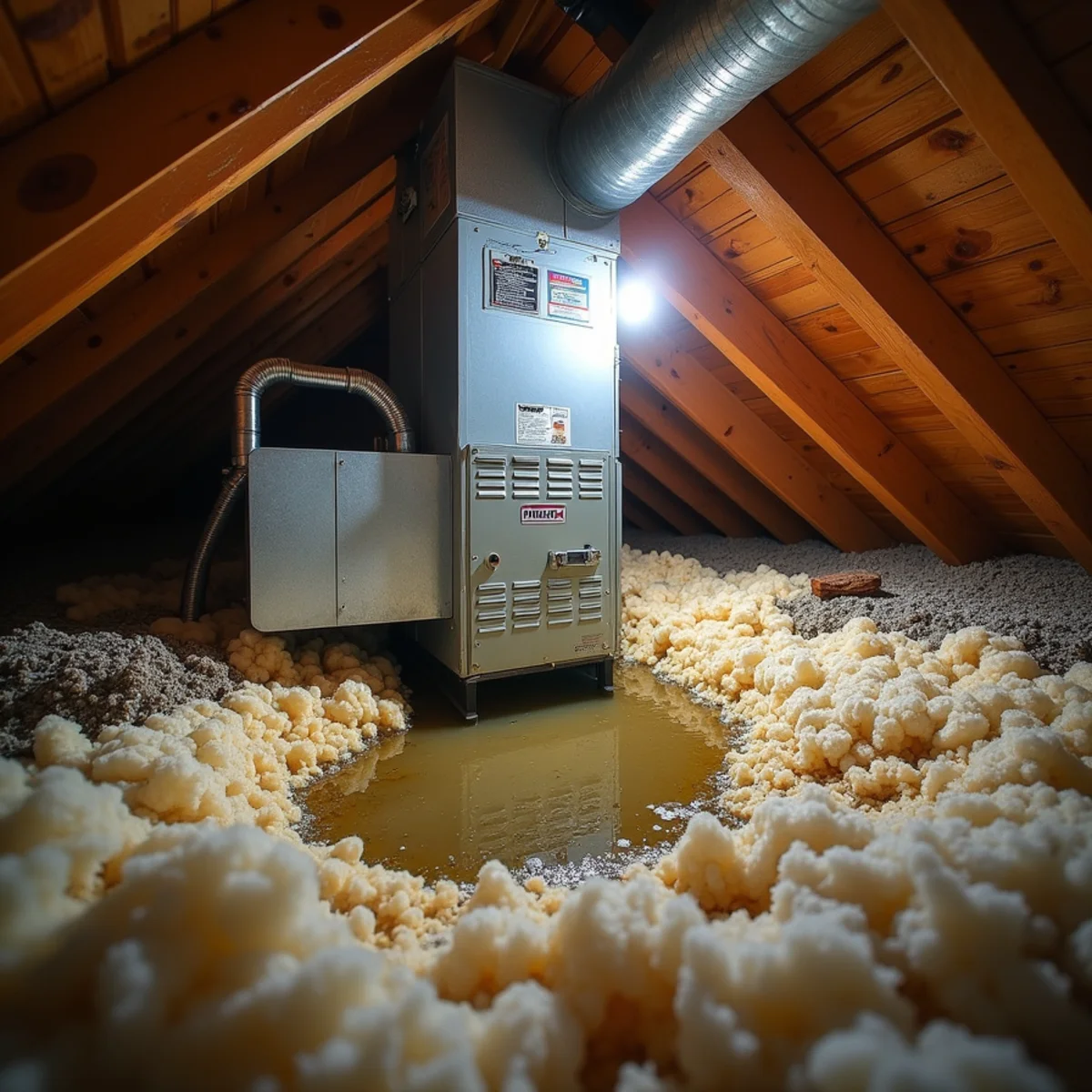
A clogged air conditioner condensate line is the leading cause of summer ceiling damage in Menifee. Dust, biofilm and mineral scale block the drain, the pan overflows into attic insulation, and water comes through the ceiling below. Flushing the line with a cup of white vinegar each spring prevents nearly all of it.
Every summer we take the same call. A ceiling stain appears — usually in a hallway, often near a return vent — and the homeowner is baffled because it has not rained since March.
It is the air conditioner. Specifically, it is a plastic pipe about three quarters of an inch across that almost nobody knows exists until it fails.
What the condensate line does
Air conditioning does two jobs: it cools air and it dehumidifies it. When warm indoor air passes over the cold evaporator coil, moisture condenses out of it — the same way a cold glass sweats on a summer afternoon.
That water collects in a drain pan under the coil and runs out of the house through the condensate line, sloping gently to a discharge point outside or into a drain. On a hot Menifee day a system can produce several gallons.
Now consider that in this valley the AC runs for months, more or less continuously. That is a lot of water moving through a small pipe, day after day.
Why it clogs here specifically
Three things block condensate lines, and Menifee supplies all three generously.
- Dust. Fine desert dust is drawn across the coil constantly, and Santa Ana events push far more of it into attics and returns. It settles in the pan and washes into the line.
- Biological growth. A dark, permanently damp pipe full of condensate is an ideal environment for algae and bacterial slime, which is why the blockage is often a soft plug rather than a hard one.
- Mineral scale. The same water chemistry that scales your water heater leaves deposits in the condensate system, gradually narrowing the effective diameter.
What happens when it blocks
Water backs up into the primary drain pan. From there, one of two things happens.
If your system has a working secondary pan and float switch, the switch detects the rising water and shuts the system down. You get a warm house and an annoying service call. That is the good outcome.
If it does not — and in a lot of 1990s and early-2000s Menifee installations it does not, or the switch has failed — the pan simply overflows. The water goes into the attic insulation and then through the ceiling drywall below.
The warning signs
- Your AC shuts off on its own on hot days. That is often the float switch doing its job. Do not just reset it — find out why it tripped.
- No water at the outdoor discharge point on a hot day when the system has been running. There should be a steady drip. Nothing means the water is going somewhere else.
- A stain near a return vent or in a hallway ceiling. That geometry, in summer, in a house with an intact roof, is a condensate line until proven otherwise.
- A musty smell when the system runs. Standing water in the pan or the line supports growth, and the air handler distributes that smell through the house.
- Water around the air handler if it sits in a garage or closet rather than the attic.
The ten-minute annual fix
Do this every spring, before the first genuinely hot week.
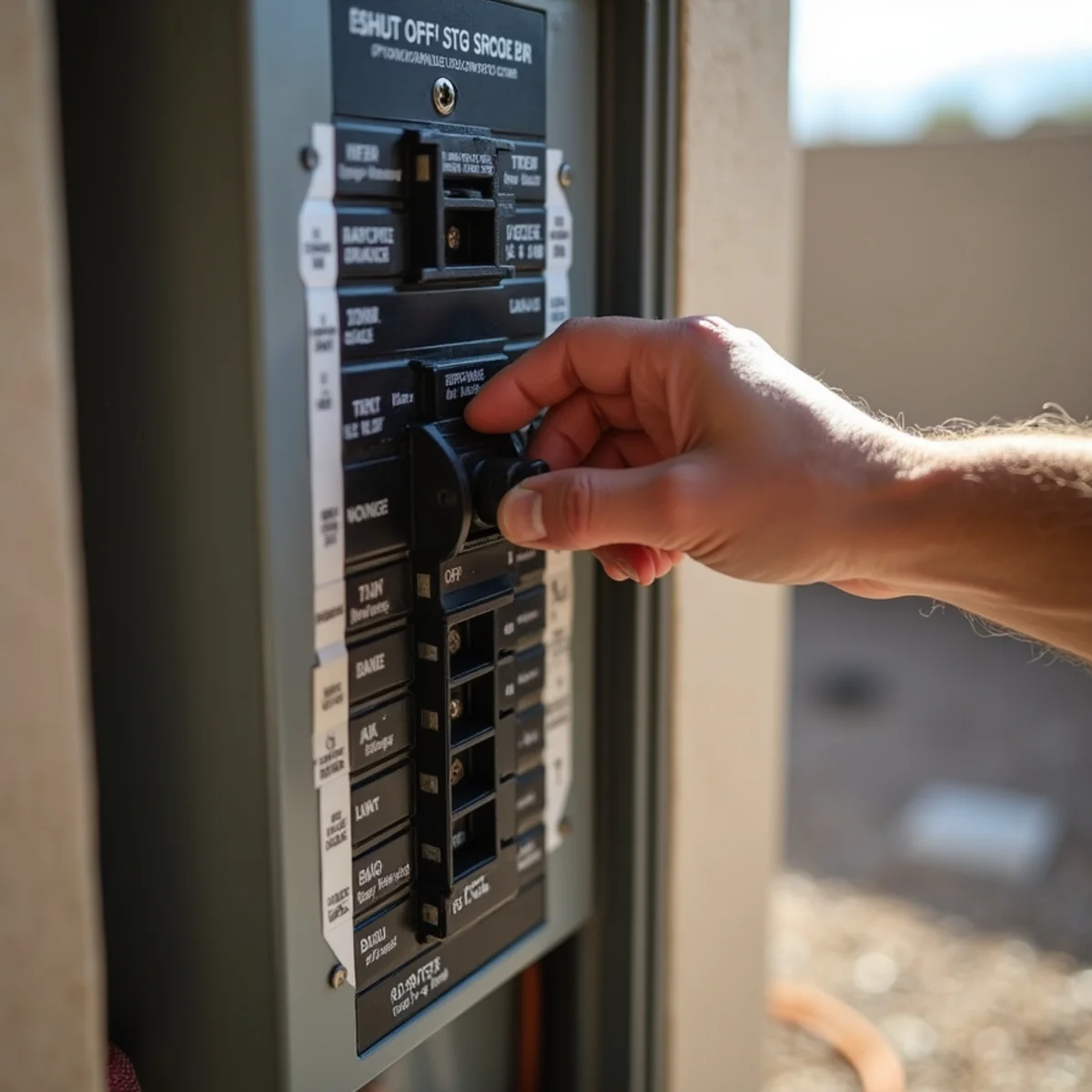
Shut the system off at the thermostat and the breaker.
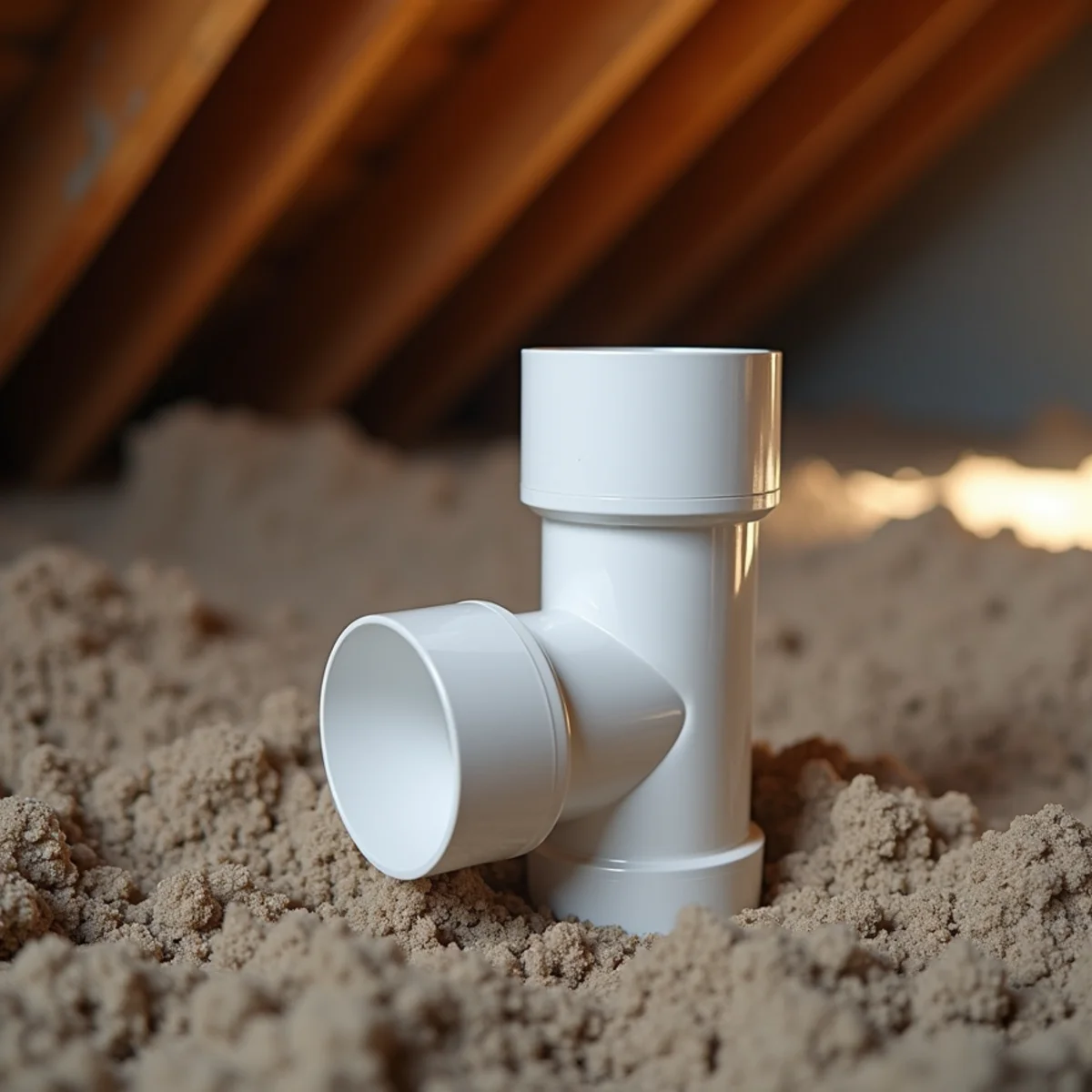
Find the access point. There is normally a capped T-fitting on the condensate line near the air handler, plus a discharge point outside — often near a window or above a landscaped bed.

Pour a cup of distilled white vinegar into the access tee. Vinegar kills algae and dissolves light scale without damaging PVC. Bleach also works but is harder on components and on any plants at the discharge end.

Wait fifteen minutes, then flush with a couple of cups of water and confirm it runs out the discharge point freely.

If nothing comes out, the line is genuinely blocked. A wet/dry vacuum held over the outdoor discharge end, sealed with a rag, will usually pull the plug out in one go.

Check the pan itself for standing water or rust while you are up there, and confirm the float switch is present and looks intact.
While the attic hatch is open, take thirty seconds to look at the insulation around the air handler. Matted, compressed, or discoloured insulation means this has already happened at least once.
What to do if it has already overflowed
Shut the system off — it will keep producing water while it runs. Put a bucket under any active drip and keep people out from under a sagging area.
Then get it looked at properly. The visible stain is the smallest part of the problem: wet insulation loses its R-value permanently, wet sheathing supports mold, and a ceiling that has been saturated is structurally compromised. Our pages on ceiling water damage repair and mold remediation cover what that work involves.
Worth adding while you are at it
- A float switch, if your system does not have one. It is inexpensive, an HVAC technician can add it in under an hour, and it converts a ceiling repair into a warm afternoon.
- A secondary drain pan under an attic air handler, if there is not one.
- A condensate line cleaning as part of your annual HVAC service — most technicians will do it if you ask, and most do not if you do not.
In a city where air conditioning runs half the year, this is one of the highest-return ten-minute tasks a homeowner can do. It is also, in our experience across Paloma Valley and the surrounding tracts, one of the least performed.
How much water your air conditioner actually produces
This is the number that makes the risk make sense. People think of a condensate line as a trickle, and in a mild climate it more or less is. In a Menifee August it is not.
An air conditioner is a dehumidifier that happens to also cool. Every hour it runs, it condenses moisture out of the air passing over the evaporator coil, and that water has to go somewhere. On a run-heavy summer day a residential system can produce several gallons, day after day, for months. Every drop of that is meant to leave through a plastic pipe roughly three quarters of an inch across, usually running through an attic, at a very shallow slope.
Reframed that way, the failure mode is obvious. You have a continuous water supply running through the hottest part of your house, above your ceilings, through a small pipe that is prone to blocking — and unlike a plumbing leak, nobody ever thinks to check it.
Where the water goes when the line blocks
What happens next depends entirely on where your air handler is and whether the secondary protection was installed and is working.
| Air handler location | Where the overflow goes | What you usually see first |
|---|---|---|
| Attic, over living space | Out of the secondary pan, or over its edge, onto the ceiling below | A spreading ceiling stain, often over a hallway or bedroom, in the hottest part of summer |
| Attic, with a working float switch | Nowhere — the system shuts itself off | The air conditioning stops working on the hottest day of the year, which is the system doing its job |
| Interior closet | Down the closet wall and into the flooring and adjacent rooms | Buckled flooring at a closet threshold, or a musty smell in a hallway |
| Garage | Onto the garage slab and toward the shared wall | Damp drywall at the base of the wall between the garage and the house |
The float switch in the second row is the single most valuable component in this list, and it is inexpensive. It sits in the secondary drain pan and cuts power to the system when water rises in it. Losing air conditioning in August is unpleasant. It is dramatically less unpleasant than replacing a ceiling.
Frequently asked questions
How often should I flush the condensate line?
Once a year in spring, before the first hot week. If your system has clogged before, or you are in a dustier area, twice a year — spring and mid-summer — is better insurance.
Vinegar or bleach?
Vinegar. It handles algae and light scale without being hard on PVC joints or metal components, and it will not damage plants at the discharge point. Bleach is more aggressive than the job needs.
My AC keeps shutting itself off. Is that related?
Very likely — that is often the float switch detecting a full drain pan and cutting the system to prevent an overflow. It is a warning, not a fault. Resetting it repeatedly without clearing the line is how the pan eventually overflows anyway.
Is condensate overflow damage covered by homeowners insurance?
It often is, because it is generally treated as sudden and accidental discharge from an appliance rather than as a plumbing failure. Where it becomes contested is when the damage is clearly long-running — a stain that has been growing for two summers is a different conversation from a ceiling that failed last week. That is another argument for looking at the pan once a year: it keeps the loss firmly in the sudden category.
Can I just pour bleach down the line every year?
A common recommendation, and it is not the one we would give. Bleach can degrade some line materials and connections over time, and it does nothing about the sludge already sitting in the trap. Clearing the line physically — wet vacuum at the exterior termination to pull the blockage out — actually removes the obstruction. If you want to treat the line afterwards, distilled white vinegar is the gentler option.