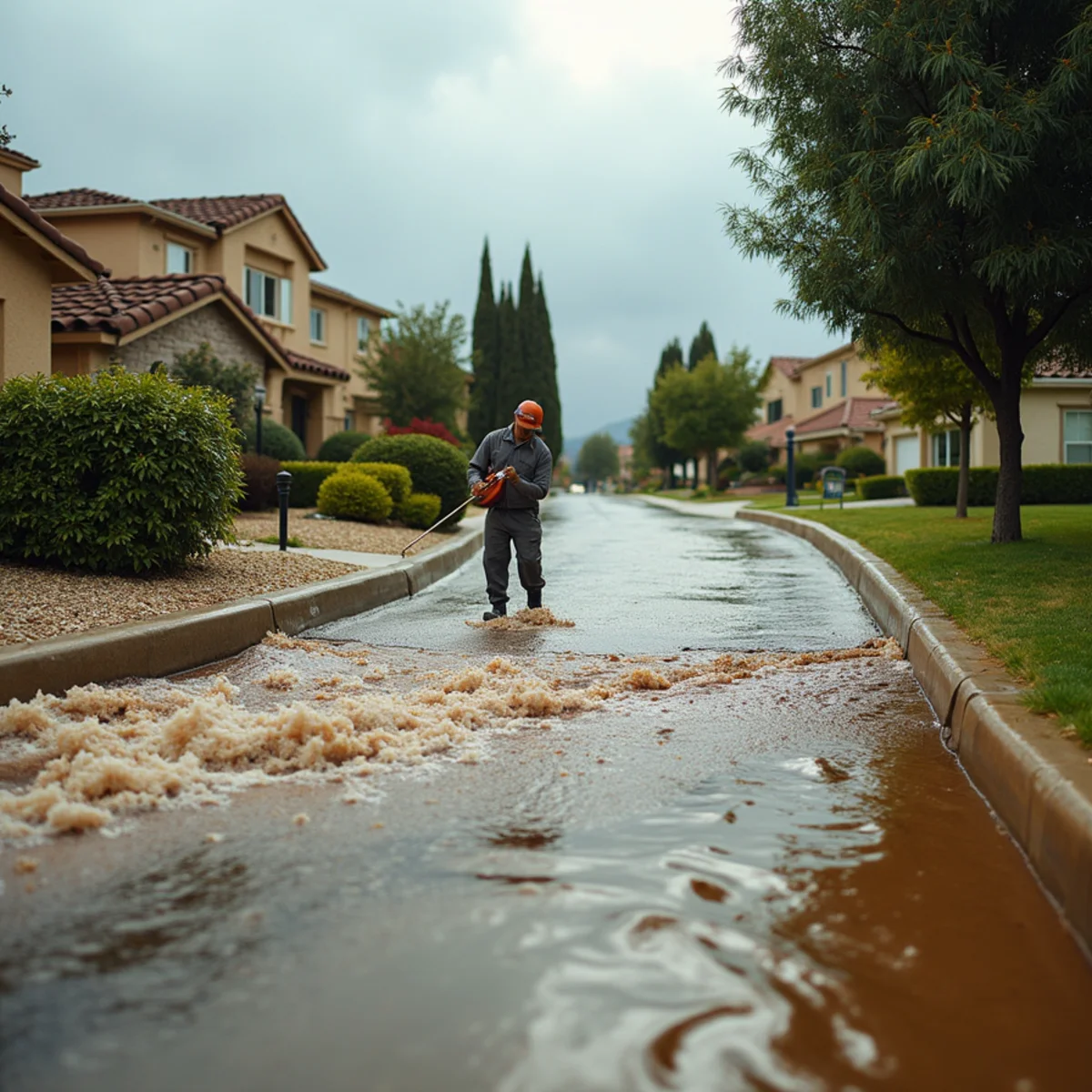
Flood damage restoration in Menifee is Category 3 work: storm water has crossed soil and streets, so it is contaminated by definition. We contain the affected zone, extract, remove every porous material the water touched, disinfect, then dry and rebuild. It is not a wet-vac-and-fan job, and treating it as one spreads contamination through the rest of the house.
Flood water is not a spill. It is Category 3 by definition: it has crossed soil, streets, and whatever those streets were carrying. It gets handled with containment, protective equipment, and disposal rules, not a wet vac and a fan.
We work flood losses across Menifee year-round — summer monsoon cells, winter Pacific storms, and the drainage failures that show up whenever either one arrives.
What storm-water intrusion looks like in a Menifee home
Flooding here rarely arrives as a wall of water. It seeps, backs up, and finds the lowest opening in the envelope.
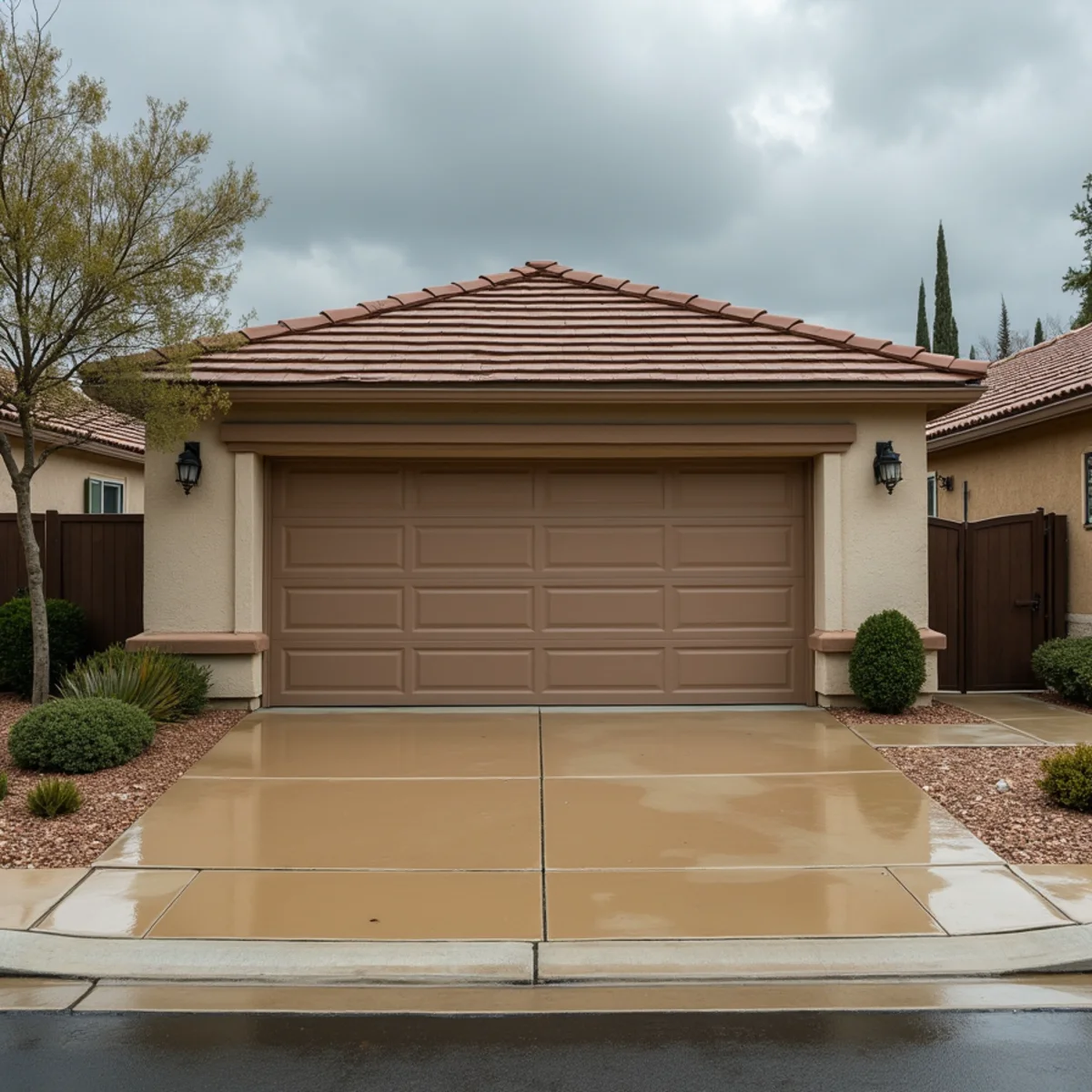
Water under the garage door
The most common entry point in this city. Garage slabs sit low and the door seal is the weakest part of the envelope. From the garage it moves to the interior wall and the laundry.
Silt lines and grit on the floor
A fine mud ring after the water recedes tells us this was outdoor runoff, not a supply line. That changes the category and the entire cleaning protocol.
Water at the slider or a low window
When a patio drain backs up, water pools against the door track and comes in over the threshold. Rear-yard sliders in the flatter tracts are a repeat offender.
Backflow from a floor drain or shower
When a storm overwhelms the sewer, the lowest fixture in the house is where it surfaces. That is contaminated water and it needs to be treated as such.
Runoff arriving from uphill
In Canyon Hills and the sloped pockets of Menifee, water from a neighboring lot can sheet across yours. Retaining walls and swales handle a normal season; a monsoon cell can exceed them in minutes.
What flood restoration covers
Every step below is Category 3 protocol. None of it is optional, and all of it is inside one scope.
Containment and negative air before anything else
Poly barriers seal the affected area and negative air machines with HEPA filtration keep contaminated air from migrating into clean parts of the house. This goes up before extraction starts, not after.Extraction and muck-out
Water first, then the silt and debris the runoff carried in. Outdoor flooding brings soil with it, and muck-out labour scales with how far it travelled into the property.Removal and regulated disposal of porous materials
Carpet, pad, batt insulation, particle board and the lower courses of drywall come out and are disposed of under Category 3 rules. Porous material that absorbed flood water cannot be reliably disinfected in place.Disinfection, drying and a drainage assessment
Every remaining surface is cleaned and treated with an EPA-registered antimicrobial, the structure is dried with daily logged readings, and we tell you plainly what let the water in — a door sweep, a blocked yard drain, or a grade that has settled.
Why Menifee floods the way it does
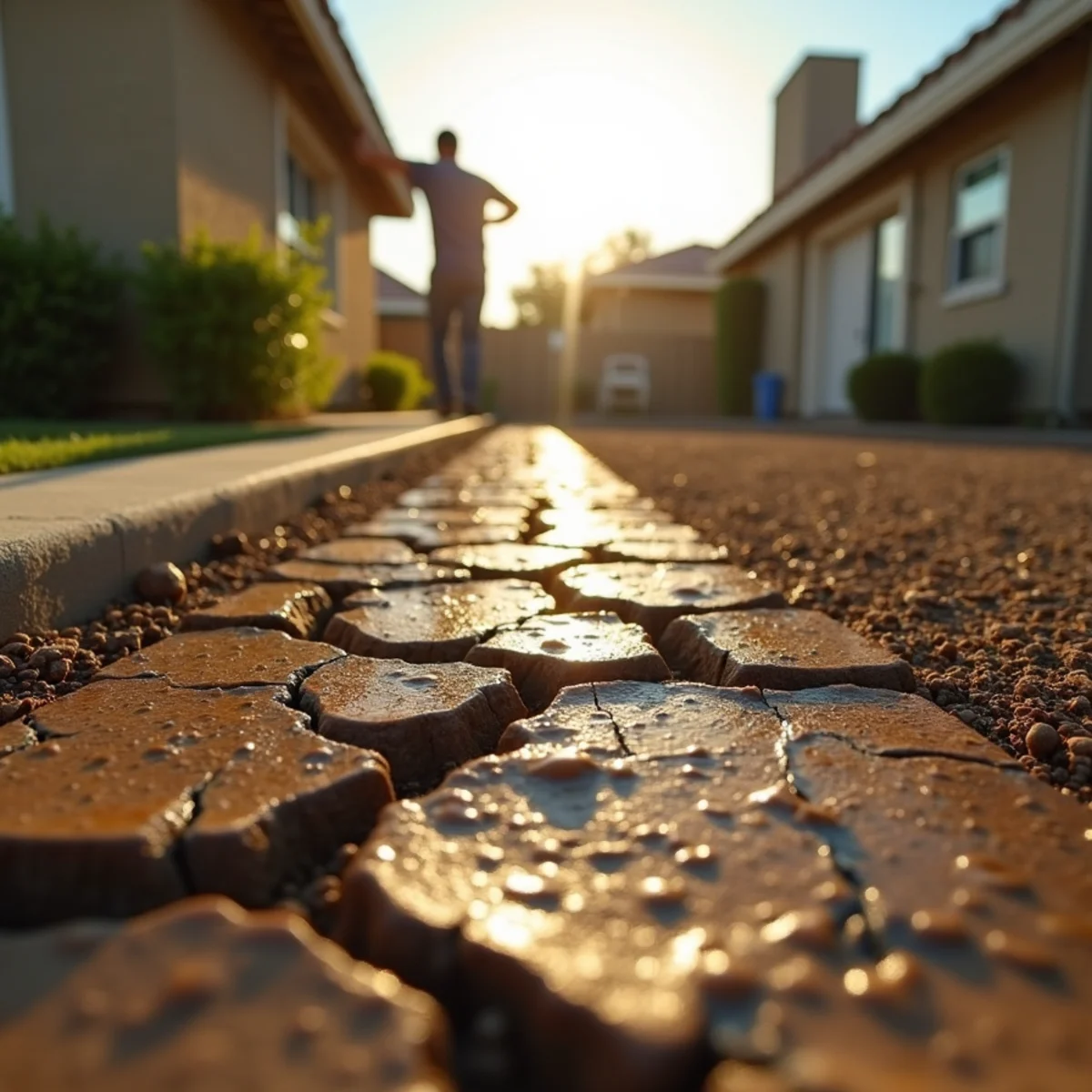
Two distinct seasons produce two distinct kinds of flooding. From July through September, monsoon moisture pushes in from the southeast and stalls over the valley. These cells are small, intense, and localized — Heritage Lake can take a downpour while Sun City stays dry. The ground has been baked for months and cannot absorb it, so it runs.
From December through March, Pacific storms bring the opposite: lower intensity over much longer duration. That is when saturated soil, undersized yard drains, and clogged downspouts cause slow intrusion at door thresholds and along foundations. It is less dramatic and often more expensive, because it soaks in for hours before anyone notices.
The city's geography adds its own wrinkle. Much of Menifee is former ranch land that was graded flat, so water sheets rather than channels. The southern and eastern edges climb into terrain where it does channel — and arrives fast at whatever sits downhill. Newer master-planned tracts have engineered drainage; older pockets in Quail Valley, Homeland, and Romoland often do not.
How we handle a flood loss
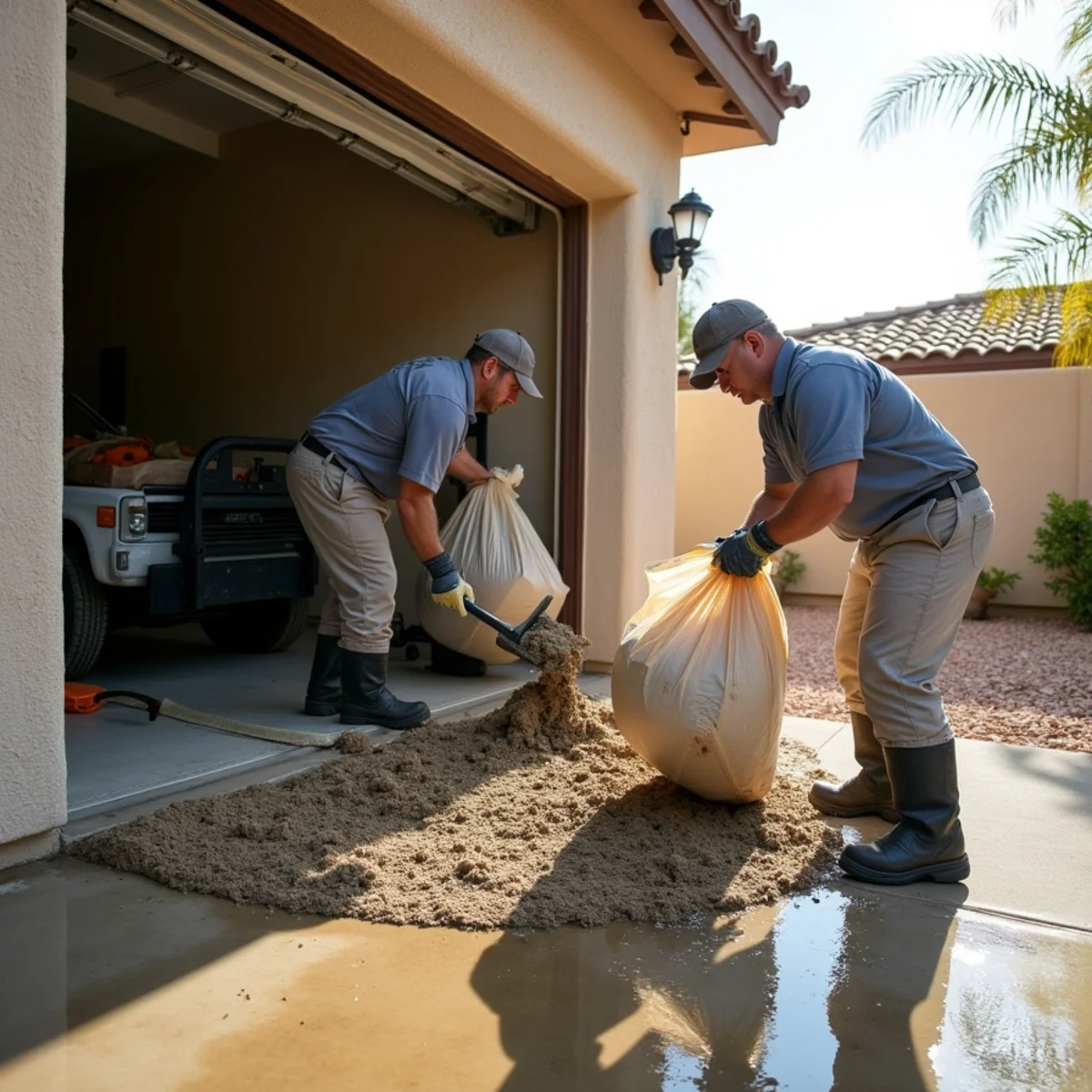
Flood work follows Category 3 protocol from the first minute. That is not caution for its own sake — it is what keeps contamination out of the rest of the house.
- 1
1. Safety assessment
We check for energized circuits in contact with water, gas appliance exposure, and structural concerns before entry. Flood water and electricity share a floor more often than people expect.
- 2
2. Containment
Poly barriers and negative air machines isolate the affected zone so contaminated air and debris do not migrate to clean parts of the house.
- 3
3. Extraction and muck-out
Water comes out first, then silt and debris. Anything porous that flood water saturated — pad, unsealed particle board, batt insulation, soaked drywall — is removed and disposed of under Category 3 rules.
- 4
4. Cleaning and disinfection
Every remaining surface is cleaned, then treated with an EPA-registered antimicrobial. HEPA air scrubbers run throughout to capture what gets disturbed.
- 5
5. Structural drying
Once the space is clean, drying begins in earnest. Slab, framing, and wall cavities are metered daily and dried to standard before anything is closed up.
- 6
6. Rebuild and drainage advice
We put the structure back, and we tell you plainly what let the water in. Sometimes that is a door sweep. Sometimes it is a yard drain that needs to be enlarged before next monsoon season.
What flood damage restoration costs in Menifee
Flood work costs more than a clean-water loss, and the reason is mostly disposal and containment rather than labor hours.
Category 3 protocol
Mitigation for contaminated water generally starts around $7 per square foot because it requires PPE, containment, negative air, antimicrobial treatment, and regulated disposal.
How much has to be removed
Flood water ruins porous materials outright. Carpet pad, batt insulation, and the lower courses of drywall usually come out. That demolition and haul-away is a real share of the total.
Silt and debris load
Outdoor runoff brings soil with it. Muck-out labor scales with how much came in and how far it traveled into the house.
Whether it is a covered peril
This is the big one. Rising surface water is excluded from standard homeowners policies and needs separate flood coverage — which changes who pays, not what the work costs.
Why homeowners call us after a flood
Flood work is where the difference between a properly equipped restoration company and a general contractor with a shop vac shows up fastest.
We treat it as Category 3 from the first minute
Storm water that has crossed a driveway and a street is contaminated regardless of how clear it looks. Containment, PPE and regulated disposal are standard on every flood call here, not an upsell.
We know which Menifee streets flood and when
Monsoon cells between July and September are intense and hyper-local — Heritage Lake can take a downpour while Sun City stays dry. Winter Pacific storms behave completely differently. We route around the low crossings rather than discovering them.
Honest coverage guidance before you file
Standard homeowners policies exclude rising surface water, which surprises people every single season. We tell you that up front and document the loss so it works for whichever policy actually applies.
One crew through the rebuild
Flood work removes a lot of material. The same crew that tore it out puts it back — drywall, insulation, flooring and finishes — so there is no gap between two contractors for a carrier to fall into.
Frequently asked questions
Is flood damage covered by my homeowners insurance?
Generally not. Standard policies exclude rising surface water and mudflow, which is what most Menifee monsoon flooding is. Sewer and drain backup is frequently available as an endorsement, and separate NFIP or private flood policies cover true flooding. We document the loss either way so you have what you need for whichever policy applies.
Do I really need flood insurance in Menifee? It barely rains.
Rainfall totals are low; rainfall intensity is not. A single August cell can drop more water in twenty minutes than the hardpan can take, and much of the flooding we respond to happens well outside mapped FEMA zones. Check your parcel on the FEMA Flood Map Service Center and price a policy before you decide.
Can any of my flooded belongings be saved?
Hard goods usually — furniture frames, tile, sealed surfaces, metal, glass, most electronics that were not submerged. Porous items that sat in Category 3 water generally cannot be restored to a safe condition: mattresses, upholstered furniture, particle board, and carpet pad. We separate salvageable from non-salvageable and photograph everything for your claim.
How is this different from a burst pipe cleanup?
Category. A burst supply line is clean water, and the work is extraction and drying. Flood water has crossed the ground and is contaminated, so it requires containment, PPE, removal of porous materials, and disinfection before drying even begins. Same house, very different job — see burst pipe and slab leak repair.
How quickly do I need to act after storm water gets in?
Immediately, and faster than for a clean-water loss. Flood water is contaminated from the moment it enters, so the risk is not only structural — it is what is growing in the materials it soaked. In Menifee's warm interiors, microbial growth on wet porous material starts inside the 24-to-48-hour window and often at the fast end of it. Keep people and pets out of the affected area, do not run fans across it, and call.
Where we provide flood damage restoration in Menifee
We run this service across every Menifee neighborhood and out into the surrounding cities. Response times are honest drive-time bands from our shop on Palomar Road, not marketing numbers.
- Flood Damage Restoration in Menifee, CA
- Flood Damage Restoration in Menifee Lakes
- Flood Damage Restoration in Audie Murphy Ranch
- Flood Damage Restoration in Heritage Lake
- Flood Damage Restoration in Quail Valley
- Flood Damage Restoration in Sun City, Menifee
- Flood Damage Restoration in Paloma Valley
- Flood Damage Restoration in Canyon Hills
- Flood Damage Restoration in Romoland
- Flood Damage Restoration in Homeland
- Flood Damage Restoration in McCall Boulevard
- Flood Damage Restoration in Newport Road