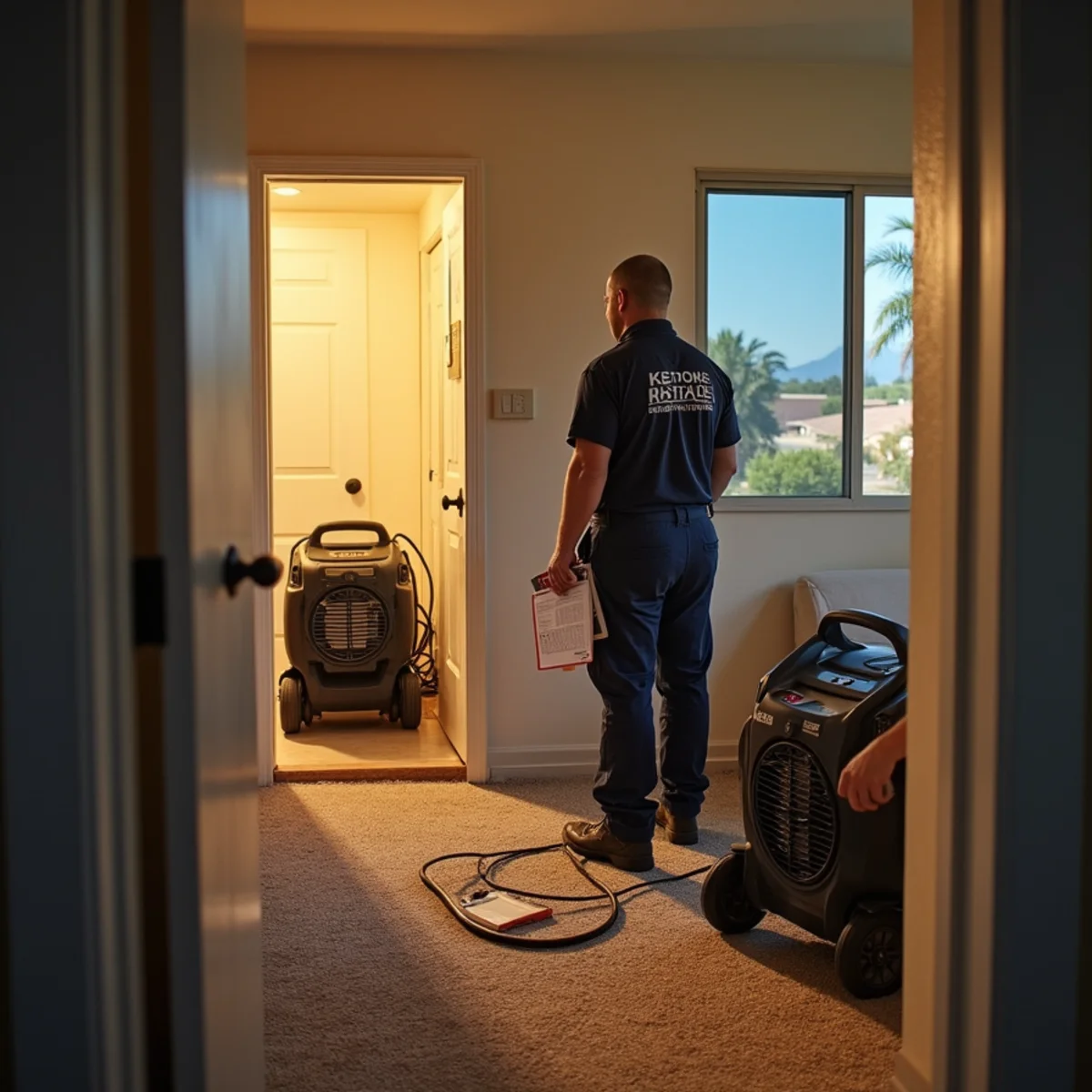
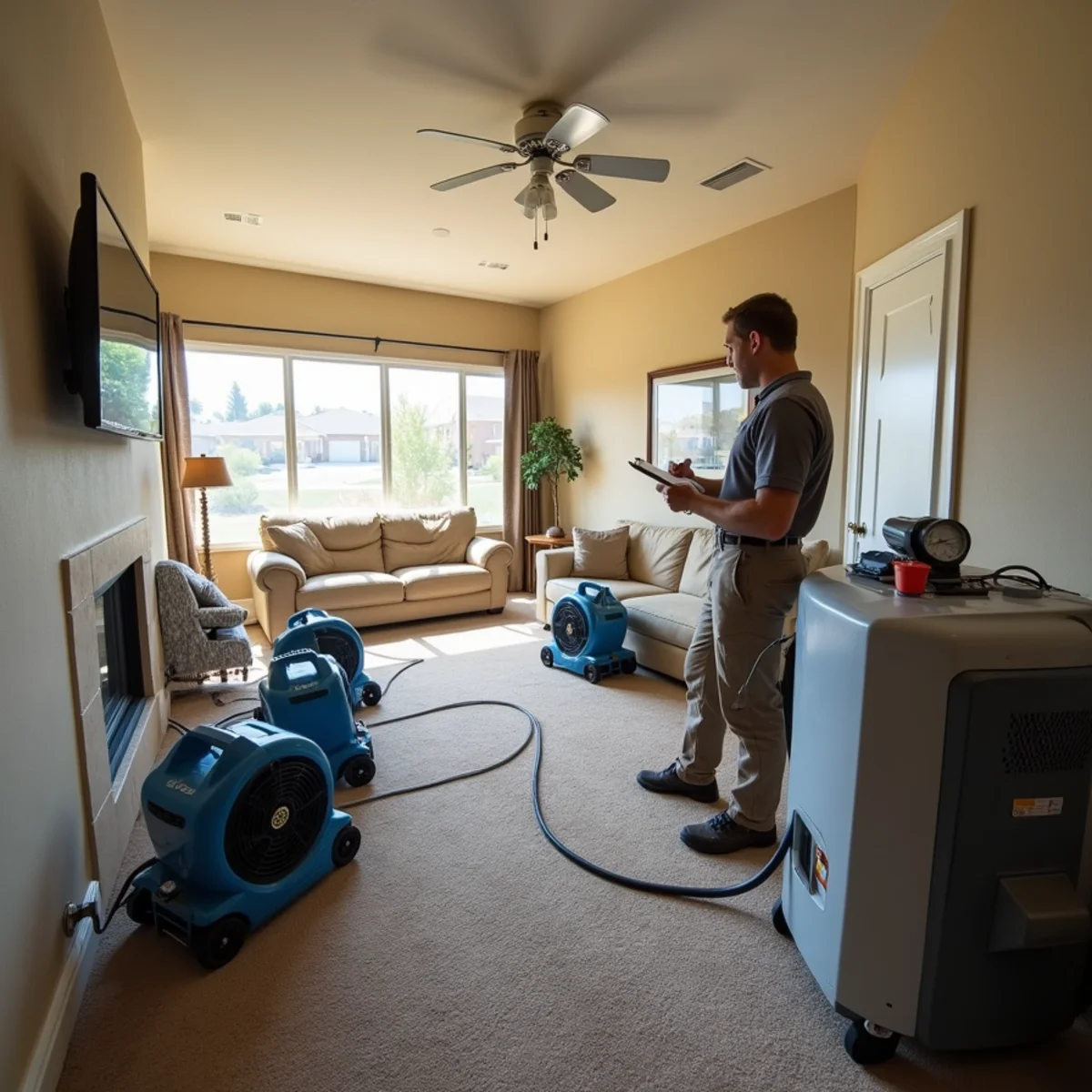
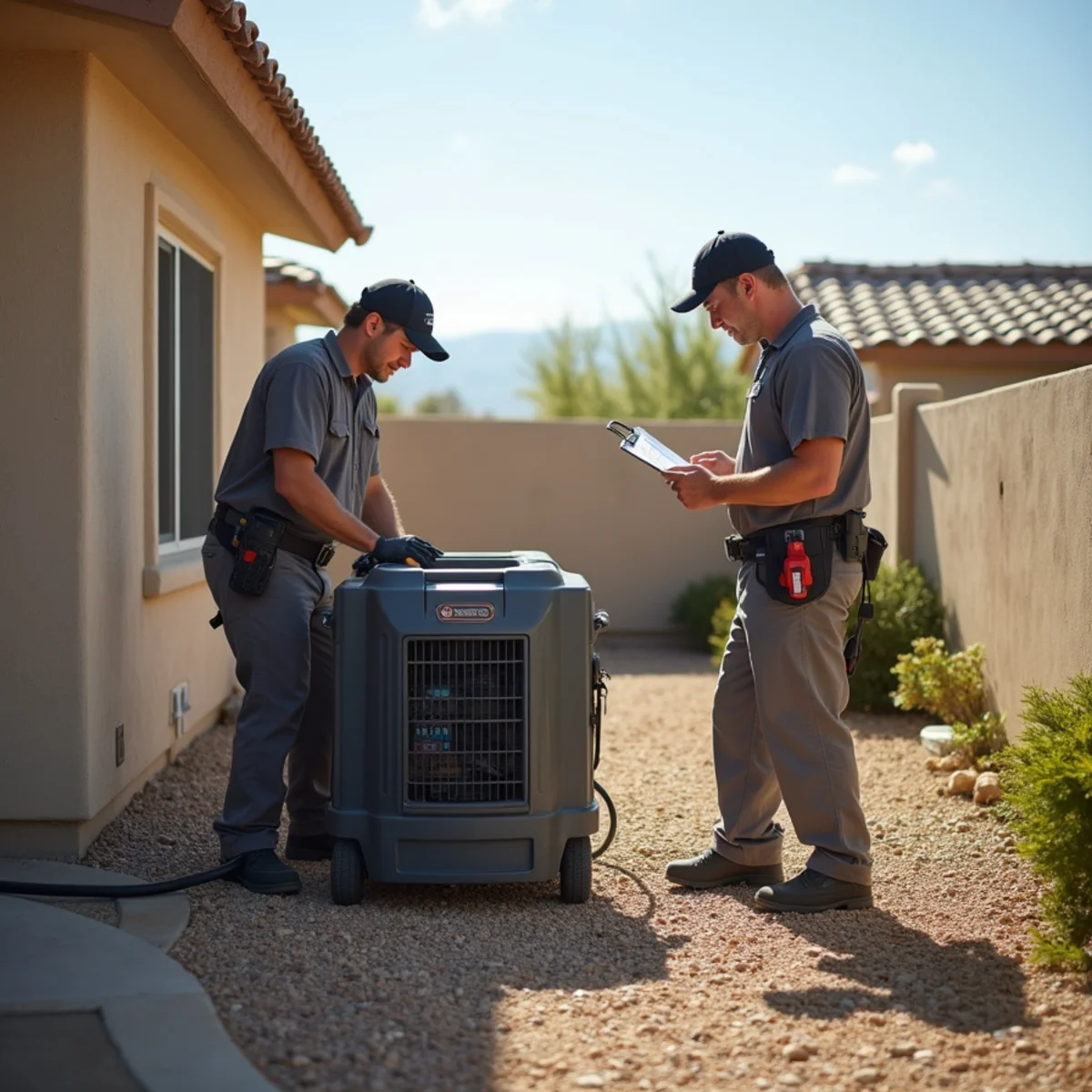
Structural drying and dehumidification in Menifee is the step that decides whether a water loss is finished or merely quiet. Extraction removes the water you can see; structural drying removes what is inside the framing, the slab and the wall cavity. We calculate the equipment load, meter every affected material daily against a dry standard from your own home, and hand you the log.
It is also the step most commonly done badly. A few rented fans in a room is not structural drying. Real drying means calculating the load, placing air movers to create the right surface airflow, running dehumidifiers sized to the space, and metering every day until documented targets are met.
We publish those numbers to you and to your adjuster. You will know exactly when your house is dry, and so will they.
Signs a previous "drying" job did not finish
We get called to correct these regularly. If any of them apply after a past water loss, the structure was likely never dried to standard.
Odor that returned a few weeks later
The classic signature of a cavity that was closed up wet. The surface dried, the inside did not, and growth started once the equipment left.
Equipment pulled after two days with no readings
If nobody metered the walls or handed you a log, nobody actually knows whether it was dry. Two days is rarely enough for framing or slab.
Baseboard or drywall that is discolored above the old line
A tide line that migrated upward after drying supposedly finished means moisture was still wicking through the material.
Flooring installed over a slab that was never tested
New flooring over a wet slab fails — adhesive releases, laminate cups, and moisture gets trapped. Slabs need a moisture test before anything goes down.
Only fans were used, no dehumidifier
Air movers evaporate water into the air. Without a dehumidifier removing it, that moisture lands somewhere else in the house. You have relocated the problem, not solved it.
What a structural drying scope includes
This is a measured process with defined targets, not equipment left running until the room seems fine.
A dry standard taken from your own home
We meter unaffected material of the same type elsewhere in the property. That reading becomes the target. Every home has its own baseline, and drying to a generic number is guesswork dressed up as a process.A calculated equipment load, not an estimate
Affected cubic footage, material class and the amount of water present determine how many air movers and how much dehumidification capacity the space needs. This is arithmetic, and under-equipping a room is the expensive mistake because it stretches the timeline.Correct air mover placement and LGR dehumidification
Air movers set at a shallow angle along wet surfaces to create the boundary-layer airflow that drives evaporation, paired with low-grain refrigerant dehumidifiers that drain the moisture out of the building rather than moving it to another room.Daily readings, logged and handed over
Every affected material read daily and recorded, with equipment repositioned based on what the numbers show. You receive the log and so does your adjuster — it is the difference between an approved mitigation invoice and a reduced one.
Drying a house in the Inland Empire
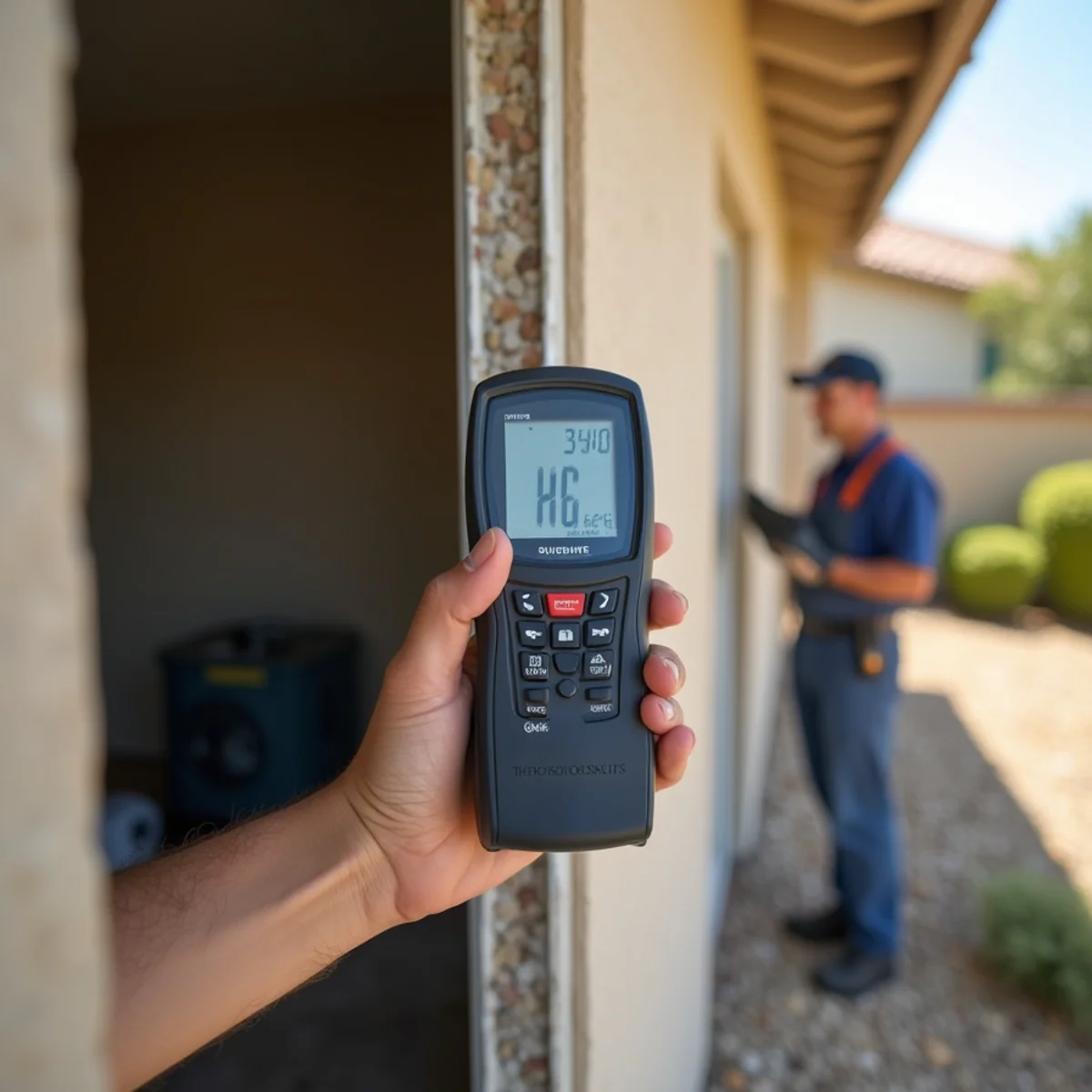
Menifee's climate gives us a genuine advantage. Outdoor relative humidity is often very low, so when conditions allow it, bringing in outside air is an efficient way to dry a structure. Crews from humid regions do not have that option and would not think to use it.
But that advantage sets a trap. Low ambient humidity dries surfaces very fast, so a room can look and feel completely dry while the framing, the slab, and the inside of the wall cavity are still saturated. Homeowners see dry carpet, assume it is over, and call us a month later about a smell. Surface dryness is not structural dryness.
Slab-on-grade construction is the other local factor. Concrete holds and releases moisture slowly, so drying targets take longer to reach than in a raised-floor home. We plan for that from the first day rather than discovering it on day four.
And we watch the outdoor conditions. During monsoon season, humidity can climb enough that open-air drying becomes counterproductive; we close the envelope and run a closed drying system instead. During a Santa Ana event the outside air is bone dry and we can use it aggressively. Adjusting to the weather is a real part of doing this well here.
How applied structural drying works
It is a measured process with defined targets, not a matter of leaving equipment running until it seems fine.
- 1
1. Establish a dry standard
We meter unaffected material of the same type elsewhere in the house. That reading is the target — every home has its own baseline, and drying to a generic number is guesswork.
- 2
2. Calculate the load
Affected cubic footage, material class, and the amount of water present determine how many air movers and how much dehumidification capacity the space needs. This is arithmetic, not intuition.
- 3
3. Place air movers correctly
Air movers go at a shallow angle along wet surfaces to create the boundary-layer airflow that drives evaporation. Pointed at a wall head-on, they do far less than people assume.
- 4
4. Run LGR dehumidification
Low-grain refrigerant dehumidifiers pull the evaporated moisture out of the air and drain it away, so the water actually leaves the building instead of moving to another room.
- 5
5. Meter and log daily
Every affected material is read daily and recorded. Equipment gets repositioned based on what the numbers show. You receive the log, and so does your adjuster.
- 6
6. Verify and release
Equipment comes out when readings meet the dry standard — not on a schedule and not when it feels dry. Then, and only then, does the rebuild start.
What structural drying costs
Drying is billed on equipment and monitoring days, which is why an accurate initial calculation saves money rather than adding to it.
Equipment count and days
Air movers and dehumidifiers are billed per unit per day. Correct placement shortens the job — under-equipping a space is the expensive mistake, because it stretches the timeline.
Materials involved
Drywall and carpet dry quickly. Hardwood, plaster, dense insulation, and concrete are slower and need more equipment days.
Monitoring visits
Daily readings and adjustments are part of the scope. This is the line that separates a documented dry-out from a guess, and it is what an adjuster looks for.
Containment and specialty drying
Injection drying for closed cavities, floor mat systems for hardwood and slab, and drying chambers all add equipment beyond the standard set.
Why drying is where companies differ most
Anyone can put fans in a room. The difference is knowing when to take them out.
ASD-certified crews doing the calculation
IICRC Applied Structural Drying certification covers the psychrometrics behind equipment sizing. It is the difference between a measured dry-out and a room full of borrowed fans.
We use Menifee's dry air deliberately
Outdoor humidity here is often low enough that bringing in outside air is genuinely efficient — an option crews from humid regions never learn to use. But during monsoon season the dew point flips and open windows add moisture, so we check conditions rather than assume.
We plan for slab-on-grade from day one
Concrete holds and releases moisture slowly, so drying targets take longer to reach here than in a raised-floor home. That goes into the schedule at the start, not as a mid-job surprise.
We do not pull equipment early
The gear comes out when readings meet the standard. Not on day three because the room feels dry, which is exactly how a cavity gets closed up wet and a musty smell appears a month later.
Frequently asked questions
Why can I not just rent fans and a dehumidifier?
You can, and for a small clean-water spill on hard flooring it may be enough. What rental equipment cannot do is tell you when you are finished. Without meters and a dry standard you are guessing about wall cavities, framing, and slab — and consumer dehumidifiers are far below the capacity a real drying load needs.
How loud is the equipment and how long does it run?
Noticeably loud, and it runs continuously — typically three to five days. Turning it off overnight is the most common thing homeowners do and the most damaging, because drying is cumulative and every stoppage lets moisture redistribute.
Can I open windows instead? The air here is dry.
Sometimes, and we do use outside air when conditions favor it. But it has to be measured — if outdoor dew point is higher than indoor, open windows add moisture. During monsoon season that is often the case. We check conditions rather than assume.
How do I know the house is actually dry?
Because you have the readings. We meter daily against a dry standard taken from unaffected material in your own home, log every value, and hand you the record. If a company cannot show you numbers, they do not know either — see how long water damage restoration takes.
Can I turn the equipment off at night to sleep?
Please do not, and this is the single most common thing that extends a dry-out. Drying is cumulative — every stoppage lets moisture redistribute back into materials that were nearly dry, and you lose most of a day each time. It is genuinely loud and we understand why people do it. Tell us instead and we will look at repositioning units or swapping to quieter placement, which usually helps without costing you days.
Where we provide structural drying and dehumidification in Menifee
We run this service across every Menifee neighborhood and out into the surrounding cities. Response times are honest drive-time bands from our shop on Palomar Road, not marketing numbers.
- Structural Drying & Dehumidification in Menifee, CA
- Structural Drying & Dehumidification in Menifee Lakes
- Structural Drying & Dehumidification in Audie Murphy Ranch
- Structural Drying & Dehumidification in Heritage Lake
- Structural Drying & Dehumidification in Quail Valley
- Structural Drying & Dehumidification in Sun City, Menifee
- Structural Drying & Dehumidification in Paloma Valley
- Structural Drying & Dehumidification in Canyon Hills
- Structural Drying & Dehumidification in Romoland
- Structural Drying & Dehumidification in Homeland
- Structural Drying & Dehumidification in McCall Boulevard
- Structural Drying & Dehumidification in Newport Road