Restoration Tips
How Long Does Water Damage Restoration Take? A Menifee Timeline
Three to five days for drying, longer for the rebuild — but the variables that stretch that timeline are worth knowing before you plan around it.
The short answer
Most Menifee homes dry in three to five days. Concrete slabs and hardwood take five to ten. The rebuild runs from two days for drywall and paint to two to four weeks for a kitchen with cabinetry. Equipment comes out when readings meet a dry standard measured in your own home, not on a schedule.
The honest answer is that drying takes three to five days in a typical Menifee home and the rebuild takes anywhere from two days to a month. But those numbers are only useful if you know what moves them, so here is the timeline as it actually runs.
Day zero — the emergency response
From your call to equipment running is usually two to four hours. About thirty minutes of that is us getting to you; the rest is inspection, extraction, and setup.
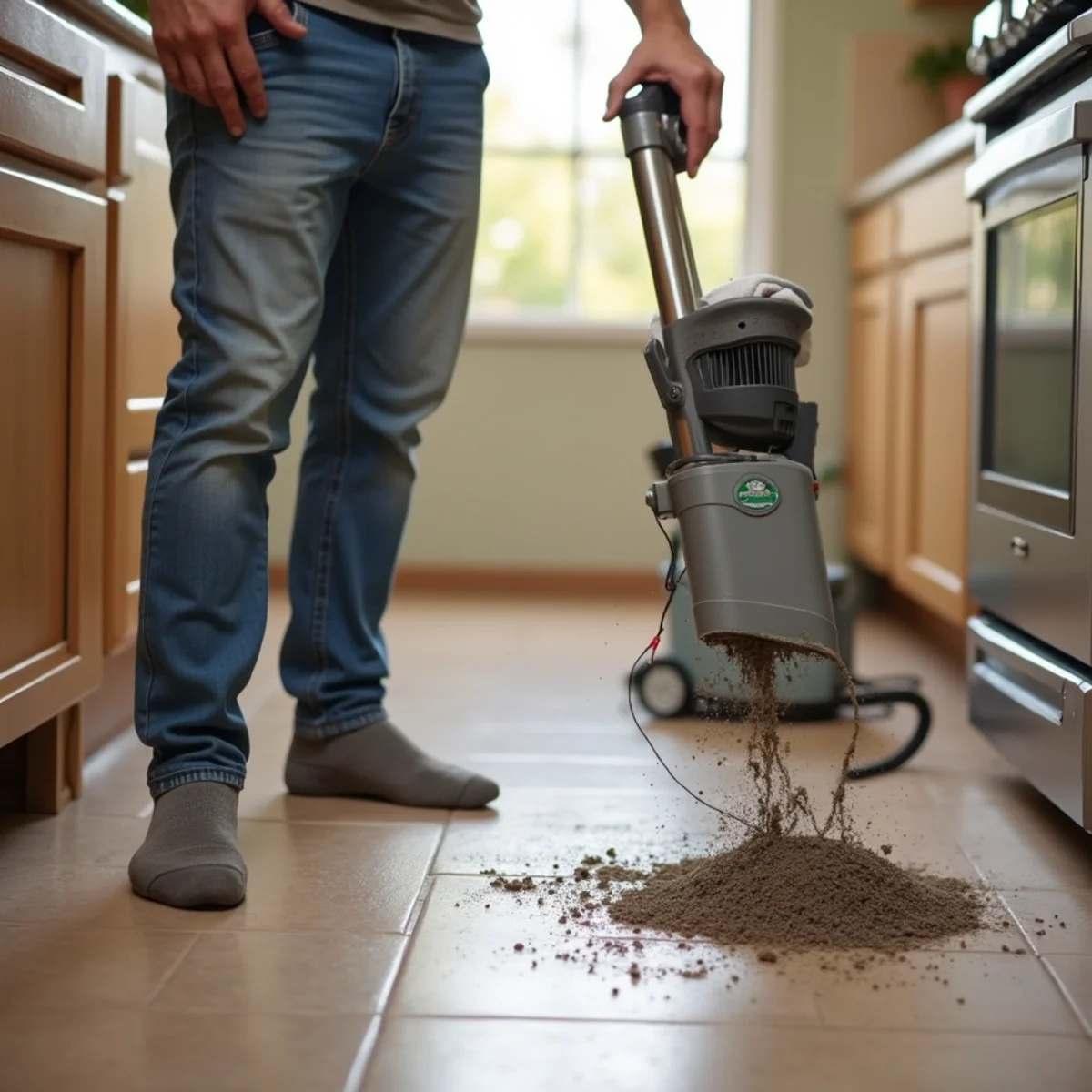
Extraction itself is faster than people expect. A truck-mounted unit pulls standing water from a couple of rooms in well under an hour. The slower part is the weighted extraction pass over carpet, which we do deliberately and repeatedly because it determines whether your carpet survives.
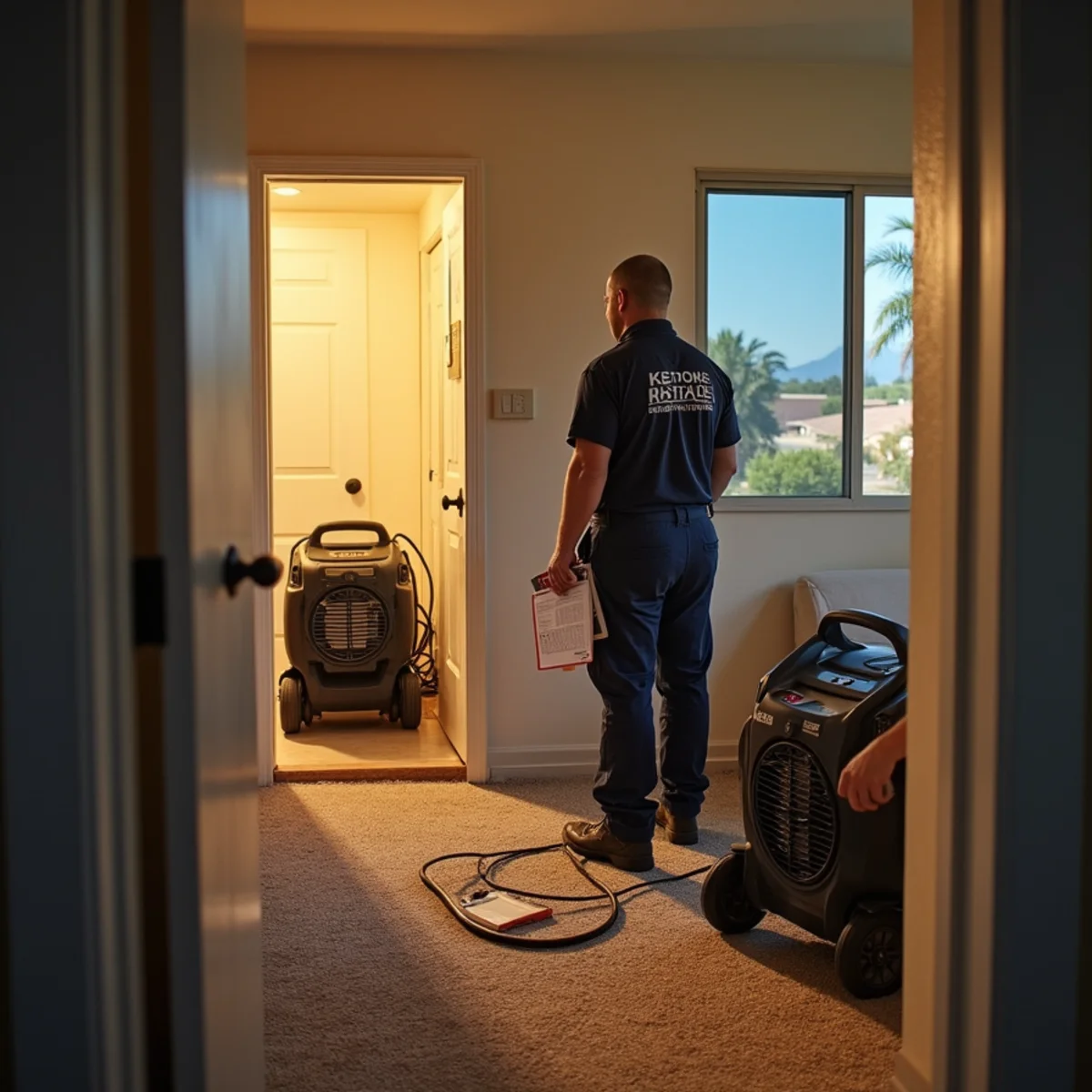
By the time we leave on day zero, air movers and dehumidifiers are running and you have a written plan showing what is running where and roughly for how long.
Days one to four — drying
Equipment runs continuously. We come back every day, take readings on every affected material, log them, and reposition equipment based on what the numbers show.
Most of the drying happens in the first 48 hours. The back half of the schedule is about the last stubborn percentage inside cavities and dense materials, which is exactly the part that causes problems if you stop early.
| Material | Typical time to dry standard |
|---|---|
| Carpet with pad replaced | 2 – 3 days |
| Drywall (dried in place) | 3 – 4 days |
| Framing and bottom plate | 3 – 5 days |
| Engineered or solid hardwood | 5 – 10 days with mat systems |
| Concrete slab | 5 – 10+ days |
| Dense-pack or wet blown-in insulation | Usually removed rather than dried |
Why Menifee dries faster — and the catch
Low outdoor humidity is a genuine advantage. When conditions allow, bringing in outside air is an efficient way to dry a structure, and crews from humid regions do not have that option at all.
The catch is that it also makes surfaces dry deceptively fast. Carpet feels dry on day one. The pad, the wall base, and the slab are not. If someone pulls equipment on day two because the room feels fine, you get the phone call about a musty smell three weeks later.
We also adjust to the season. During a Santa Ana event, the outside air is extremely dry and we can use it aggressively. During monsoon season, outdoor humidity can climb enough that opening the envelope is counterproductive, so we close it up and run a sealed drying system instead.
What stretches the timeline
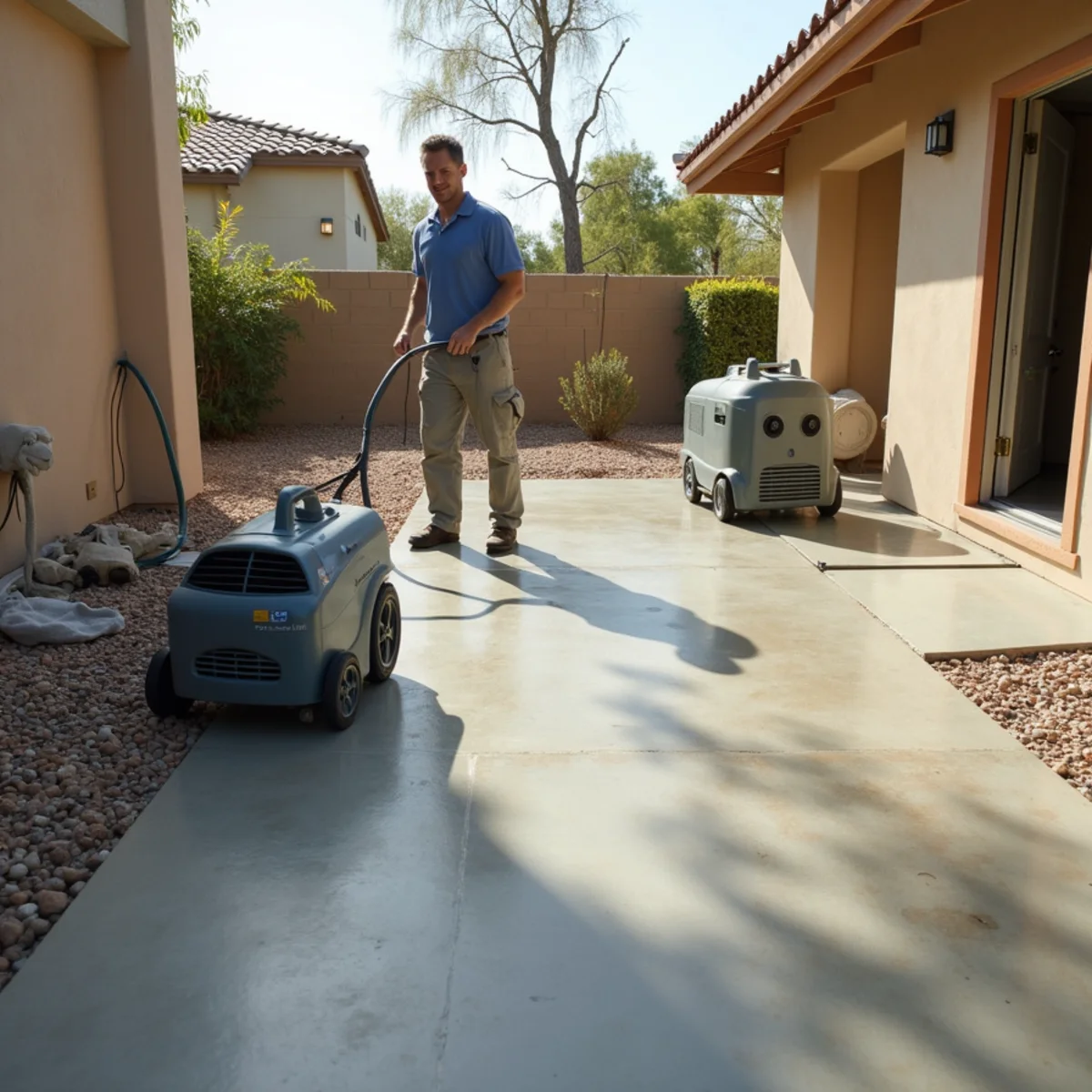
Slab-on-grade construction. Nearly every Menifee home is on a slab, and concrete gives up moisture slowly. If water sat on or under flooring for any length of time, expect the back end of the range.
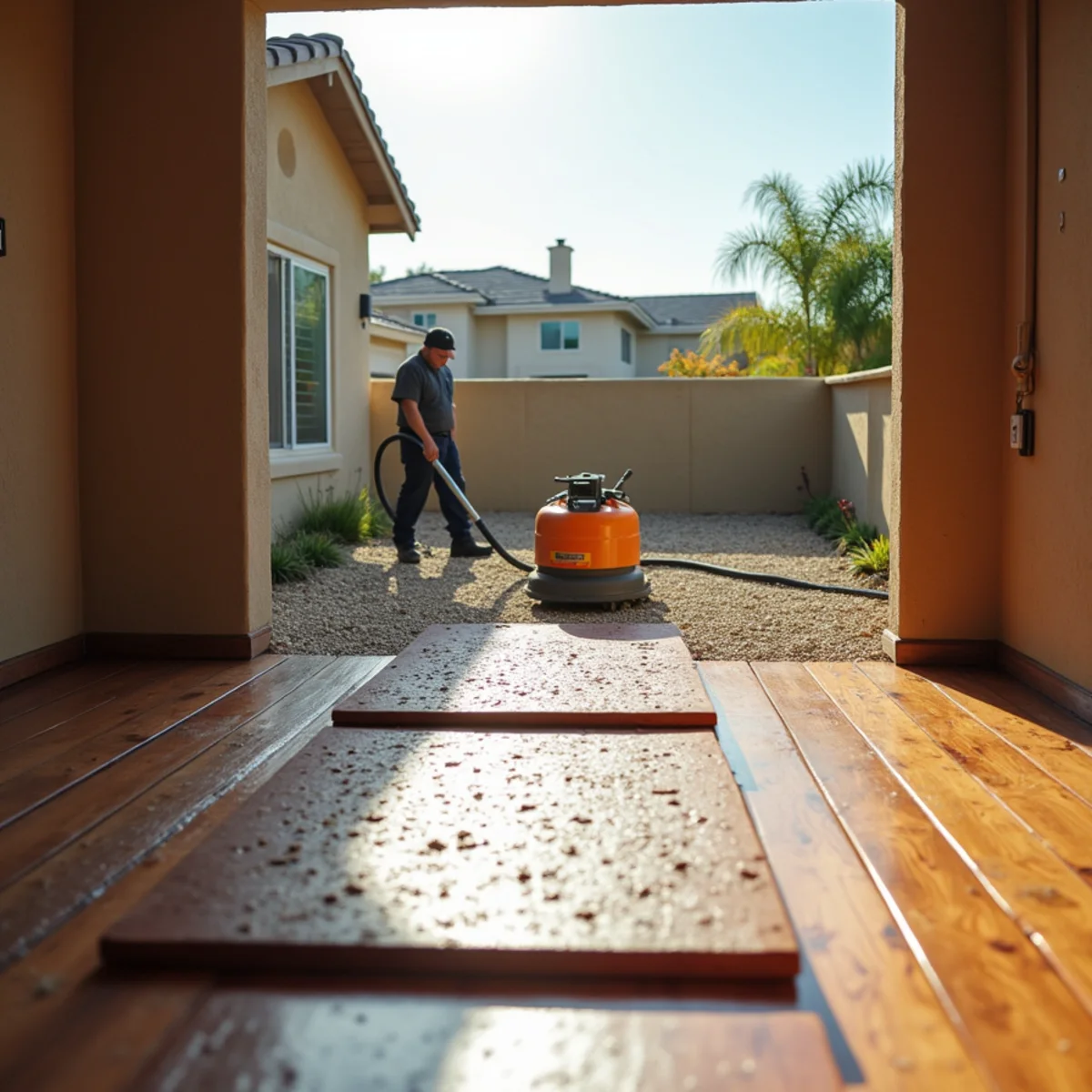
Hardwood. Solid and engineered wood need mat drying systems that pull moisture from beneath, and they need patience. Rushing hardwood is how it gets replaced unnecessarily.
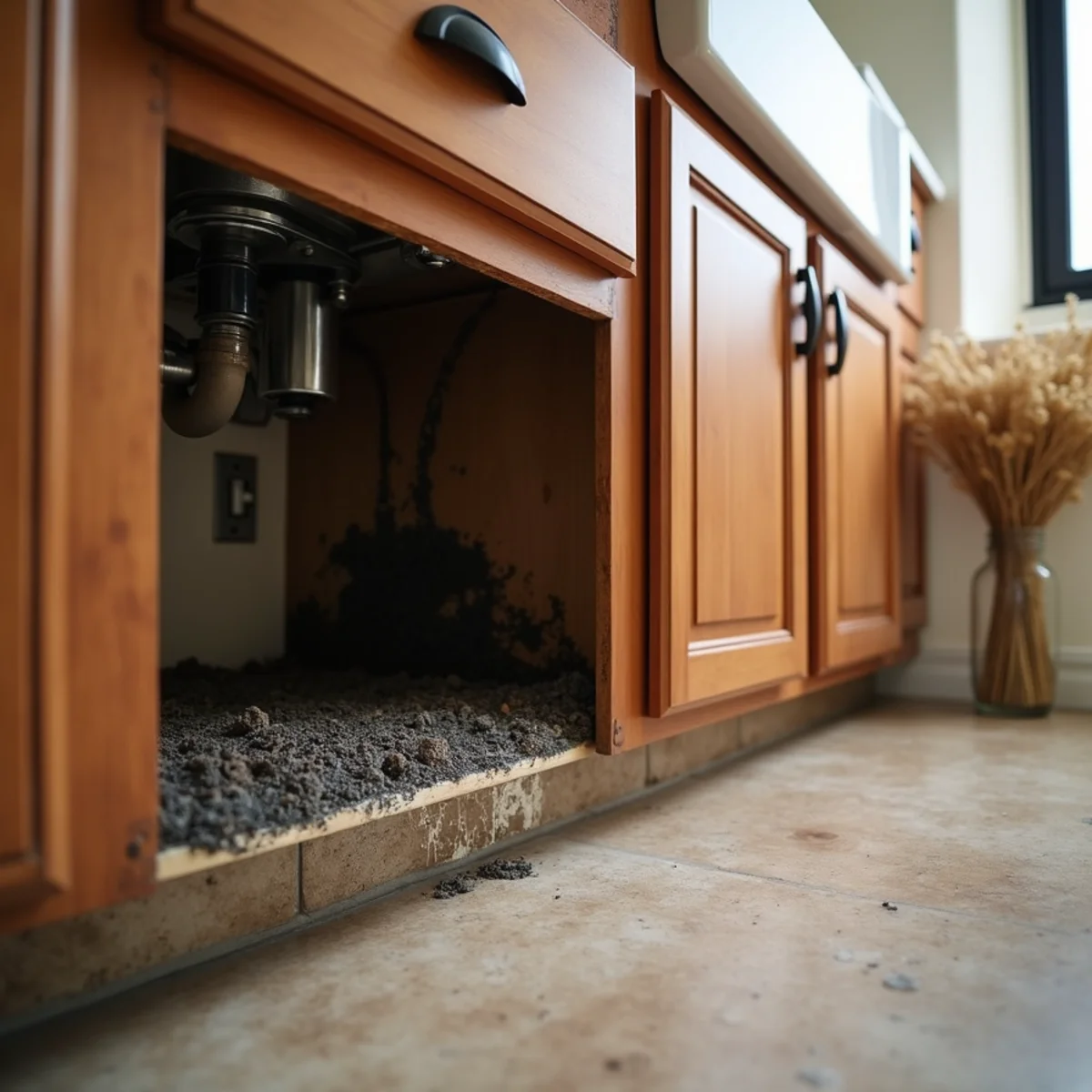
Delayed discovery. A leak found in an hour dries in days. One that ran for three weeks has moisture in framing, cabinet bases, and possibly the slab, and no amount of equipment compresses that.
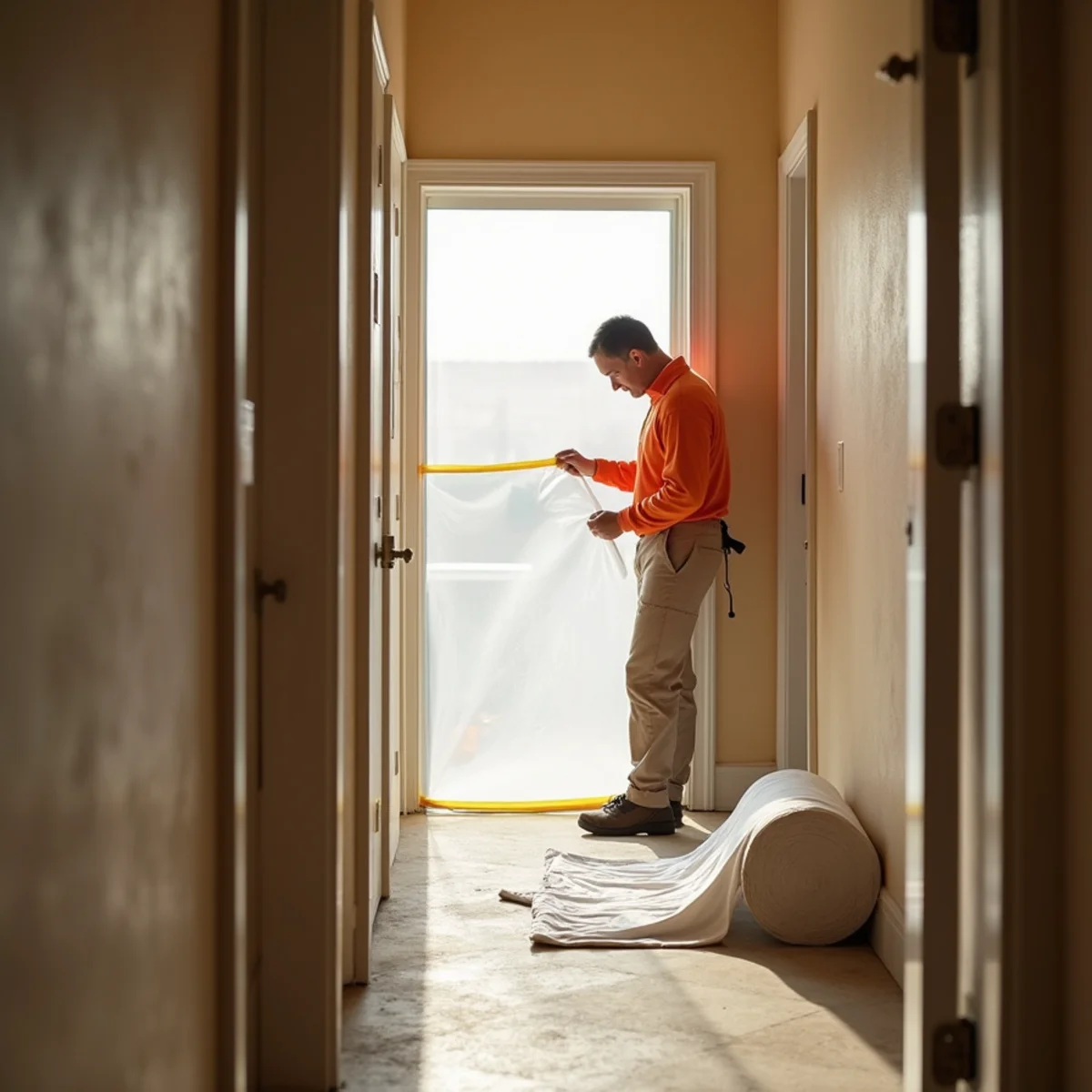
Category 2 or 3 water. Containment, demolition, and disinfection all happen before drying starts, adding one to three days at the front.
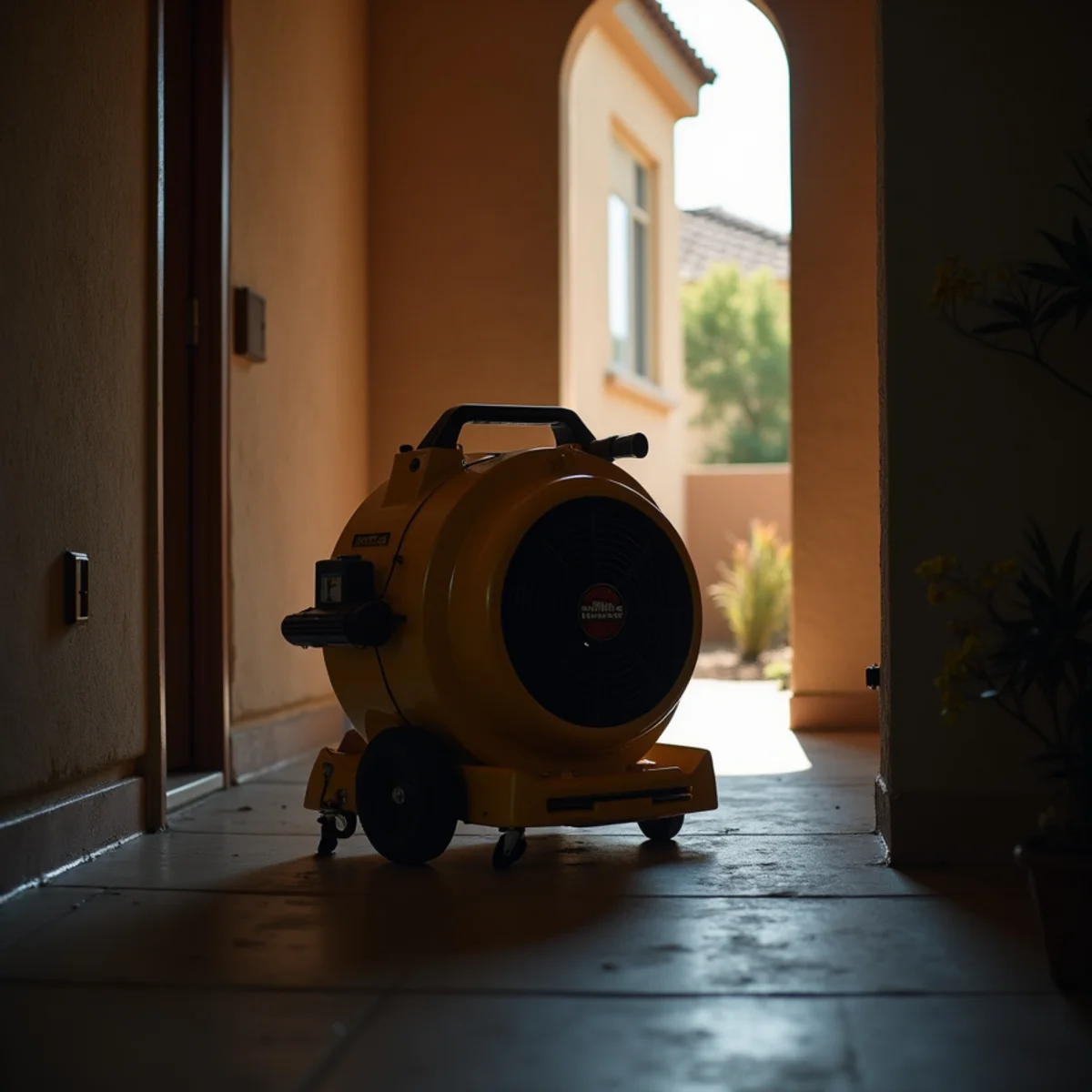
Turning the equipment off. Drying is cumulative. Every stoppage lets moisture redistribute and pushes the finish line out. It is loud, and we understand why people do it — but it genuinely costs days.
How we know when to stop
Not by the calendar. At the start of the job we take readings from unaffected material of the same type elsewhere in your house — that becomes the dry standard for your specific home. Equipment comes out when the affected material meets it.
You get the log. So does your adjuster, which is why documented drying rarely gets challenged on an invoice while undocumented drying frequently does.
Then the rebuild
| Scope | Typical duration |
|---|---|
| Drywall patch, texture, and paint | 2 – 4 days |
| Carpet and pad replacement | 1 – 2 days |
| Flooring replacement across several rooms | 3 – 7 days |
| Kitchen with cabinetry | 2 – 4 weeks (material lead times dominate) |
| Bathroom rebuild | 1 – 3 weeks |
Cabinetry and specialty flooring are almost always the long pole, and it is lead time rather than labour. We order early wherever the scope is settled, and there is a real advantage to Menifee's tract construction here — standard textures and common finishes are far easier to source than custom work would be. More on that on our water damage repair and reconstruction page.
Can you stay in the house?
Usually, if the loss is contained and the water was clean. The equipment is loud and the affected rooms are unusable, but the rest of the house functions.
You should not stay for a Category 3 loss in a living area, when a kitchen or the only bathroom is out of service, or when active mold remediation is under containment. Most policies include additional living expenses for exactly this — keep every receipt from day one.
Why two identical-looking jobs take different lengths of time
Two Menifee homes, same tract, same floor plan, same failed water heater, and one dries in three days while the other takes six. The visible damage looked the same on day one. What differed was everything underneath it.
- How long it sat before extraction — the single biggest factor, and the only one still under your control at the start
- What the flooring is: tile over slab, carpet and pad, engineered wood and vinyl plank all release moisture at very different rates
- Whether the water reached insulation, which cannot be dried in place and has to be removed and replaced
- Slab versus raised foundation — concrete holds moisture far longer than a ventilated crawl space
- How well the house holds a drying environment: a tight 2015 build dries faster than a leaky 1978 one once sealed, but takes longer to start moving
- Whether the source was fully stopped, because a slow ongoing leak will defeat any amount of equipment
This is why an honest company will not quote you a firm number of days before taking a reading, and why a company that quotes three days for every job is quoting a schedule rather than a structure.
What you can actually do to shorten it
More of this is within your control than people assume, and none of it requires equipment.
- Leave the equipment running continuously. Turning air movers off overnight for the noise is the most common cause of a job running an extra day or two.
- Keep the affected rooms closed and the air conditioning on. Drying is a controlled environment, and an open window in July undoes a day of dehumidification in an afternoon.
- Do not add moisture to the space — no mopping, no wet cleaning, and keep long showers to other bathrooms while the equipment is in.
- Give us daily access at a consistent time. Readings drive placement changes, and a day where nobody can let us in is a day where the equipment is not adjusted.
- Clear the affected rooms of what you can safely move, so the airflow reaches the wet material rather than the back of a wardrobe.
- Tell us immediately if something smells different or a new area feels cool underfoot. Finding a second wet area on day two is normal; finding it on day five adds a week.
Frequently asked questions
Can I turn the equipment off at night?
Please do not. Drying is cumulative, and every stoppage lets moisture redistribute back into materials that were nearly dry. It genuinely adds days. If the noise is unmanageable, tell us — sometimes we can reposition units to reduce it without slowing the job.
Why is it taking longer than the three days you estimated?
Usually because the wet area was larger than it first appeared, or because a slab or hardwood is involved. We would rather extend by two days than close a wall over damp framing. You will see the readings, so you can see exactly why.
How soon can flooring go back down?
Only after the subfloor or slab meters dry. Installing over a slab that has not been verified is the most expensive shortcut in this trade — the adhesive releases, the flooring cups, and moisture gets trapped underneath where it feeds mold.
Can I pause the job for a few days if I need to travel?
You can, but the equipment should keep running while you are away rather than being switched off. Wet structure that stops drying does not hold steady — it re-equilibrates with the moisture still in the materials around it, and you lose most of the progress made. If nobody will be at the property, tell us and we will arrange access and secure setup rather than pausing.
Does the rebuild start before drying finishes?
No, and any contractor offering to start earlier is offering to seal moisture into your walls. Reconstruction begins once affected materials meet the dry standard taken from unaffected material in your own home, and that is the reading recorded in the final log. What we can and do overlap is the preparation — measuring, ordering materials and scheduling trades — so the rebuild starts the day the equipment leaves rather than a week after.