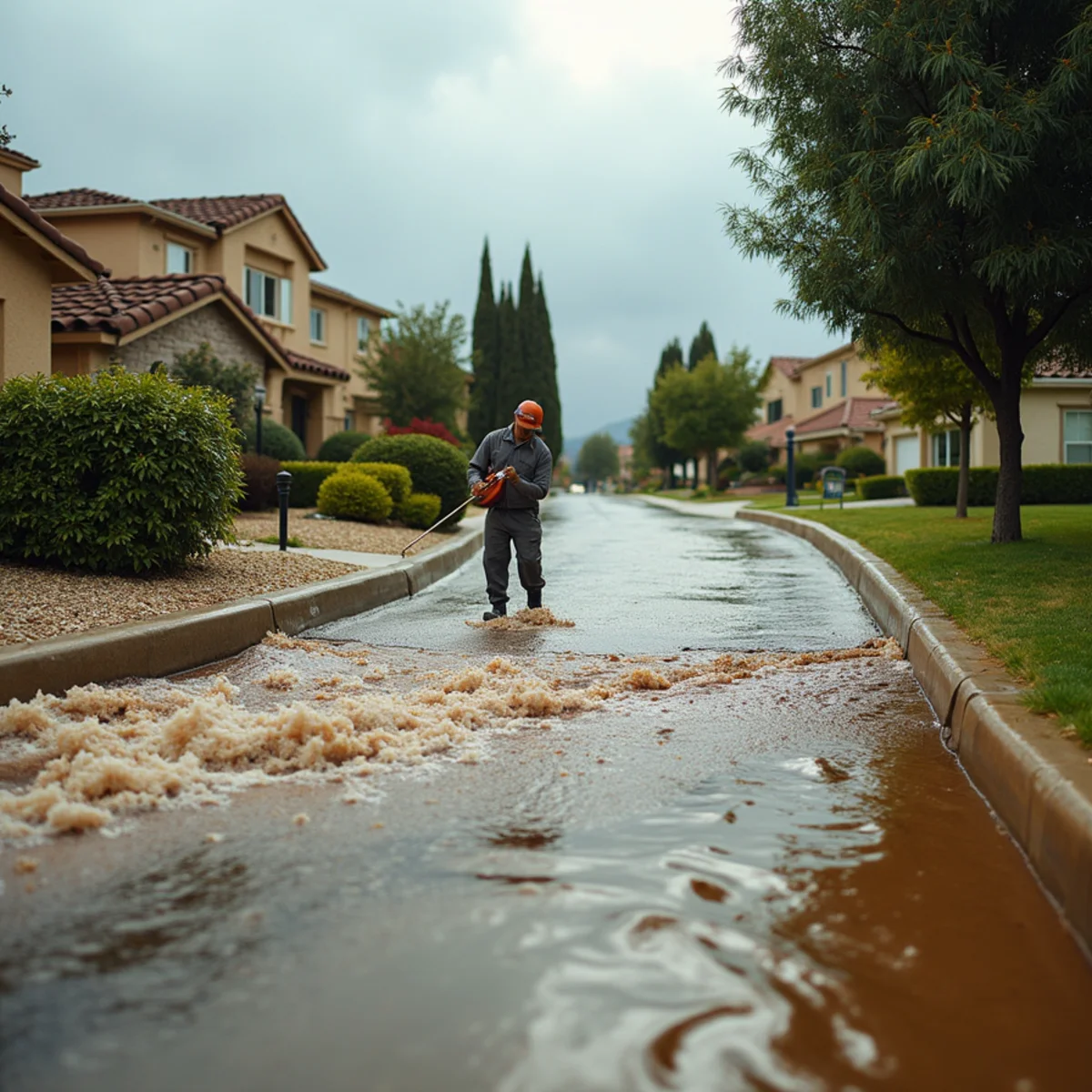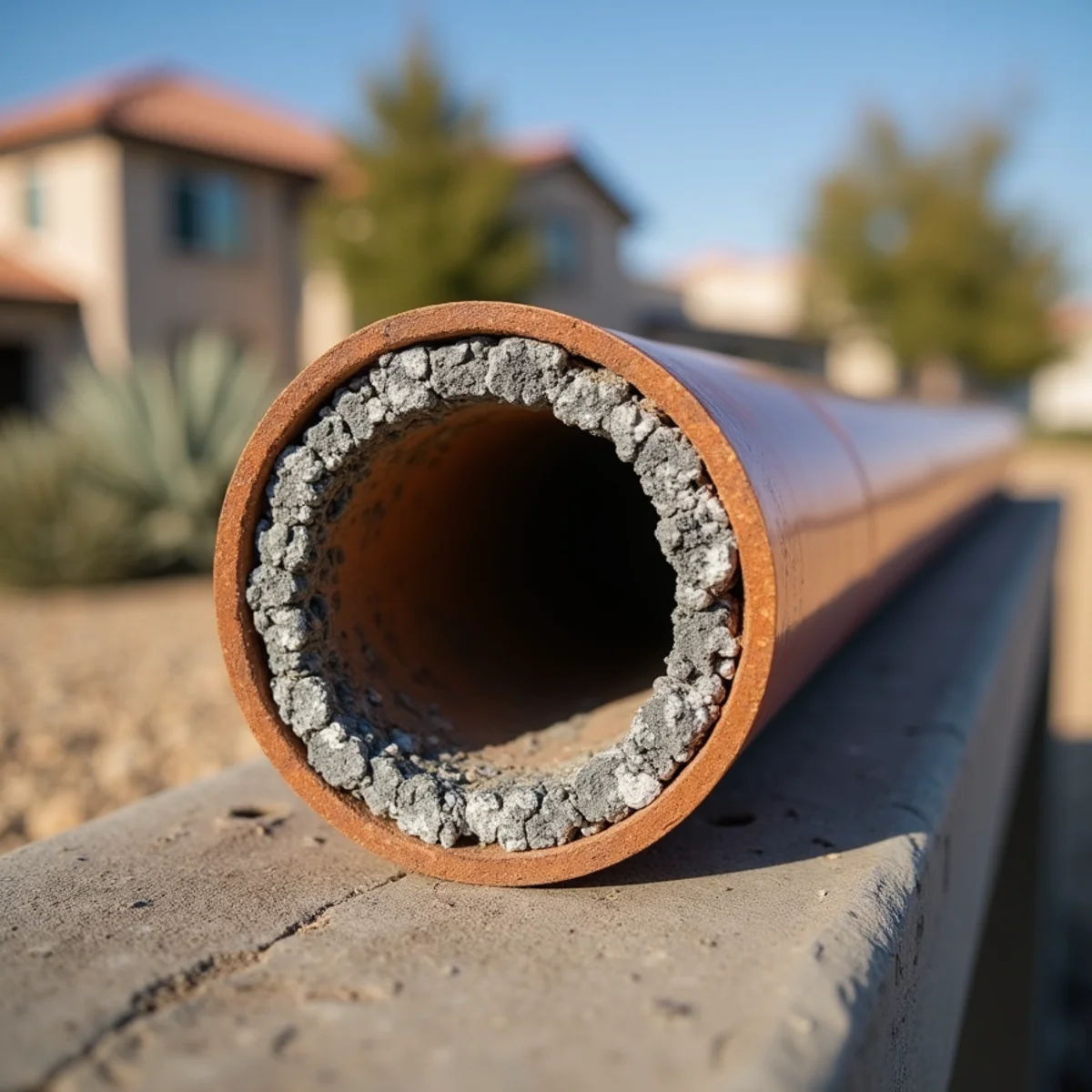
What actually happens is different: new homes fail differently, not less. The first decade of a house is when workmanship issues surface, and hard water starts working on the plumbing from day one regardless of age.
Water damage risks specific to Spencer's Crossing
Every neighborhood in this region fails in its own way, and it is usually predictable from the construction era and the terrain. Here is what we actually respond to here.
1Envelope defects that surface in the first decade
Improperly lapped flashing, missed sealant at penetrations, and window installation issues rarely announce themselves immediately. They show up the first time wind-driven rain hits the wall at the right angle — often five to eight years in.
2Site drainage still settling
New development means recently graded soil, and soil settles. Grades that drained correctly at close of escrow can flatten or reverse over several years, sending landscape and storm runoff back toward the foundation.
3Hard water does not care how new the house is
EMWD water chemistry starts depositing scale in a brand-new water heater the day it is commissioned. Newer tanks and fixtures still need annual maintenance here, and most owners of new homes have never been told that.
4Tankless and recirculation systems with their own failure modes
Newer homes frequently have tankless heaters and recirculating hot water loops. Both are excellent systems and both need descaling in mineral-rich water — skipped, they scale internally and fail in ways a conventional tank does not.
The housing stock we work in Spencer's Crossing
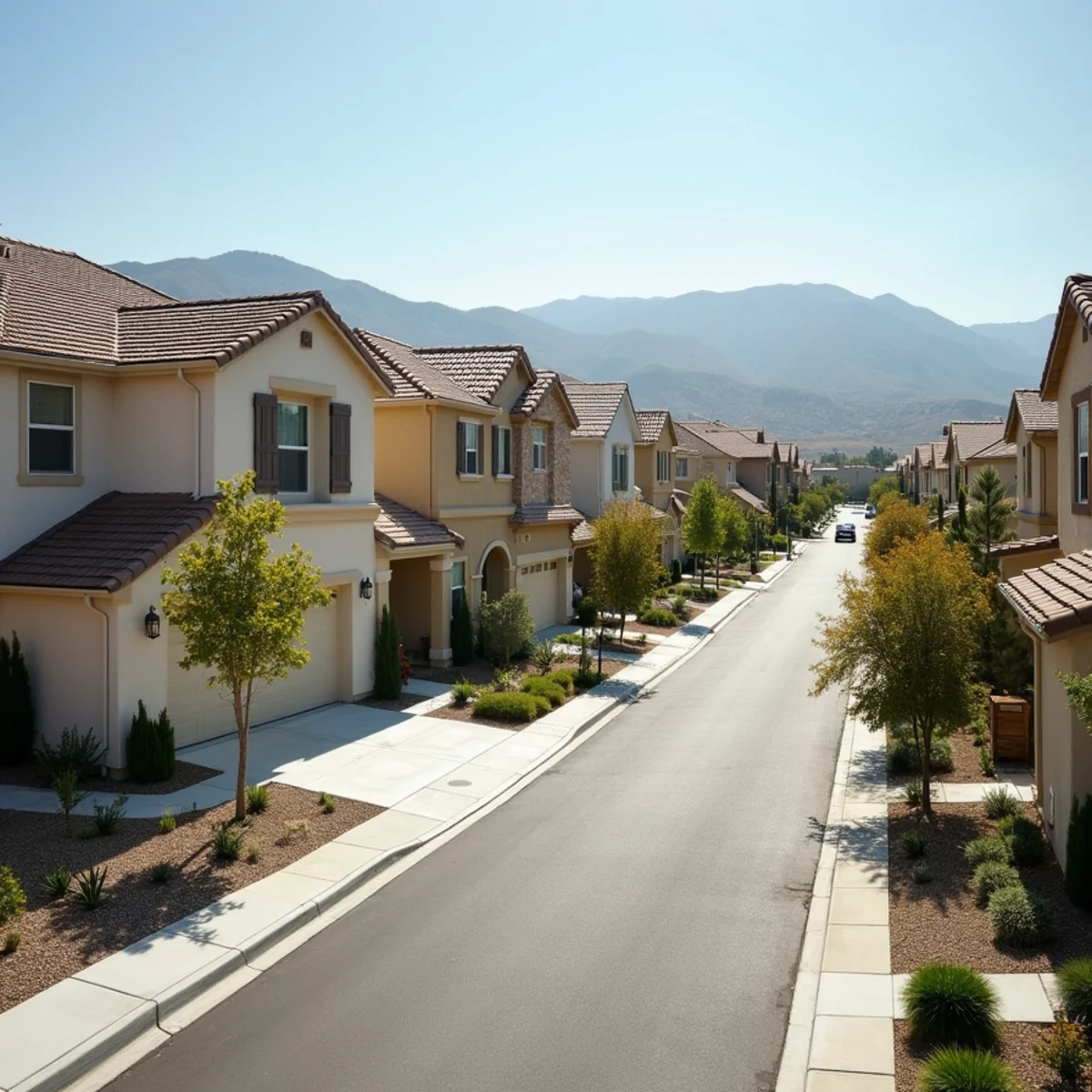
2010s and newer master-planned construction on slab foundations, with modern PEX plumbing, tankless or high-efficiency water heaters in many homes, and current energy-code building envelopes. Tighter construction than older tracts, which is efficient but also means less incidental drying capacity when something does get wet.
Local landmarks
Spencer's Crossing community park · Northern Murrieta near the Menifee boundary
Services we run most often in Spencer's Crossing
Every service we offer is available here. These are the ones this area calls for most, based on what actually breaks in these homes.
- Water Damage RestorationFull-scope extraction, structural drying, and repair — one crew from the first moisture reading to the last coat of paint.
- Leak Detection & Moisture InspectionFind it before it becomes a claim. Acoustic and thermal detection that pinpoints the leak without opening walls.
- Appliance Leak Water DamageWater heaters, washers, dishwashers, and ice maker lines — the failures Menifee's mineral-heavy water brings on early.
- Mold RemediationContained removal, HEPA filtration, and the moisture fix behind it — because mold that is only cleaned comes back.
- Structural Drying & DehumidificationCalculated equipment loads and daily moisture logs — we do not pull the gear until the structure meters dry.
Why Spencer's Crossing owners call us
New construction fails differently, not less, and most companies arriving here are looking for the wrong things.
We look at the envelope, not just the plumbing
Improperly lapped flashing, missed sealant at penetrations and window installation issues surface in years five to ten, the first time wind-driven rain hits the wall at the right angle.
Recently graded soil settles
A grade that drained correctly at close of escrow can flatten or reverse within a few years, sending landscape and storm runoff back toward the foundation.
Tankless systems need descaling here
Newer homes often have tankless heaters and recirculation loops. Both are excellent and both scale internally in this water if the annual service is skipped.
We document for warranty as well as insurance
Photographs, moisture readings and a written scope taken before repairs start are what make a builder warranty or construction defect claim work.
Getting to you in Spencer’s Crossing
Twenty-five to thirty minutes, at the southern edge of our core coverage.
At the outer edge of the local band
Spencer’s Crossing is a genuine twenty-five to thirty minute run for us, and we quote it that way. It is still comfortably a same-night response, and for anything actively running we would rather you called and let us give you the real number.
Newer, tighter construction hides the perimeter
These are recent builds — well sealed, well insulated, and very good at holding moisture inside an assembly with almost no surface evidence. Thermal imaging and a proper metered perimeter are not optional in this neighbourhood; without them the wet area gets underestimated routinely.
Builder warranty is often still in play
Homes here are young enough that a failed component may be covered by builder or manufacturer warranty. We document the specific part and the failure mode so that route stays open to you, and we would advise against discarding a failed connector or valve before it has been photographed.
If your home is still inside its builder warranty period, document everything before repairs start — photographs, moisture readings, and a written scope. That record is what makes a warranty or construction defect claim work.
Spencer's Crossing questions we get asked
My home is under builder warranty. Should I call the builder or you?
Both, in that order of urgency: stop the water and get emergency mitigation started first, then notify the builder. Waiting for a warranty appointment while water sits is how a covered defect becomes an uncovered mold problem. We document thoroughly so the warranty claim is supported.
Do new homes really need water heater maintenance?
Yes, and more than owners expect in this water. Annual flushing on a tank system, annual descaling on a tankless. Skipping it in EMWD territory measurably shortens the life of equipment that should last well over a decade.
Why is a tighter, newer home worse once something gets wet?
Modern envelopes are far less air-permeable, which is excellent for energy use but means a wet cavity has almost no incidental drying. Water that would slowly dissipate in a 1985 house sits in a 2018 house. That makes professional dehumidification more important, not less.
Our Spencer's Crossing home is only a few years old. Why is it drying so slowly?
Because modern building envelopes are far less air-permeable. That is excellent for energy use, but it means a wet cavity has almost no incidental drying. Water that would slowly dissipate in a 1985 house sits in a 2018 house. It makes professional dehumidification more important in a new home, not less, and it is the most common surprise we explain on newer construction.