
That shared infrastructure is exactly what makes losses here complicated. A single failure rarely stays inside one lease line, and resolving it means working with several tenants, a property manager, and more than one insurance carrier at the same time.
Water damage risks specific to Menifee Countryside Marketplace
Every neighborhood in this region fails in its own way, and it is usually predictable from the construction era and the terrain. Here is what we actually respond to here.
1One failure, several tenants
Supply and drain lines run through demising walls. A burst in a stock room routinely surfaces in the neighbouring unit's sales floor, and both tenants plus the landlord end up with a stake in the same repair.
2Fire sprinkler discharge
Suppression systems deliver very high volume very quickly. An accidental activation or a frozen-then-failed head can put thousands of gallons across a sales floor in minutes, soaking inventory, fixtures, and everything below a suspended ceiling.
3Restaurant kitchens backing onto retail
Grease-loaded drain lines, dish machine failures, and ice machine leaks are frequent, and they carry Category 2 or 3 water into shared back-of-house corridors that other tenants use.
4Low-slope roofs and blocked drainage
Large flat roof spans drain through scuppers and internal drains that collect debris. During a monsoon cell, blocked drainage ponds water until it finds a penetration — usually above a tenant space, appearing through the ceiling tile.
The housing stock we work in Menifee Countryside Marketplace
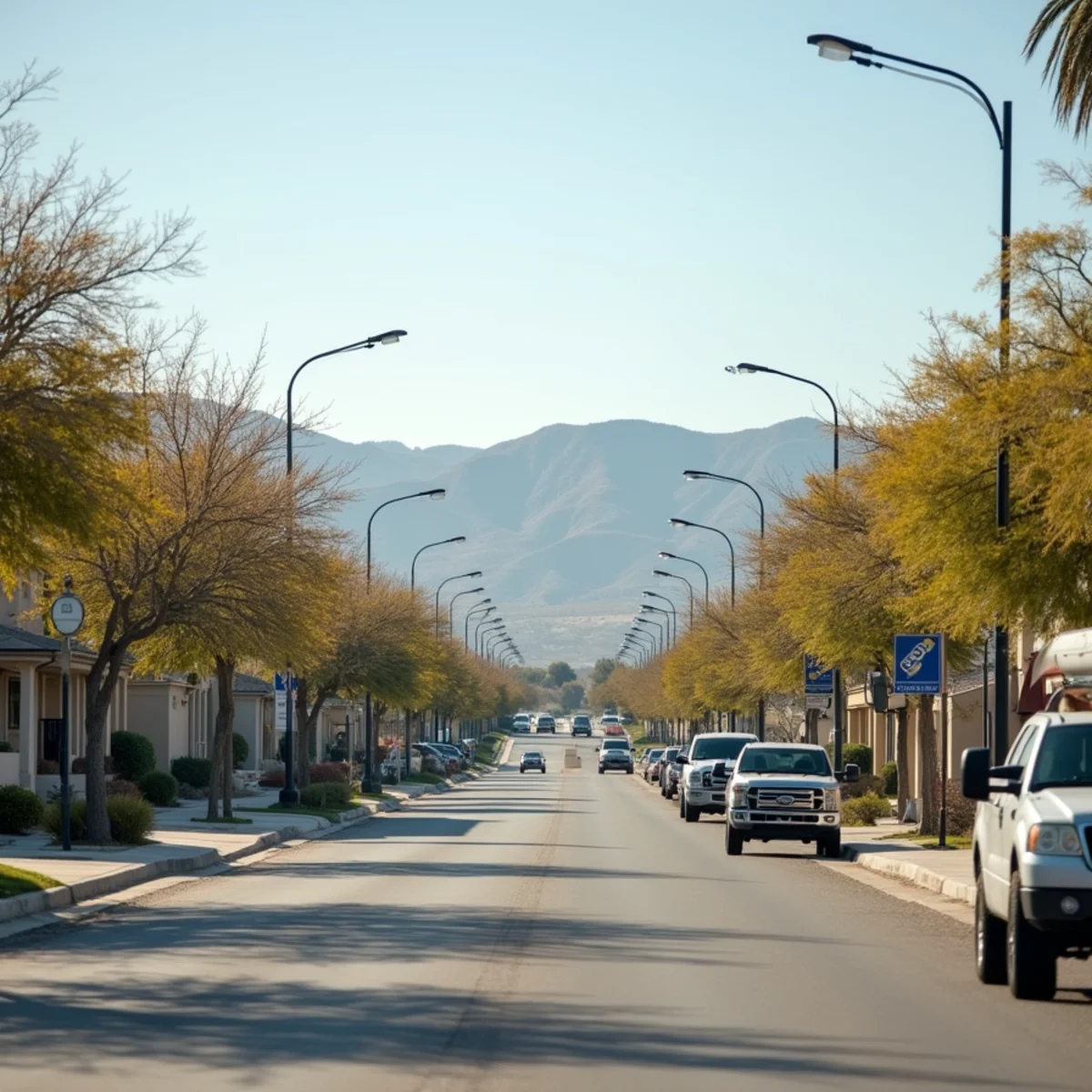
Entirely commercial: anchor retail, inline shops, restaurants, and pad buildings, sharing structural walls, roof systems, and utility runs. Suspended ceilings throughout, which both hides damage and gives water an easy path across tenant lines.
Local landmarks
Menifee Countryside Marketplace anchor stores · Newport Road frontage · Adjacent pad restaurants
Services we run most often in Menifee Countryside Marketplace
Every service we offer is available here. These are the ones this area calls for most, based on what actually breaks in these homes.
- Commercial Water Damage RestorationRetail, restaurant, medical, and office losses — worked after hours and in phases so you stay open.
- Emergency Water ExtractionStanding water out first. Truck-mounted extractors on site 24/7, because the first hour decides how big this job becomes.
- Sewage Cleanup & SanitizationCategory 3 water done properly: containment, PPE, removal of porous materials, and verified sanitization.
- Structural Drying & DehumidificationCalculated equipment loads and daily moisture logs — we do not pull the gear until the structure meters dry.
- Water Damage Repair & ReconstructionDrying is half the job. We put the house back — drywall, texture, flooring, cabinetry — so the repair does not show.
Why Countryside Marketplace tenants call us
Shared walls, shared roofs and shared utility runs mean a loss here is almost never one tenant problem. Coordination is most of the job.
We work the whole lease line, not just your unit
Supply and drain lines run through demising walls, so a burst in a stock room surfaces on the neighbouring sales floor. We document origin and path precisely so the responsibility question resolves on evidence.
Inventory protection before drying
Sprinkler discharge puts enormous volume down in minutes. We move and block what can be saved and photograph what cannot, before a single air mover goes in.
Overnight crews so the centre keeps trading
Demolition and equipment changes happen after close, and neighbouring tenants keep operating wherever containment allows it.
One scope for several carriers
Tenant, landlord and property manager usually mean multiple policies. We keep one documented scope everyone references rather than three competing versions.
Getting to you at Menifee Countryside Marketplace
Ten to fifteen minutes, and access rather than drive time is what determines how fast work actually starts.
After-hours access is the real constraint
A retail or restaurant loss at 11 p.m. needs somebody who can open the unit and authorise the work. Property management contact, tenant contact and who is authorised to sign are the three things worth having to hand — without them we are on site and unable to start.
Shared walls and roof systems mean the loss is rarely one tenancy
Inline tenants share structure and utilities, so a failure in one unit routinely affects its neighbours. That means multiple insurers, a property manager and a scope that has to be defensible across all of them, which is why documentation matters more here than on a residential job.
Staying open matters more than it does anywhere else
Every hour a retail or restaurant unit is closed is measurable revenue. Containment that isolates the affected area so the rest of the tenancy keeps trading is part of the plan from the first inspection, not something added if you ask.
Retail losses are won or lost on coordination. We work directly with property management, keep neighbouring tenants trading wherever containment allows, and run the heavy work overnight.
Menifee Countryside Marketplace questions we get asked
Water came from the tenant next door. Who is responsible?
It depends on the lease and the source, and it is rarely obvious on day one. What we do is document the origin and the path precisely, then work one scope that the tenants, the property manager, and the carriers can all reference. That documentation is usually what resolves the question.
Can we stay open during the work?
Often yes. We contain the affected zone, keep the sales floor accessible where it is safe, and schedule demolition and equipment changes overnight. Total closure is a last resort, not a default.
Our sprinkler system discharged. What happens to the inventory?
Inventory protection comes before drying. We move and block what can be saved, document what cannot, and inventory everything with photographs for the claim. Sprinkler water is clean, so a lot more stock survives than people expect — if it is moved quickly.
A pipe burst next door and flooded our Menifee Countryside Marketplace unit. Who pays?
Usually a combination: the neighbouring tenant policy, yours, and often the landlord policy, depending on the lease and where the failure originated. It is rarely obvious on day one. What resolves it is precise documentation of the origin and the water path, which we produce on arrival, plus a single scope every carrier can reference rather than three disputed versions.