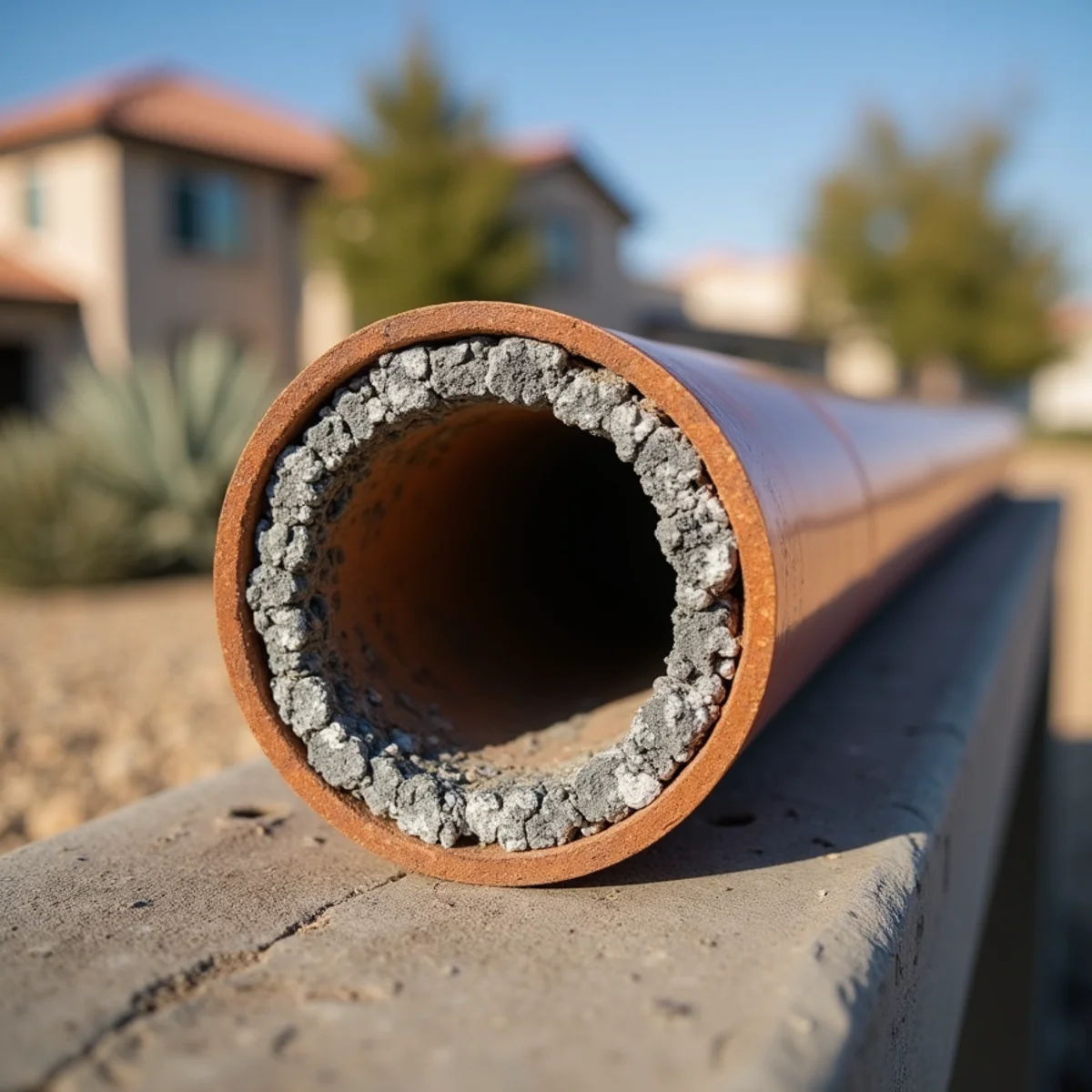

Two housing types dominate our work here: aging single-family homes with original plumbing, and mobile and manufactured homes, which fail in ways site-built houses do not.
Water damage risks specific to Hemet, CA
Every neighborhood in this region fails in its own way, and it is usually predictable from the construction era and the terrain. Here is what we actually respond to here.
1Mobile and manufactured home plumbing
Manufactured housing uses different supply materials, runs plumbing through belly wrap under the floor, and has far less structural mass to absorb a leak. Water under a mobile home floor sits between the subfloor and the belly wrap where it cannot evaporate, rotting the floor structure from underneath.
2Polybutylene supply lines in 1980s and 1990s homes
A meaningful share of homes built in this era used polybutylene, which becomes brittle over time and fails at fittings with little warning. If your home is from that period and you have grey plastic supply lines, they are worth identifying before they fail.
3Extended absences in senior communities
As in Menifee's Sun City, many Hemet residents travel for weeks at a time. Leaks that begin the day after departure run unattended, and that is the single biggest driver of large losses in this market.
4Low-slope and flat roofs
Mobile homes, park models, and some mid-century construction use low-slope roofing that ponds water rather than shedding it. Seams and penetrations are the failure points, and monsoon cells find them reliably.
The housing stock we work in Hemet, CA
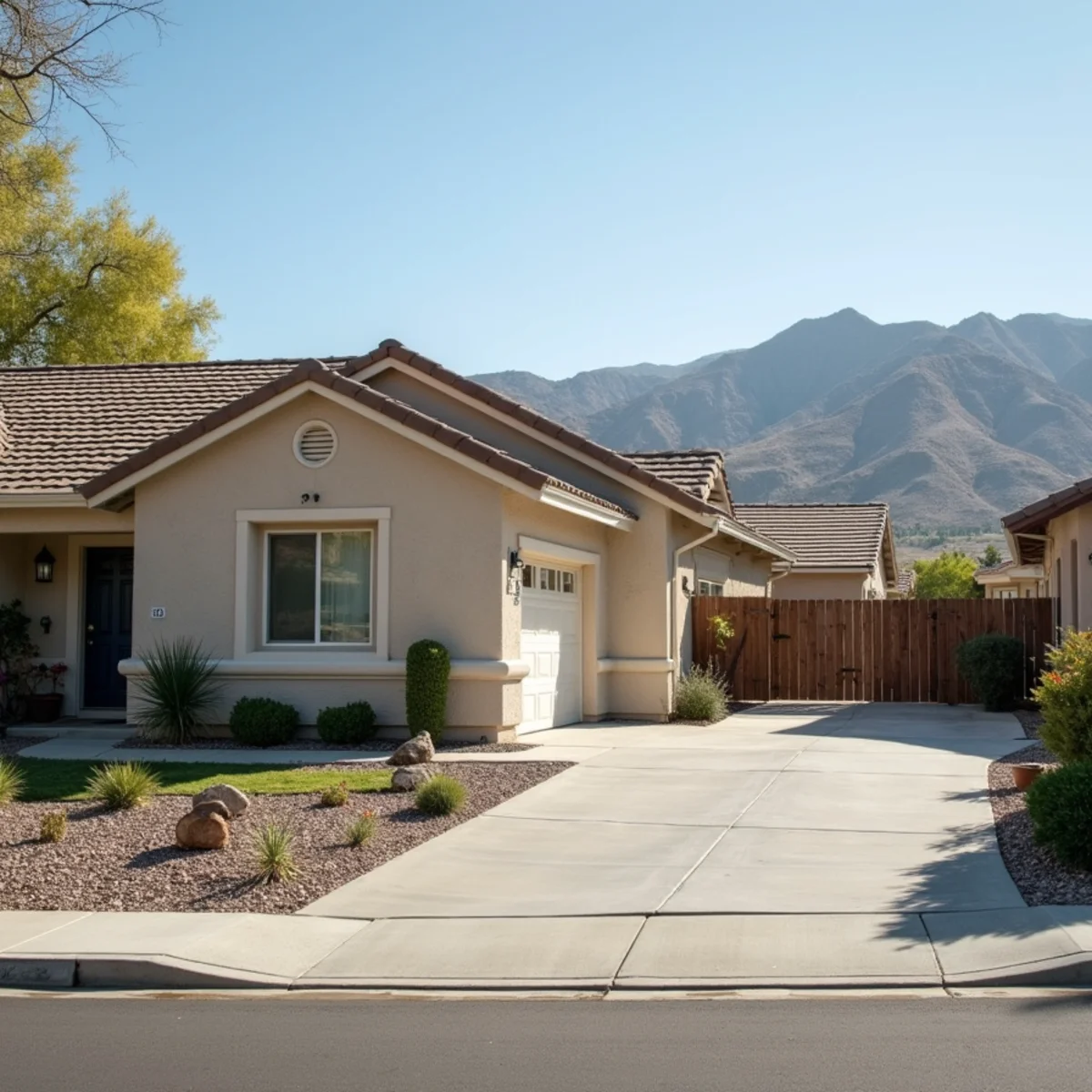
Older single-family homes, extensive mobile home and manufactured housing parks, and senior communities, alongside newer tract development on the outskirts. Plumbing materials span galvanized, polybutylene, copper, and modern PEX depending on the age and type of the home. Parts of the city are served by EMWD.
Neighborhoods we cover
East Hemet · West Hemet · Downtown Hemet · Seven Hills
Local landmarks
Diamond Valley Lake · Ramona Bowl Amphitheatre · San Jacinto Valley
Services we run most often in Hemet, CA
Every service we offer is available here. These are the ones this area calls for most, based on what actually breaks in these homes.
- Water Damage RestorationFull-scope extraction, structural drying, and repair — one crew from the first moisture reading to the last coat of paint.
- Burst Pipe & Slab Leak RepairThe failure Menifee sees most: pinholed copper under a slab. We find it, dry it, and put the floor back.
- Mold RemediationContained removal, HEPA filtration, and the moisture fix behind it — because mold that is only cleaned comes back.
- Crawl Space & Sub-Floor Water DamageMenifee has almost no basements — it has wet slabs, crawl spaces, and irrigation soaking foundations. That is what we dry.
- Roof Leak Water DamageWind-lifted tile and sun-baked underlayment let water into the attic. We tarp tonight and repair properly after.
Why Hemet homeowners call us
Two housing types dominate our Hemet work, and both need an approach that a standard tract-home playbook gets wrong.
We dry manufactured homes properly
Water gets trapped between the subfloor and the belly wrap where it cannot evaporate. The wrap usually has to be opened to dry the floor structure, and drying one from the inside only is how floors rot after a supposedly finished job.
We identify polybutylene on sight
A meaningful share of 1980s and 1990s homes here used grey plastic supply that becomes brittle and fails at the fittings with little warning. If you have it, you should know.
Extended absence is common here
As in Sun City, many residents travel for weeks. A leak beginning the day after departure is the biggest driver of large losses in this market.
Low-slope roofs get checked at the seams
Mobile homes, park models and some mid-century construction pond water rather than shedding it. Seams and penetrations are where monsoon cells find their way in.
Hemet homes need a restoration approach matched to how they are built. A manufactured home is not a small tract house, and drying one as though it were is how floor structures get written off unnecessarily.
Hemet, CA questions we get asked
Do you work on mobile and manufactured homes?
Yes, and they need a different approach. Water gets trapped between the subfloor and the belly wrap where it cannot evaporate, so the wrap usually has to be opened to dry the floor structure properly. Drying one from the inside only is how floors end up rotting after a supposedly finished job.
How do I tell if I have polybutylene pipe?
It is typically grey, sometimes blue or black, flexible plastic — usually visible at the water heater or under a sink. If your home is from the late 1970s through mid-1990s and you find it, plan on replacement. It fails at the fittings, generally without warning.
How far is Hemet from your Menifee base?
About 25 to 35 minutes depending on the route and time of day. Western Hemet and the areas toward Winchester are closer.
Do you work on mobile and manufactured homes in Hemet?
Yes, and they need a genuinely different approach. Water collects between the subfloor and the belly wrap underneath, where no amount of interior airflow will reach it. The wrap has to be opened to dry the floor structure properly. Crews that treat a manufactured home like a small site-built house dry the inside, declare it finished, and the floor rots out over the following year.