Local Menifee Risks
Do Menifee Homes Have Basements? What Is Actually Under Your Floor
People search for basement drying in Menifee constantly, and most of them do not have a basement. Here is how to tell what is actually beneath your floor — and why the answer changes everything about a water loss.
The short answer
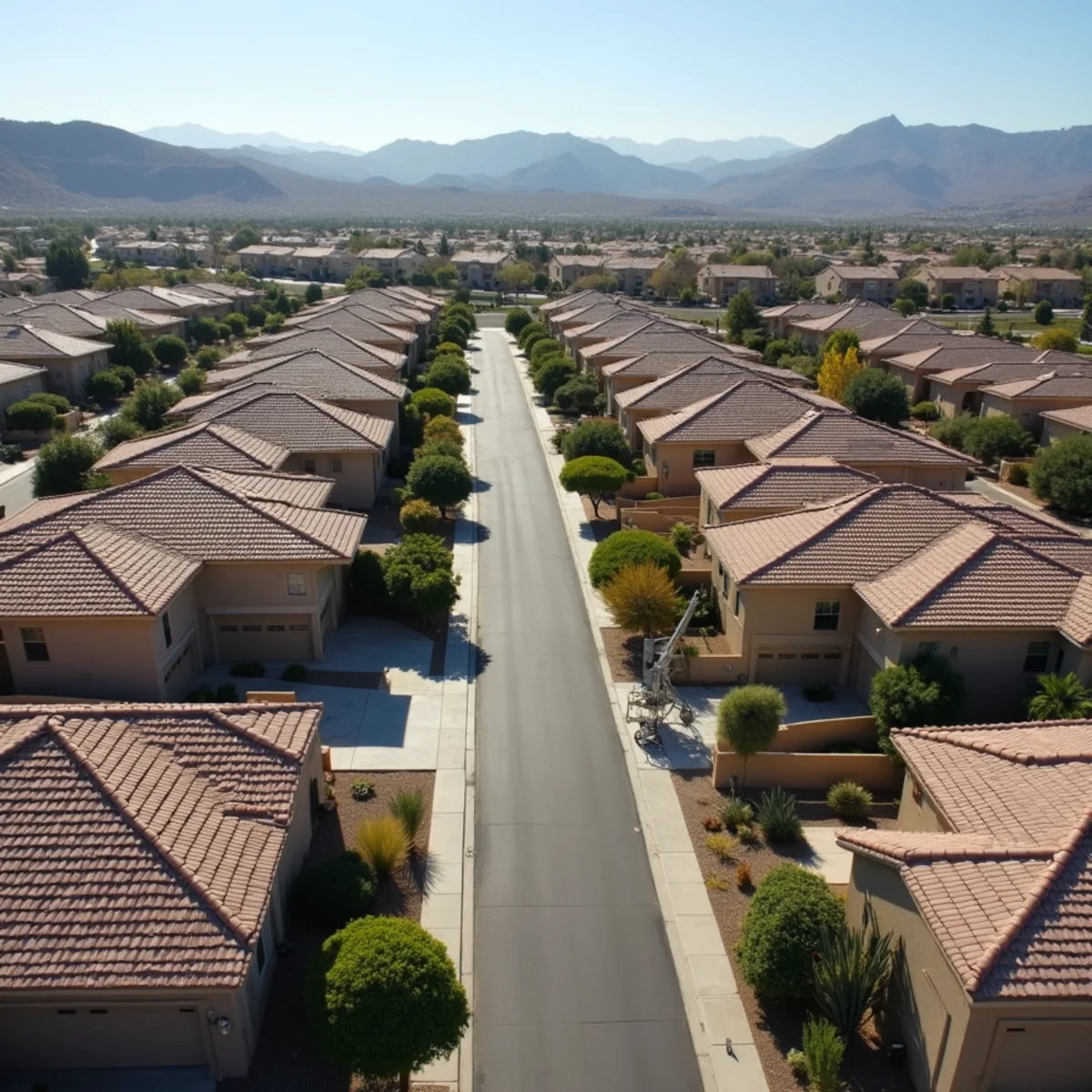
The overwhelming majority of Menifee homes have no basement. The city was built as slab-on-grade tract housing, meaning the floor sits directly on concrete poured on the ground. Genuine basements exist only in a small number of custom builds on sloped lots. If water is appearing at your lowest level, it is far more likely a slab leak or a crawl space than a basement.
This question comes up more than you would expect, and it usually arrives in the worst possible circumstances: somebody has found water at the lowest point of their house and is trying to work out what they are dealing with before they call anyone.
The short answer is that Menifee is a slab-on-grade city. Basements here are the rare exception, and if you live in one of the tract developments that make up most of the housing stock, you almost certainly do not have one.
Why Southern California stopped building basements
Basements are standard across much of the United States for a practical reason: in cold climates the foundation has to be dug below the frost line anyway, so once you have excavated that deep, enclosing the space costs relatively little extra.
Inland Southern California has no meaningful frost line. There is no structural reason to dig, and several reasons not to — excavation costs, expansive clay soils in parts of the region, and seismic design considerations. The economics of tract development did the rest. A slab is faster and cheaper to pour, and when Menifee built out in waves from the 1960s onward, that is what went down.
The three things that are actually under Menifee floors
| What you have | Where it is common | Where water usually comes from |
|---|---|---|
| Slab-on-grade | The large majority — Sun City, Menifee Lakes, Paloma Valley, Audie Murphy Ranch, Heritage Lake, most tract housing | A slab leak: a supply line failing underneath the concrete. Needs electronic location before anything is cut. |
| Raised foundation with a crawl space | Pockets of older stock, particularly parts of Quail Valley and Homeland | Plumbing above the crawl space, groundwater, or a failed vapour barrier. Water can sit for weeks unnoticed. |
| Genuine basement or daylight lower level | A small number of custom builds on slopes — Canyon Hills, Greer Ranch, toward Canyon Lake | Surface runoff, retaining wall or subdrain failure, far more often than plumbing. |
How to tell which one you have, in about two minutes
- Look at the exterior where the wall meets the ground. If there is a continuous concrete edge at roughly ground level with no vents, you are almost certainly on a slab.
- Look for foundation vents — small screened openings spaced around the base of the house. Vents mean a crawl space underneath.
- Stand in the lowest room and check whether it is below the level of the ground outside the nearest window. If it is, you have genuine below-grade space.
- Check whether the floor sounds and feels solid underfoot everywhere, with no hollow spring. Slabs do not flex; a raised floor over a crawl space often does, subtly.
- If your home is on a slope and the garage or a room sits a full level below the front door, that is a daylight basement even if nobody calls it one.
Why the distinction matters the moment water appears
It is not academic. The three foundation types fail in completely different ways, and treating one like another wastes time while the damage spreads.
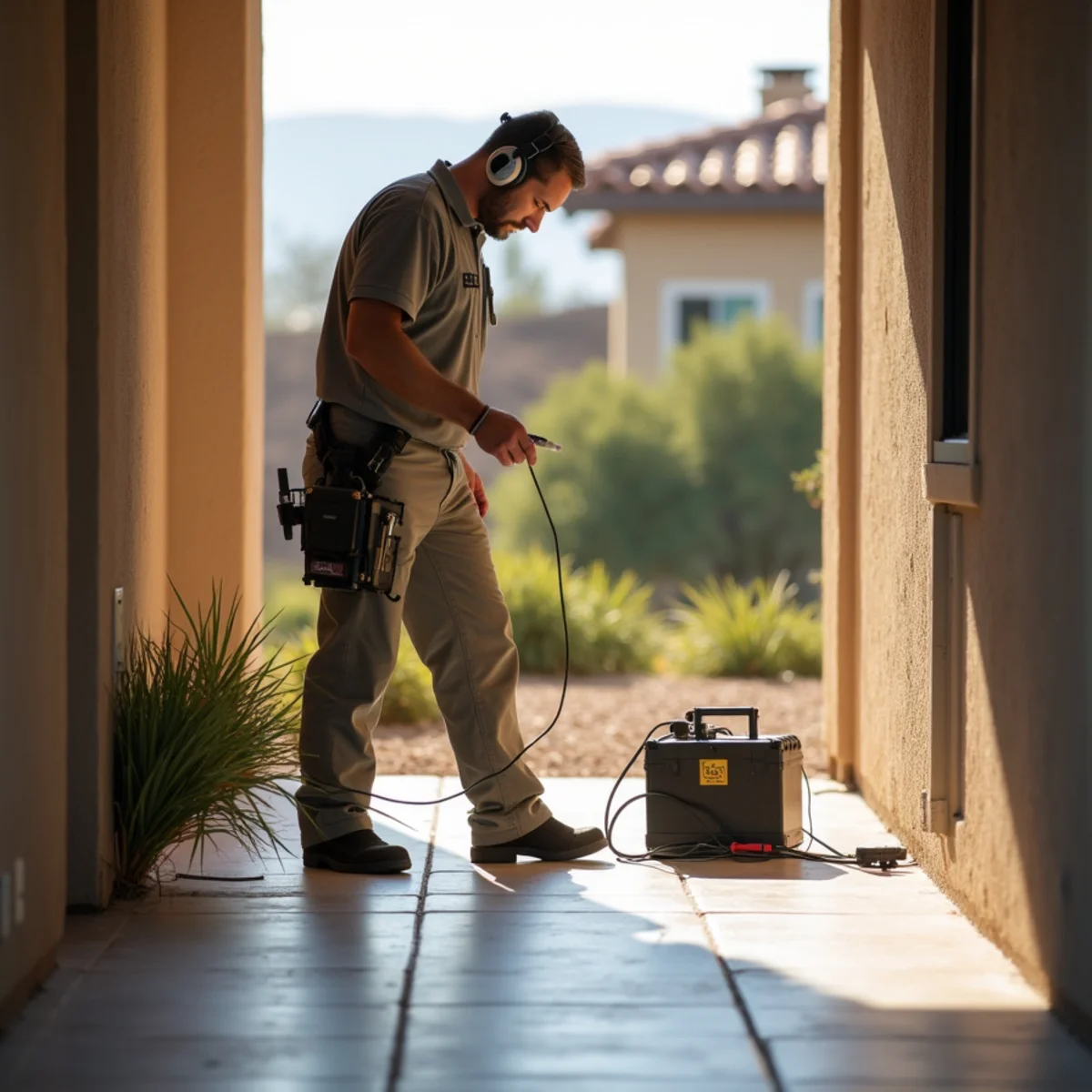
On a slab, water at floor level is most often a supply line failing underneath the concrete. The warning signs are a warm patch on the floor, a water bill that climbed without explanation, and the sound of running water in a quiet house. The critical step is locating the line electronically before any concrete is opened, so the slab is cut once and in the right place.
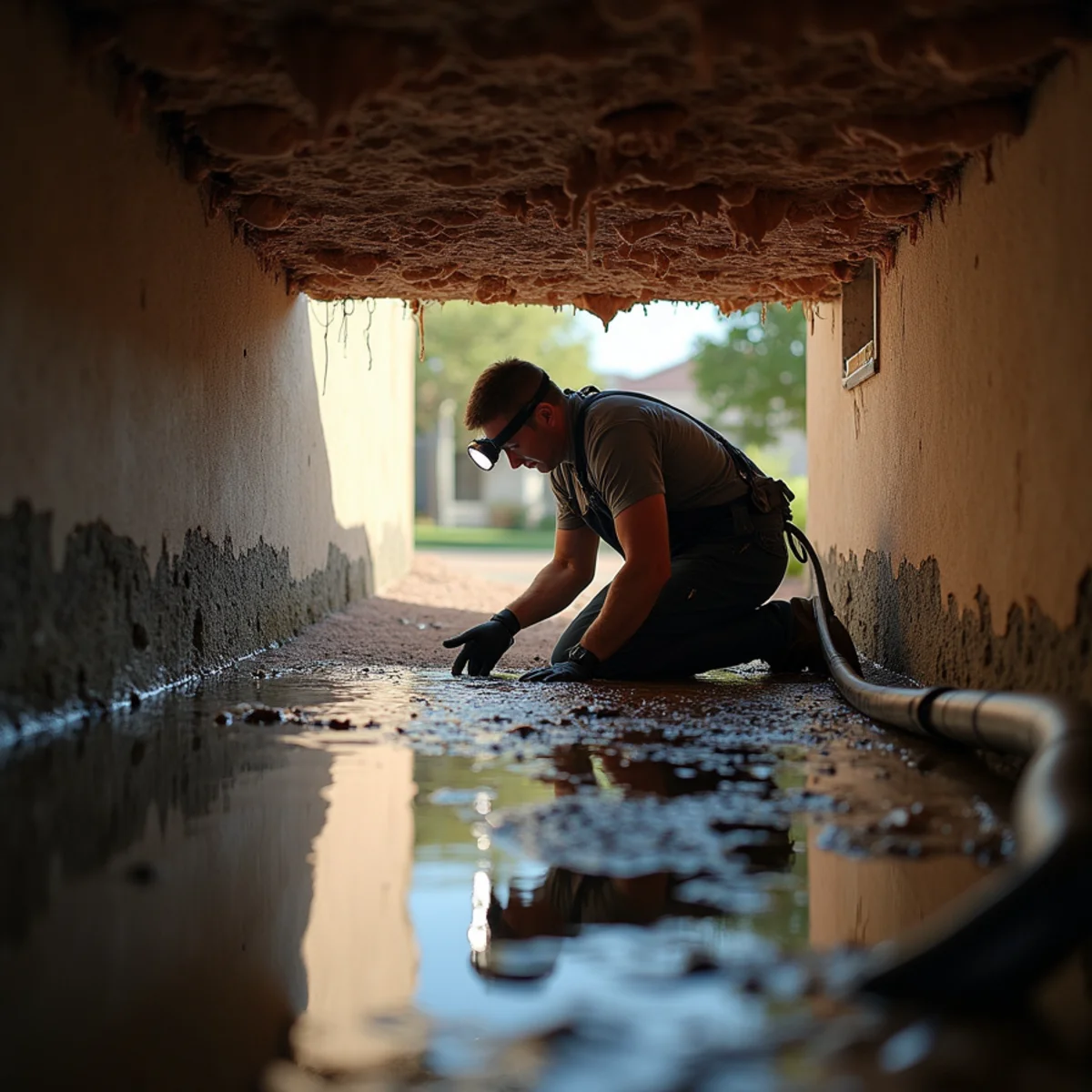
In a crawl space, water hides. There is no visible symptom in the living space for weeks, and the first sign is usually a musty smell that returns whenever the house is closed up. Crawl spaces also need somebody willing to go under the house rather than shine a torch through the hatch — standing water twenty feet back is invisible from the opening.
In a genuine below-grade room, the cause is more often outside the building than inside it. Surface runoff during a monsoon cell, a blocked area drain, or a failed subdrain behind a retaining wall will all put water into a lower level, and drying it without addressing the drainage simply means doing it again next season.
What people mean when they search for basement drying in Menifee
We see this search constantly, and in practice it almost always turns out to be one of four situations: a slab leak that has reached the flooring, a crawl space holding water, a sunken living room or below-grade garage on a sloped lot, or occasionally a genuine lower level in a custom home.
- All four need below-grade drying, and all four are work we do.
- All four need a different diagnosis, and three of the four have causes that drying alone will not fix.
- Only one of them is actually a basement.
That is why the inspection is free and happens before any scope is written. Establishing what the space is and where the water came from takes about twenty minutes and changes the entire job.
If you are standing in water right now
Do not spend time working out your foundation type. Shut the water off at the main if you can reach it safely, keep off the affected floor, and call. We will establish what you have when we arrive, and we would rather diagnose it in person than have you guess at midnight.
Frequently asked questions
Are there any houses in Menifee with basements?
Yes, but very few, and they are concentrated in custom and semi-custom builds on sloped lots — the Canyon Hills and Greer Ranch hillsides and properties toward Canyon Lake. Where the grade already drops, a daylight basement or stepped lower level becomes practical to build. In the tract developments that make up most of the city, they are essentially absent.
Why does my house feel like it has something underneath it then?
You may have a raised foundation with a crawl space, which is common in parts of the older stock around Quail Valley and Homeland. A crawl space is not a basement — it is typically two to four feet of unfinished clearance between the ground and the floor joists — but it is below-grade space, it can hold water, and it is one of the easiest places for a leak to run unnoticed for weeks.
Does a slab foundation mean I am safe from water damage?
No, it changes the failure mode rather than removing it. Slab homes get slab leaks: supply lines running under the concrete corrode and fail, which in Menifee is common because the local water is hard on copper and much of the housing is now at the age where pinholing starts. The water has nowhere obvious to go, so it migrates up through the slab into flooring and wall plates.
Can water under a slab damage the foundation itself?
Usually not. Concrete tolerates water well. What gets damaged is everything sitting on and beside the slab — flooring, baseboards, wall plates and whatever is inside the walls. Genuine foundation movement from a slab leak requires a serious, prolonged leak in the right soil conditions, not the typical pinhole found within a couple of months.
How do I find out my foundation type for certain?
Riverside County property records and your original home inspection report will both state it. Failing that, the exterior check for foundation vents takes under a minute, and any restoration or plumbing contractor will tell you on sight. We confirm it as part of the free inspection before writing any scope.