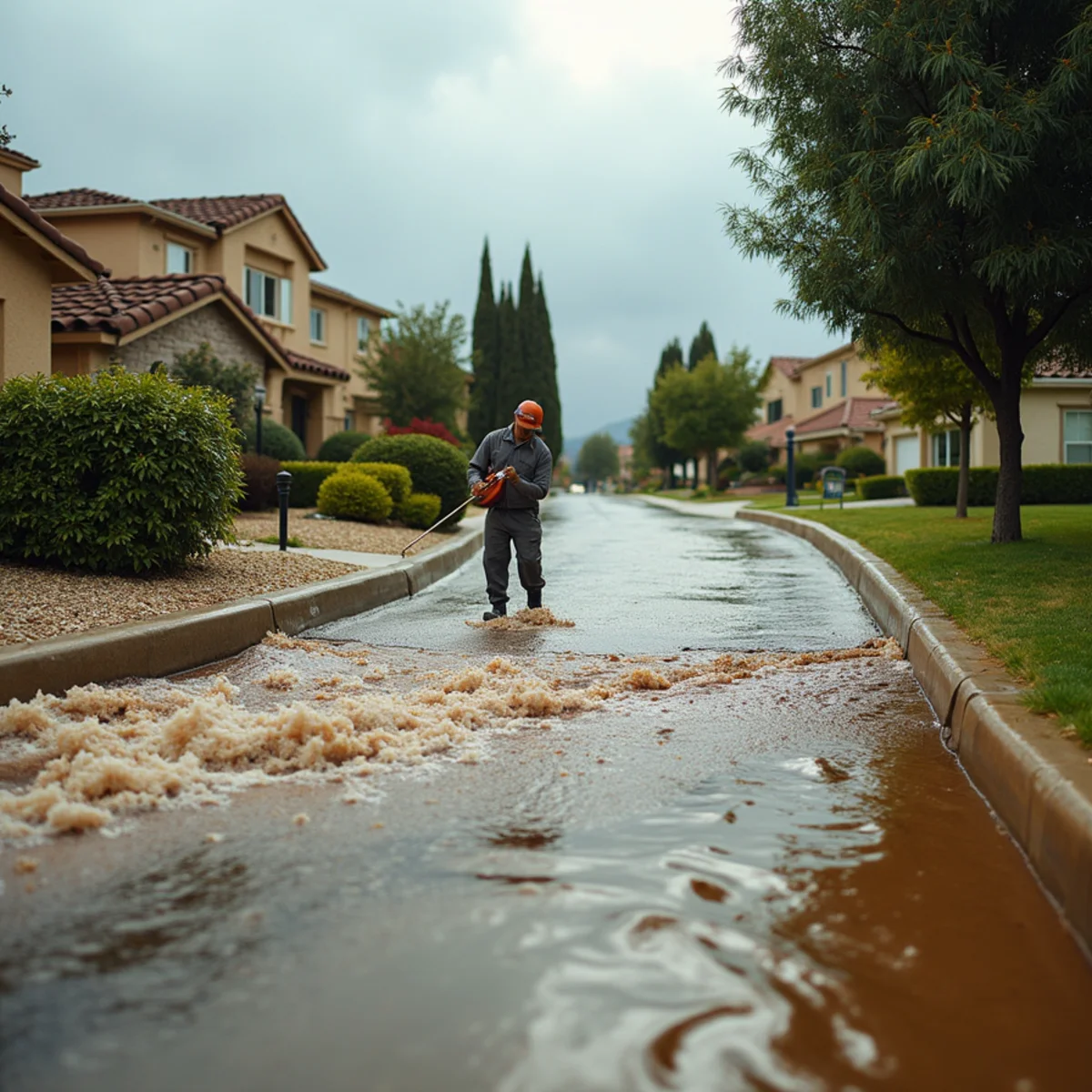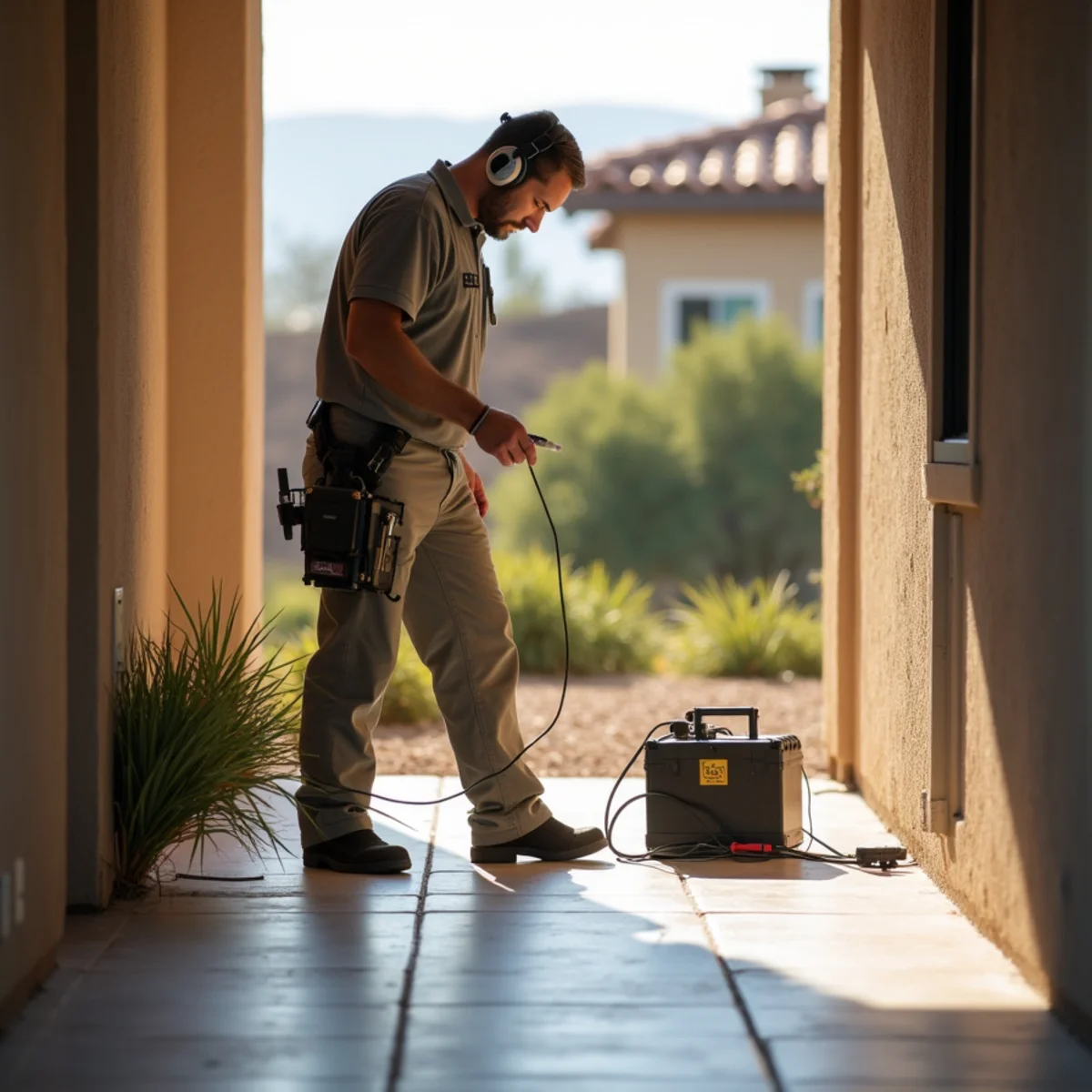
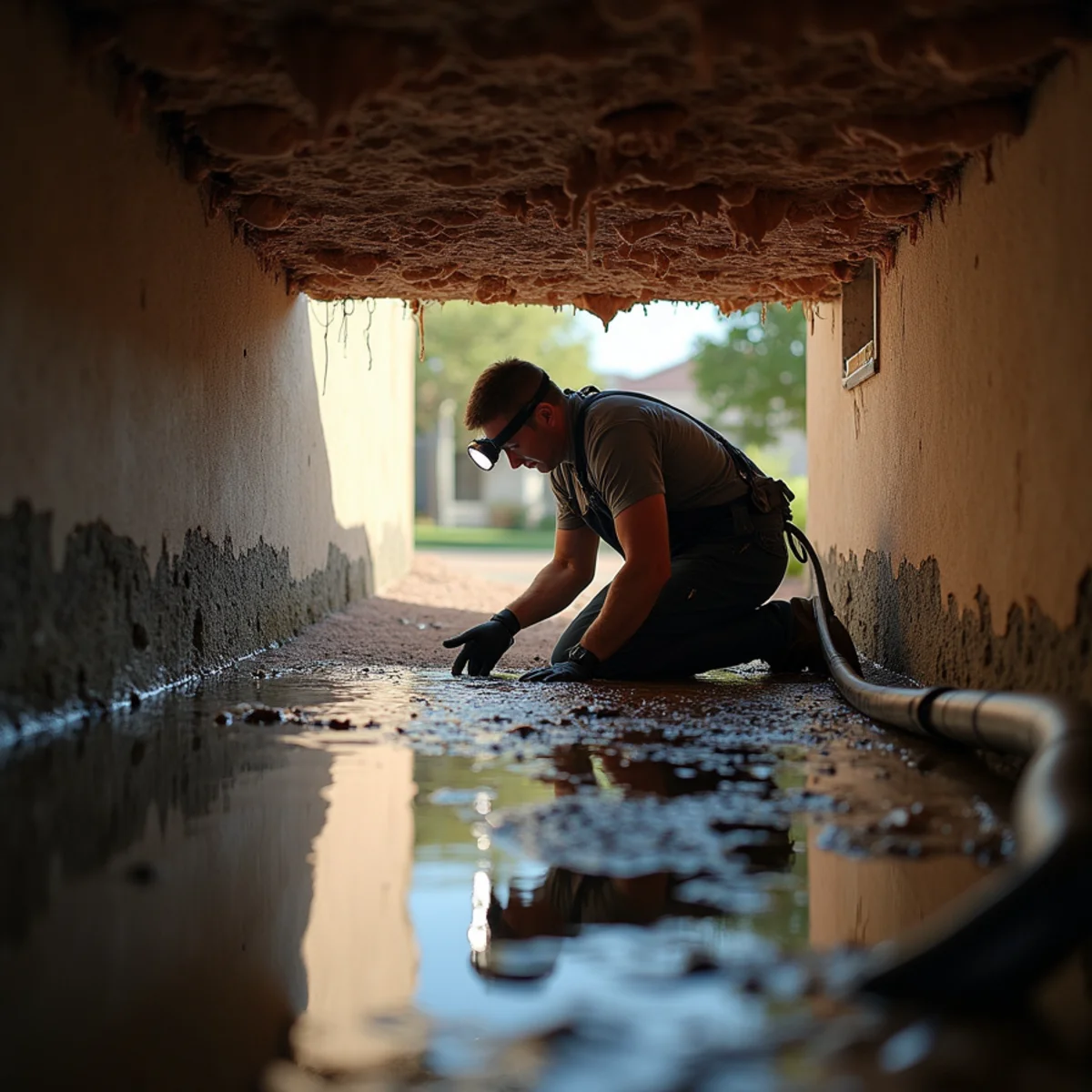
We provide basement and below-grade water removal across Menifee, CA — extraction, drying to a measured standard and the repairs afterwards, 24/7. One thing worth knowing before you call: the overwhelming majority of Menifee homes are slab-on-grade and have no basement at all. If water is appearing at the lowest level of your house, it is far more often a slab leak, a crawl space or a sunken room than a true basement. The free inspection establishes which, and the answer changes the whole job.
That matters because people searching for a basement drying service in Menifee frequently do not have a basement. What they have is water showing up at the lowest point they can see: a sunken living room, a below-grade garage on a sloped lot, a wine cellar, or most commonly a crawl space that has been quietly holding water for weeks.
All of those need below-grade drying, and we do all of them. But they are different jobs with different causes, and getting the diagnosis right on day one is the difference between fixing the problem and drying the symptom.
What below-grade water looks like before you see standing water
Below-grade spaces are under-visited, so the early signs are usually smelled or felt rather than seen.
A musty smell that returns when the house is closed up
The most reliable early indicator. Air moves upward through a house, so a damp lower level vents into the rooms above it. If the smell comes back every time the air conditioning has been running with the windows shut, something below is wet.
Efflorescence — white chalky deposits on concrete
Mineral salts left behind as water passes through concrete and evaporates. In this water it is pronounced. It tells you moisture is moving through the wall or slab, not merely sitting on it.
A cool, slightly damp floor at the lowest level
Sunken rooms and below-grade garages telegraph this before anything looks wrong. A floor that reads cool underfoot in a warm house is worth a meter reading.
Rust on the bottom of anything stored down there
Appliance feet, shelving legs, tool boxes. Persistent humidity shows up on metal long before it shows on the structure.
Standing water after a monsoon cell
Intense summer rain over sun-baked ground runs off rather than soaking in, and below-grade spaces are where it collects. If water appears only after heavy rain, the cause is outside the building, not inside it.
What below-grade water removal includes
Below-grade drying is harder than drying an above-grade room, because the space is enclosed, poorly ventilated and usually surrounded by damp earth.
Establishing what the space actually is, and where the water came from
Basement, sunken room, daylight basement, below-grade garage or crawl space — and whether the source is plumbing, groundwater, surface runoff or condensation. Everything after this depends on getting it right.Extraction, including from under stored contents
Below-grade spaces are where people store things. Water sits under and inside boxes, and cardboard wicks it upward into whatever is stacked above. Contents get lifted and the floor underneath gets extracted properly.Dehumidification sized for an enclosed space
A below-grade room has little natural air exchange and damp earth on the other side of the wall, so the dehumidification load is higher than the square footage suggests. Equipment is sized by calculation and logged daily against a dry standard.Containment and antimicrobial treatment where the category calls for it
Groundwater and surface runoff are not clean water. Where the category requires it, the space is contained with negative air before anything is removed, so spores are not pushed up into the living space above.
What you probably have instead of a basement
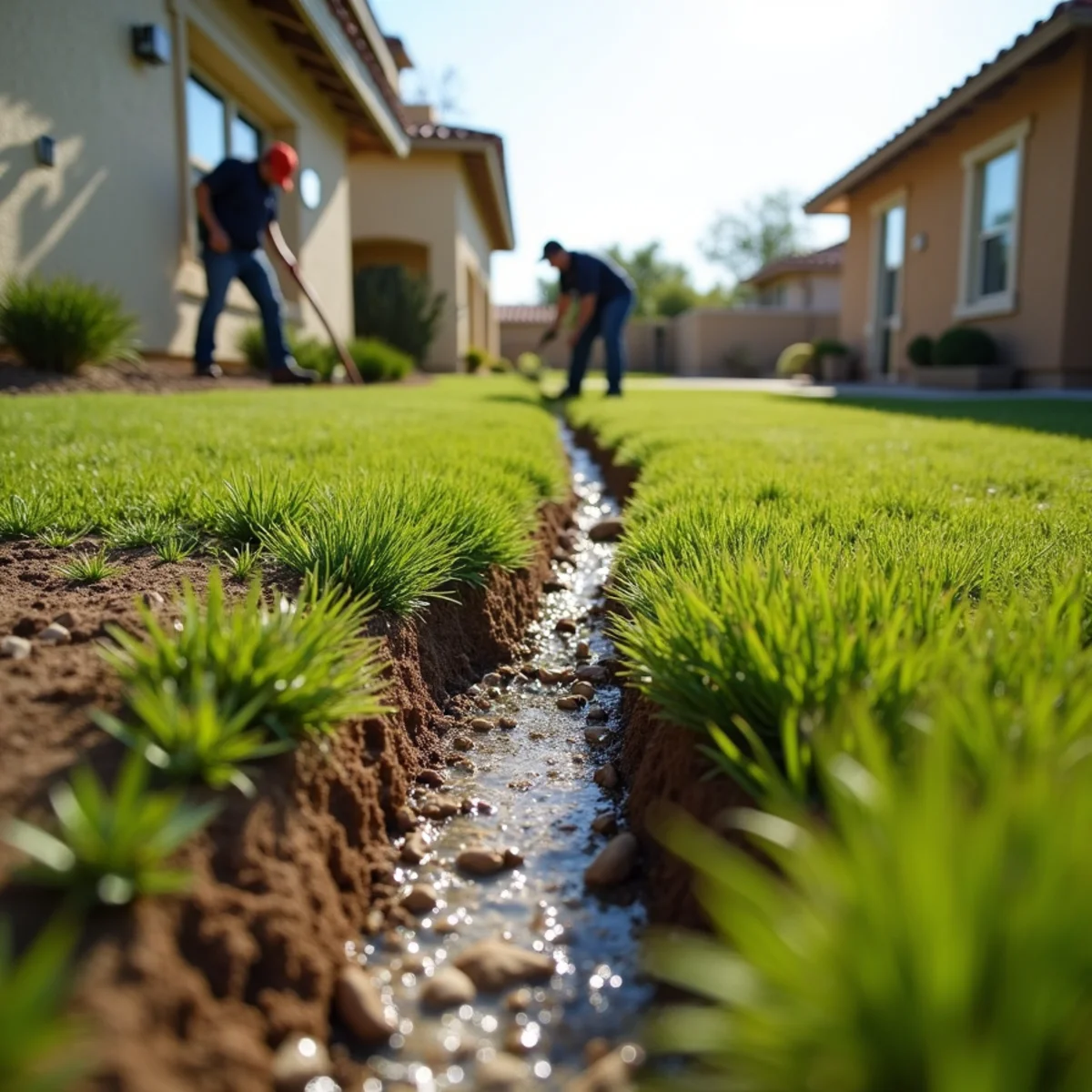
If you are in a Menifee tract home — Sun City, Quail Valley, Menifee Lakes, Paloma Valley, Audie Murphy Ranch, Heritage Lake — you almost certainly have slab-on-grade construction. Water appearing at floor level there is usually a slab leak, which is a supply line failing beneath the concrete, and it needs locating electronically before anything is opened.
If you are on a slope in Canyon Hills, Greer Ranch or toward Canyon Lake, a daylight basement or a stepped lower level is genuinely possible, and so is water entering through a retaining wall or a failed subdrain rather than from any plumbing.
And in parts of the older stock — pockets of Quail Valley and Homeland in particular — you may have a raised foundation with a crawl space rather than a slab. A crawl space will hide water for weeks, which is exactly why it needs somebody willing to go under the house rather than assess it from the hatch.
We will tell you which of these you have at the inspection, free, before any scope is written. If it turns out you do not need a restoration company at all, we will tell you that too.
How a below-grade drying job runs
The diagnosis comes first, because the four likely causes need four different responses.
- 1
1. Identify the space and the source
Meter readings, thermal imaging and a look at the exterior grade. Plumbing failure, groundwater, surface runoff and condensation each leave a different pattern, and the fix for one does nothing for the others.
- 2
2. Stop the ingress
Isolating a supply line, clearing a blocked area drain, or temporarily diverting surface water away from the entry point. There is no value in drying a space that is still taking water.
- 3
3. Extract and remove unsalvageable material
Standing water out, then the porous material that cannot be dried in place — soaked cardboard, affected insulation, carpet pad. Contents are moved up and out rather than shuffled around down there.
- 4
4. Dry the enclosed volume to a measured standard
Low-grain dehumidification with directed airflow, sized for a space with poor natural ventilation and damp surrounding earth. Daily readings against an unaffected control area in your own home.
- 5
5. Treat and verify
Antimicrobial treatment where the water category warranted it, then final readings confirming every affected material has reached standard before equipment comes out.
- 6
6. Address why it happened
For a plumbing cause, the repair. For water arriving from outside, the honest conversation about grade, drainage and whether this will recur next monsoon season — including when the right answer is a drainage contractor rather than us.
What moves the cost of below-grade drying
You get a written number after the free inspection. These are the variables that decide it.
What the space is
A crawl space, a finished lower level and an unfinished below-grade garage are three different jobs. A finished space has materials to save and reinstate; an unfinished one mostly needs drying and treatment.
Where the water came from
Clean supply water is the cheapest scenario. Groundwater and surface runoff arrive contaminated, which changes the protocol, the protective equipment and what has to be removed rather than dried.
How enclosed the space is
Poor ventilation and damp surrounding earth raise the dehumidification load, which means more equipment for more days than the same square footage above grade would need.
How long it ran before anyone looked
This is the big one for below-grade spaces specifically, because nobody goes down there. A week is a dry-out. Two months is a remediation.
Why call us for a below-grade space
The common failure in this work is treating a below-grade space like a slightly damper version of an upstairs room.
We will tell you if you do not have a basement
Most Menifee callers who ask for basement drying have a slab leak or a crawl space instead. Saying so costs us an upsell and saves you from paying to dry the symptom while the cause keeps running.
Somebody actually goes under the house
Crawl spaces get assessed from the hatch far too often. A torch through an opening does not find standing water twenty feet back, and that is precisely where it sits.
Equipment sized for an enclosed, earth-surrounded volume
Below-grade drying needs more dehumidification per square foot than above-grade work, and it is a calculation rather than a guess. Our ASD-certified crews size it and log it daily.
We separate the drying from the drainage question
If water is arriving from outside, drying it is only half an answer. We are straight about what is a restoration job and what is a grading or drainage job — including when that means recommending a different trade.
Frequently asked questions
Who provides basement drying services in Menifee, CA?
We do — 24/7, from our shop on Palomar Road, with IICRC-certified crews and a free on-site inspection before any scope is written. The useful caveat is that genuine basements are rare in Menifee because the housing is overwhelmingly slab-on-grade. If you are seeing water at the lowest level of your home, call and describe it; we will establish whether it is a basement, a sunken room, a below-grade garage, a crawl space or a slab leak, and the inspection costs nothing either way.
Do homes in Menifee even have basements?
A small minority do. They are almost entirely custom and semi-custom builds on sloped lots — the Canyon Hills and Greer Ranch hillsides, and properties toward Canyon Lake — where the grade made a daylight basement or a stepped lower level practical. The tract housing that makes up most of the city is slab-on-grade with no below-grade space at all.
Water is pooling at the lowest point of my house. What is it likely to be?
In a Menifee tract home, most often a slab leak — a supply line failing beneath the concrete. If it only appears after heavy rain, surface water entering from outside is more likely, and the garage threshold is the usual entry point. If your home has a raised foundation, a crawl space holding water is very common and easily missed. The free inspection separates these in about twenty minutes.
How long does it take to dry a below-grade space?
Longer than an equivalent room above grade, because the space is enclosed, poorly ventilated and surrounded by damp earth. A contained clean-water event might be three to five days; a crawl space that has held water for weeks can run considerably longer. You get daily moisture logs, and equipment stays until the readings meet the dry standard taken from an unaffected part of your own home.
Will insurance cover a flooded basement or lower level?
It depends entirely on how the water got there, which is why we document the mechanism carefully. Sudden discharge from a plumbing failure is commonly covered. Groundwater seepage and surface flooding are generally excluded from standard homeowner policies and need separate flood coverage. Sewer backup usually requires its own endorsement. We give you the evidence either way so the determination is made on facts.
Can I just run a dehumidifier down there myself?
For a genuinely small, clean-water event you sometimes can, and we will say so. What a consumer dehumidifier cannot do is keep extracting at low humidity — its rated capacity is measured in warm, already-humid air and falls off sharply as the space dries, which is exactly when you still need it. In an enclosed below-grade volume with damp earth on the other side of the wall, that limitation matters more than it would upstairs.
The water only shows up after heavy rain. Is that still your job?
The drying and any contamination control is, yes. The cause usually is not — water arriving from outside during a monsoon cell is a grading, drainage or sealing problem, and drying it without addressing that just means doing it again next season. We will dry it properly and be straight with you about what needs fixing outside, including when that is somebody else trade.
Where we provide basement and below-grade drying in Menifee
We run this service across every Menifee neighborhood and out into the surrounding cities. Response times are honest drive-time bands from our shop on Palomar Road, not marketing numbers.
- Basement & Below-Grade Drying in Menifee, CA
- Basement & Below-Grade Drying in Menifee Lakes
- Basement & Below-Grade Drying in Audie Murphy Ranch
- Basement & Below-Grade Drying in Heritage Lake
- Basement & Below-Grade Drying in Quail Valley
- Basement & Below-Grade Drying in Sun City, Menifee
- Basement & Below-Grade Drying in Paloma Valley
- Basement & Below-Grade Drying in Canyon Hills
- Basement & Below-Grade Drying in Romoland
- Basement & Below-Grade Drying in Homeland
- Basement & Below-Grade Drying in McCall Boulevard
- Basement & Below-Grade Drying in Newport Road