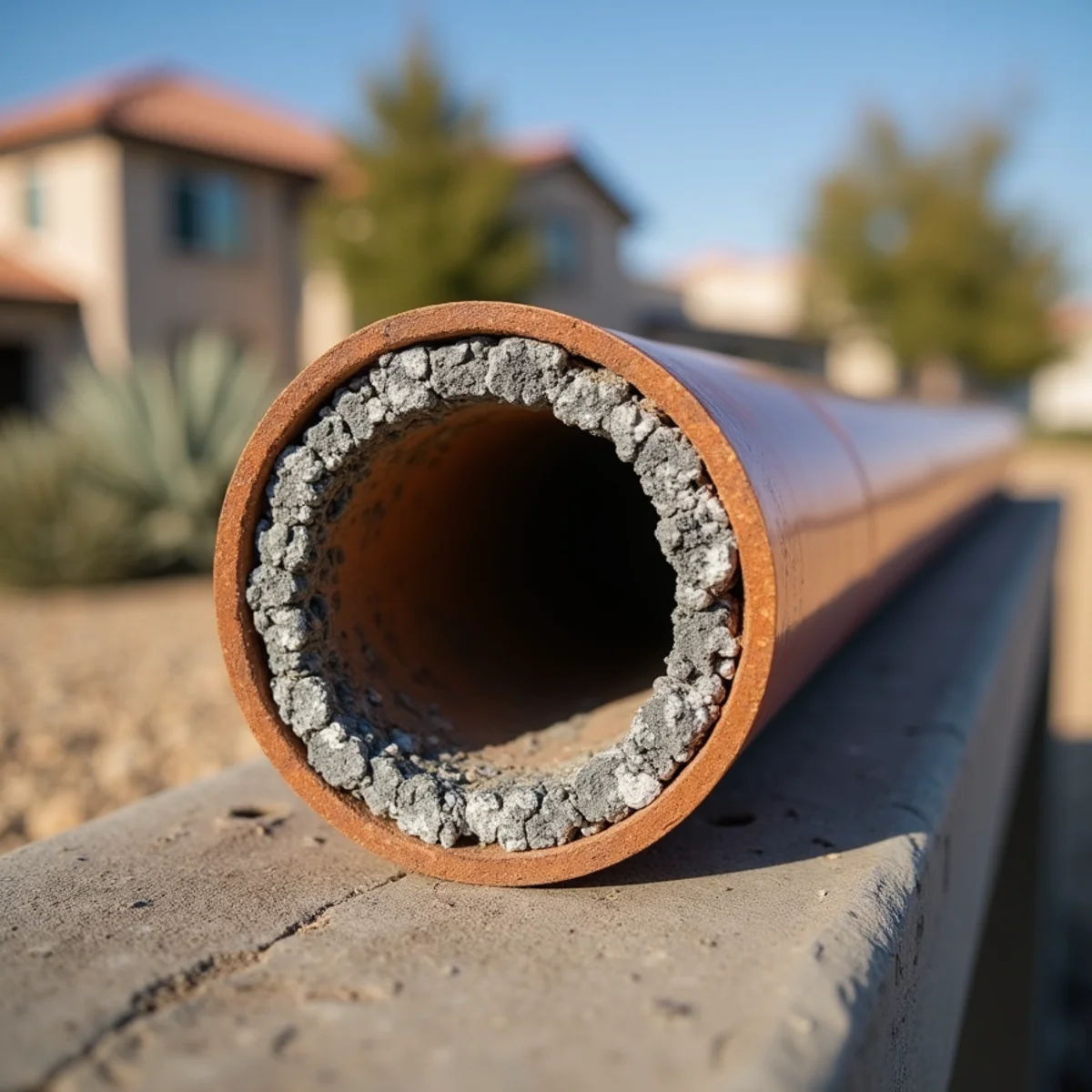

The residential and commercial sides of the city fail in completely different ways, and both are common work for us out here.
Water damage risks specific to Rialto, CA
Every neighborhood in this region fails in its own way, and it is usually predictable from the construction era and the terrain. Here is what we actually respond to here.
1Post-war housing with original systems
A significant share of the housing dates to the 1950s and 1960s with original or first-replacement plumbing. Galvanized supply and cast iron drains are common and both are well past design life.
2Distribution facilities with large exposures
Warehouse and logistics buildings have vast slab areas, long roof spans, and racked inventory. Roof drainage failures during a storm can affect enormous floor areas quickly.
3Hard water across the city
Mineral-heavy supply produces the familiar Inland Empire pattern — water heater sediment, scaled fixtures, seized valves, and accelerated pitting in aging copper.
The housing stock we work in Rialto, CA
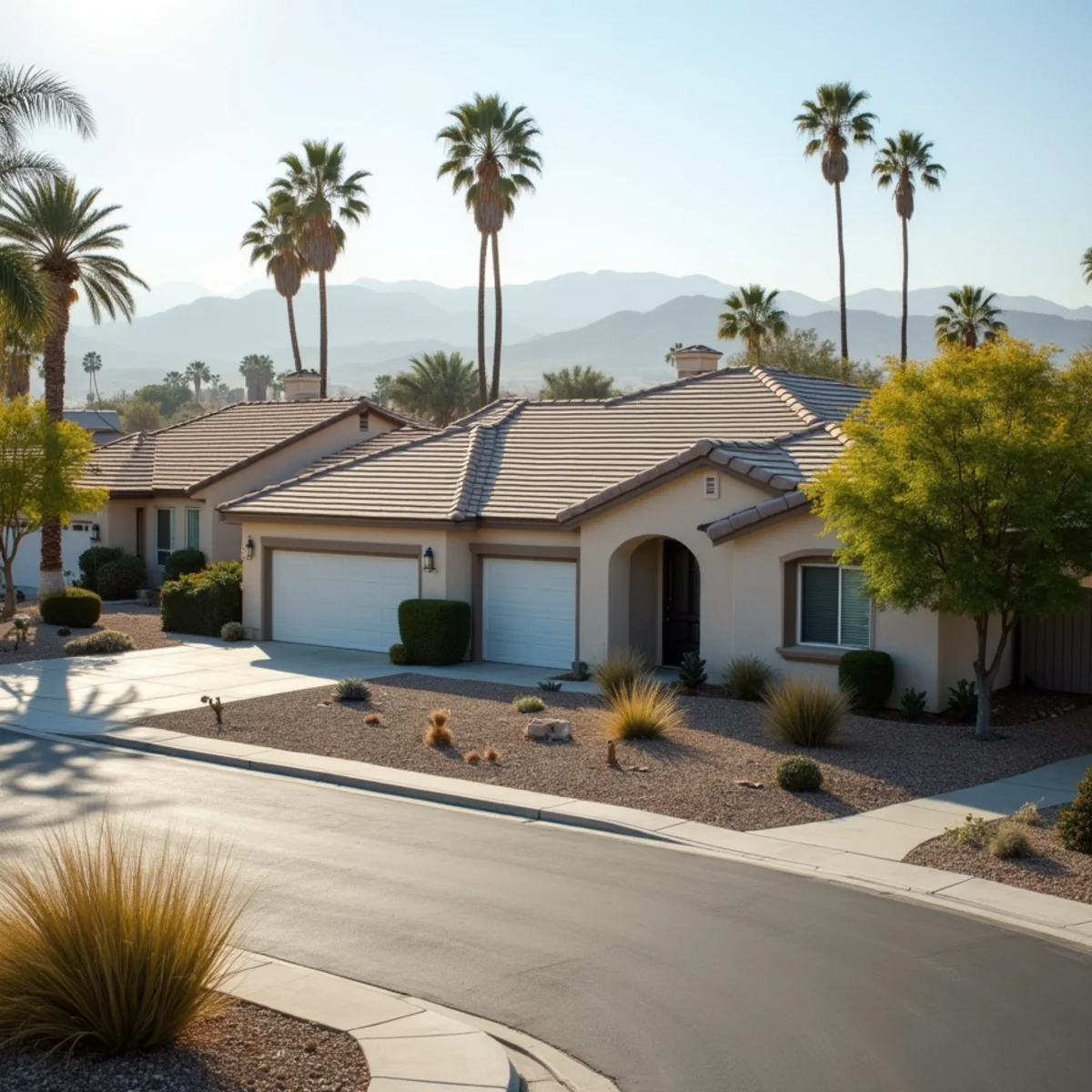
Post-war single-family neighbourhoods, 1980s through 2000s tract development, and extensive logistics and distribution property. Predominantly slab-on-grade in the newer housing, with mixed construction in the older stock.
Local landmarks
Renaissance Marketplace · Rialto Municipal Airport area · Interstate 210 corridor
Services we run most often in Rialto, CA
Every service we offer is available here. These are the ones this area calls for most, based on what actually breaks in these homes.
- Water Damage RestorationFull-scope extraction, structural drying, and repair — one crew from the first moisture reading to the last coat of paint.
- Commercial Water Damage RestorationRetail, restaurant, medical, and office losses — worked after hours and in phases so you stay open.
- Burst Pipe & Slab Leak RepairThe failure Menifee sees most: pinholed copper under a slab. We find it, dry it, and put the floor back.
- Mold RemediationContained removal, HEPA filtration, and the moisture fix behind it — because mold that is only cleaned comes back.
- Emergency Water ExtractionStanding water out first. Truck-mounted extractors on site 24/7, because the first hour decides how big this job becomes.
Why Rialto property owners call us
Post-war housing and modern logistics space have almost nothing in common except that water ruins both.
1950s and 1960s systems at end of life
Galvanized supply and cast iron drains, both well past design life. Declining pressure and recurring slow drains are the two symptoms that appear first.
Distribution facilities need product protection first
Water spreads across a flat slab quickly and wicks into cardboard and pallets within minutes. Inventory protection starts before drying does.
Hard water throughout the city
Water heater sediment, scaled fixtures, seized valves and accelerated pitting in aging copper, the familiar Inland Empire pattern.
Extended service area, stated plainly
We are straight about being an extended-range page: response here is longer than our Menifee core, and if water is actively spreading we will tell you to call the nearest available crew as well.
Post-war housing and modern logistics space have almost nothing in common except that water ruins both. Tell us which one you have and we will bring the right equipment.
Rialto, CA questions we get asked
How urgent is a warehouse roof leak?
Very, if there is product below it. Water spreads across a flat slab fast and wicks into cardboard and pallets almost immediately. Protecting inventory comes first, then we address the roof and dry the structure.
What should I expect from 1950s plumbing?
Galvanized supply that has narrowed with internal corrosion, and cast iron drains that may have scaled or cracked. Declining pressure and recurring slow drains are the two symptoms that show up first.
Do you serve Rialto?
Extended service area, longer response than our Menifee core. Call for an honest arrival estimate.
How urgent is a warehouse roof leak in Rialto?
Very, if there is product below it. Water spreads across a flat slab fast and wicks into cardboard and pallets almost immediately, so the inventory loss often exceeds the building damage. Protecting and moving stock comes first, then we address the roof and dry the structure. Large open volumes need desiccant dehumidification rather than residential equipment.